English
 Español
 Français
 Deutsch
 Italiano
 Português
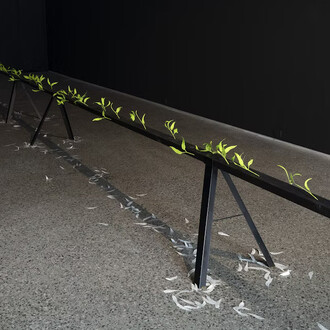
Art history would have us believe that sculptures tend to stay put. Rot, decomposition and seepage – physical processes that are central to Erin Hallyburton’s practice – sit uncomfortably against the sanitised void of the white cube and the related myth of bodies as neat and contained. It is within this understanding of materials and bodies as messy, polluting and contaminating, that rot situates itself.
The works in rot push back on the idea that fats and fatness are problems to be solved. Commercially and industrially, oil is considered a contaminant and its disposal is highly regulated. In a broader context, where fat bodies are understood as needing to be hidden, shamed or made to disappear, the persistence and non-compliance of oils can be thought of as a site of resistance to anti-fat ideologies.
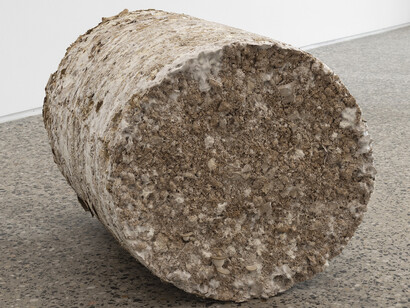
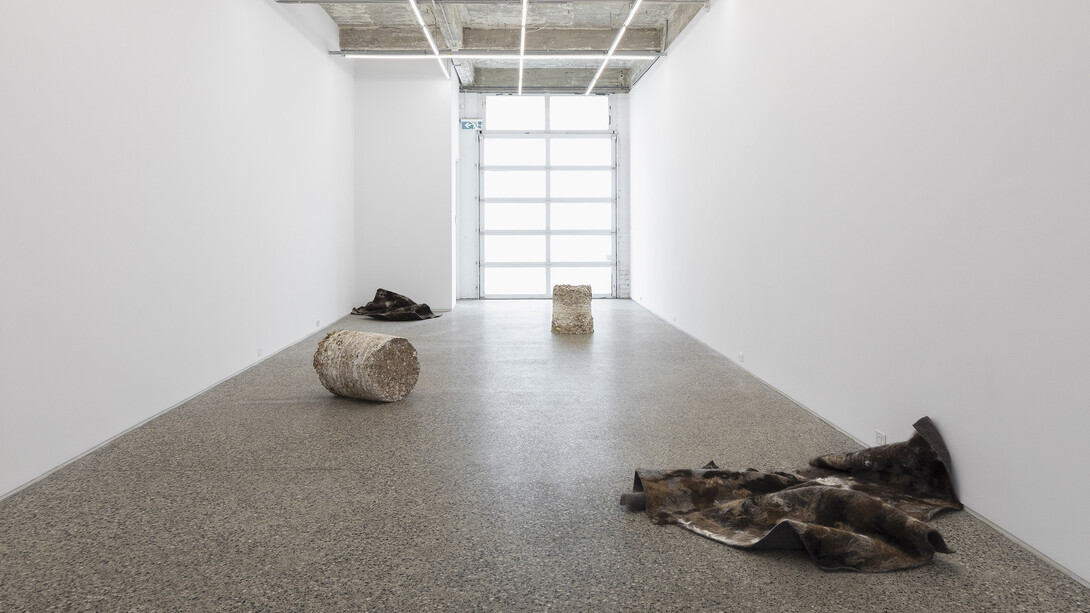
The three sculptural elements in rot each adapt an established process for the ‘management’ of oil. Eaters (2026) draws on mycoremediation – the practice of using the digestive enzymes in fungi to degrade petroleum hydrocarbons. Here, a 44-gallon drum used for industrial-grade storage of pollutants becomes a mould, in which sculptural forms were grown from oyster mushroom mycelium and cardboard.
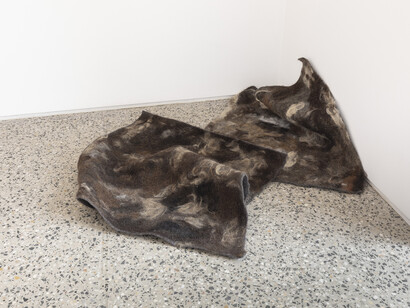
Sorbent weavings (2026) is a series of felted mats made from trimmings collected from the artist’s local hairdresser. Human and animal hair are oleophilic (oil-loving), absorbing between 3 and 9 times their weight in oil. Compacted using a felting machine, these works reference the recent community-based production of human hair mats to manage petrochemical spills.
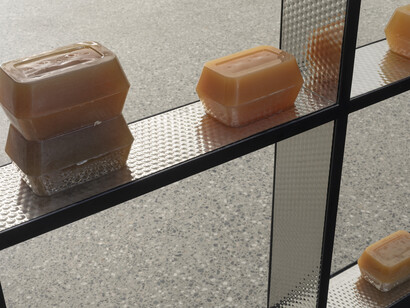
Leftovers (2026) responds to regulatory frameworks for the safe disposal of cooking oils. The active ingredient in these sculptures is stearic acid, a compound found in saturated fats that keeps them solid at room temperature. Cast in takeaway containers, Leftovers recalls gelatinised remains in the fridge, congealment in the deep fryer, and the compliance regimes of the fast-food industry.
By thinking with pollutants, rather than against them, the processes in rot reroute the systems designed to contain oil. Fat and fatness are left unmanaged, and their terms renegotiated as sites of productive disobedience.