English
 Español
 Français
 Deutsch
 Italiano
 Português
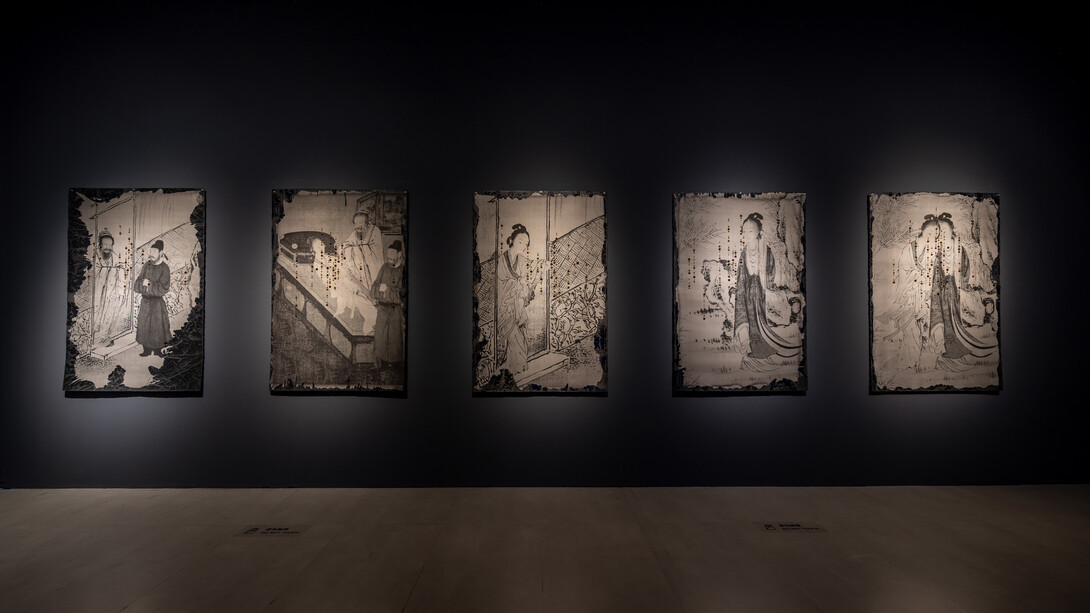
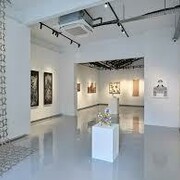
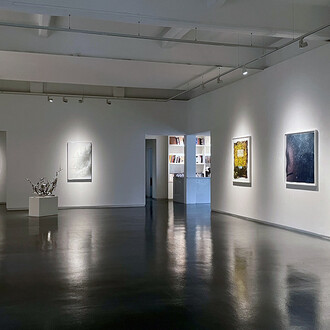
Sullivan+Strumpf is pleased to announce Inside one nien, a solo exhibition of new works by celebrated Australian Chinese artist, Lindy Lee, opening at their Singapore gallery Thursday 12 November 2026.
The artist’s first solo exhibition in Singapore since 2019, Inside one nien expands on themes explored in the landmark critically acclaimed retrospective, Lindy Lee, Myriad stars between Myriad worlds, curated by Dr Shen Qilan. This major survey exhibition, which spanned two floors and 1300m² of gallery space at A4 Museum, Chengdu, China in 2025, is currently on tour, showing at Sea World Culture and Arts Centre, Shenzhen, until October 18, 2026.
Join Lindy Lee and the Sullivan+Strumpf team for the official opening of Inside One Nien, 2PM – 5PM Saturday 14 November 2026 at 1M Yong Siak Street, Singapore. All welcome.
In order to enter the work, I have to let go of the ego self, let go of all preconceptions, be open and receptive to the world.
(Lindy Lee)
In 2024, to celebrate the National Gallery of Australia’s 40th anniversary, Lindy Lee was commissioned to create an immersive public sculpture, titled Ouroboros, which stands at over four metres high and weighs approximately 13 tonnes. The work was the most expensive and ambitious commission in the National Gallery of Australia’s history. Lee uses the work to explore her Chinese ancestry through Taoism and Ch’an (Zen) Buddhism — philosophies that see humanity and nature as inextricably linked.
More recently, Lee was selected to create a public sculpture to grace the entry of the Artizon Museum in Tokyo, in 2025. The birth of infinite constellations similarly extends Lee’s interest in philosophies which seek to uncover humanity’s place within the universe. Lee has developed a practice in which she intentionally establishes conditions through which the artist’s ego is sacrificed, allowing for chance, and nature, to play a unique and central role in her artmaking.
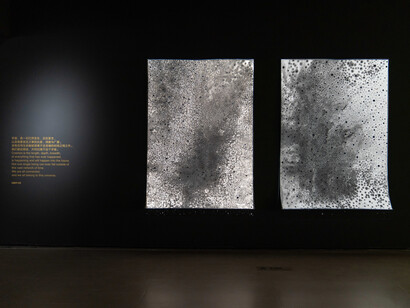
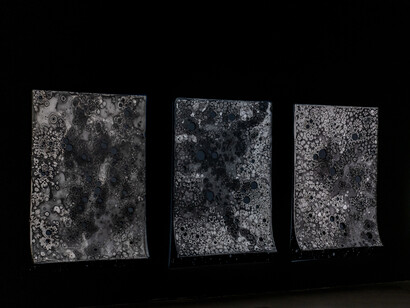
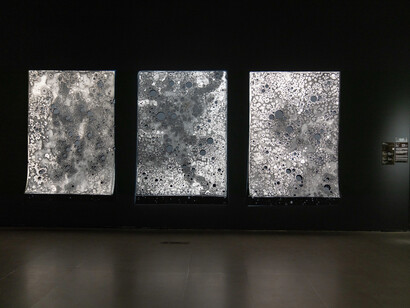
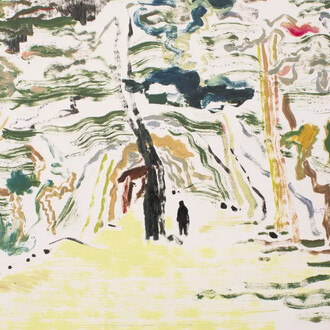
In Inside one nien this philosophy is encountered through material. The exhibition brings together works across bronze, stainless steel and paper, including Lee’s flung bronzes, radial and sculptural steel works and rain paintings. Across these forms, the artist relinquishes degrees of control to gravity, heat, water, fire, and time, allowing each material to record the conditions of its making. What emerges is not an illustration of impermanence, but a physical enactment of production.