English
 Español
 Français
 Deutsch
 Italiano
 Português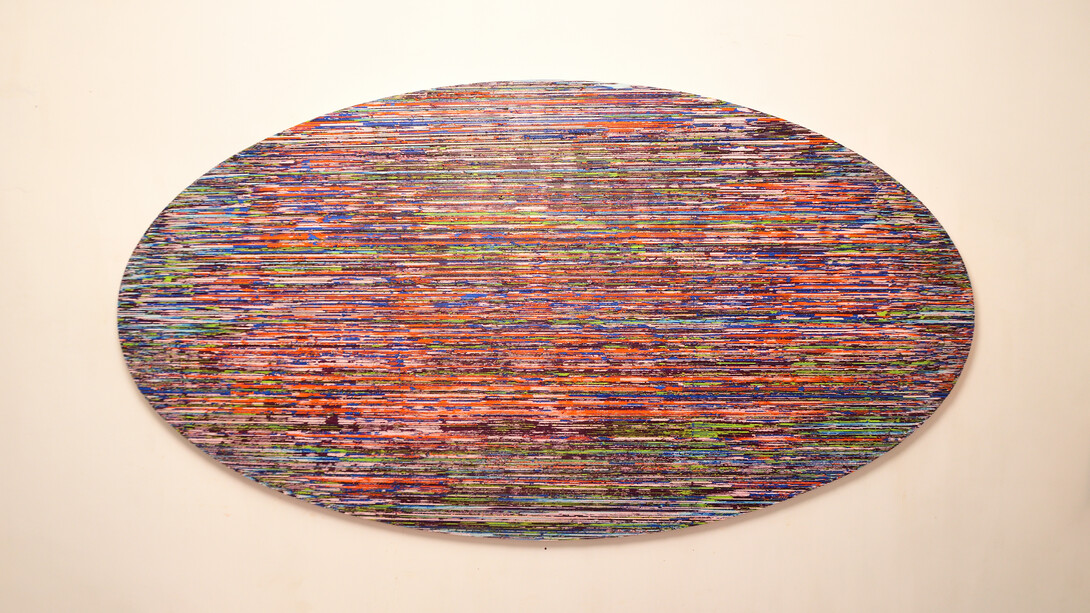
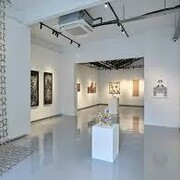
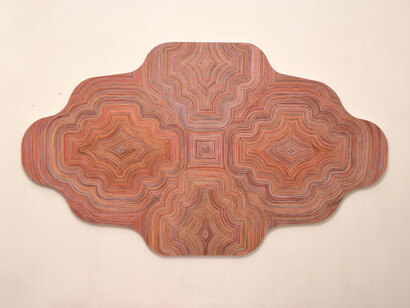
Sullivan+Strumpf is delighted to present Residuum, a solo exhibition by Indonesian artist Irfan Hendrian at our Singapore gallery. A masterful practitioner of paper as a medium, Hendrian transforms this material into works of remarkable form, structure, and complexity.
The title Residuum refers to what remains after a process of decay, an apt metaphor for an exhibition preoccupied with transformation whether through the lives of materials, the persistence of information or even the quiet power of things we discard or forget.
At the heart of this exhibition is a provocation: that paper may be humanity’s most enduring legacy. In an age of digital communication, Hendrian invites us to consider paper as the “hard drive of the future”, like stacks of frozen information capable of outlasting the very people who created them. When the world falls silent, he suggests it is the layered strategy of the earth; the rings within trees and the pages pressed between them that will tell the stories of who we are.
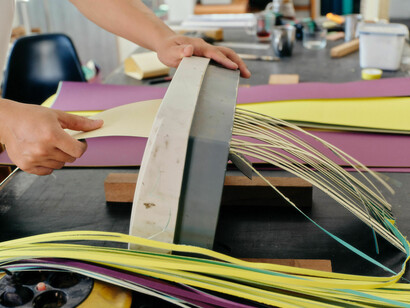
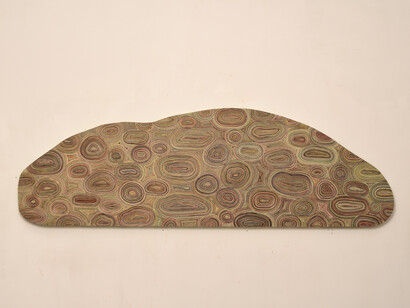
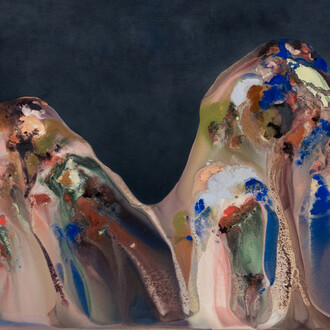
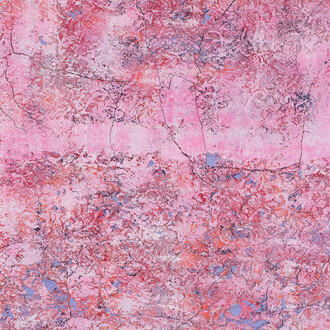
Working through processes of compression, layering, and stratification, Hendrian creates works that mimic the logic of geology. He compresses paper into dense, sedimentary forms and constructs object based works from leftover prints and discarded magazines, or materials already on their way to being forgotten. The result is a body of work that feels both archaeological and intimate.
Residuum also marks a meaningful personal turning point for Hendrian. His work interrogating the politics of cultural histories of the Indonesian Chinese found him exhausted by the weight of those themes. This exhibition is his deliberate step back towards material practice.
Hendrian frames the exhibition through a striking image: "“I want to return to where I left off—back to my roots and a medium-focused practice. I view this transition like an unfinished house where materials have been abandoned. This upcoming exhibition reverses that idea: it explores how what we abandon often outlasts us, serving as a testament to our existence through both the production of the material and the information it once carried."