English
 Español
 Français
 Deutsch
 Italiano
 Português
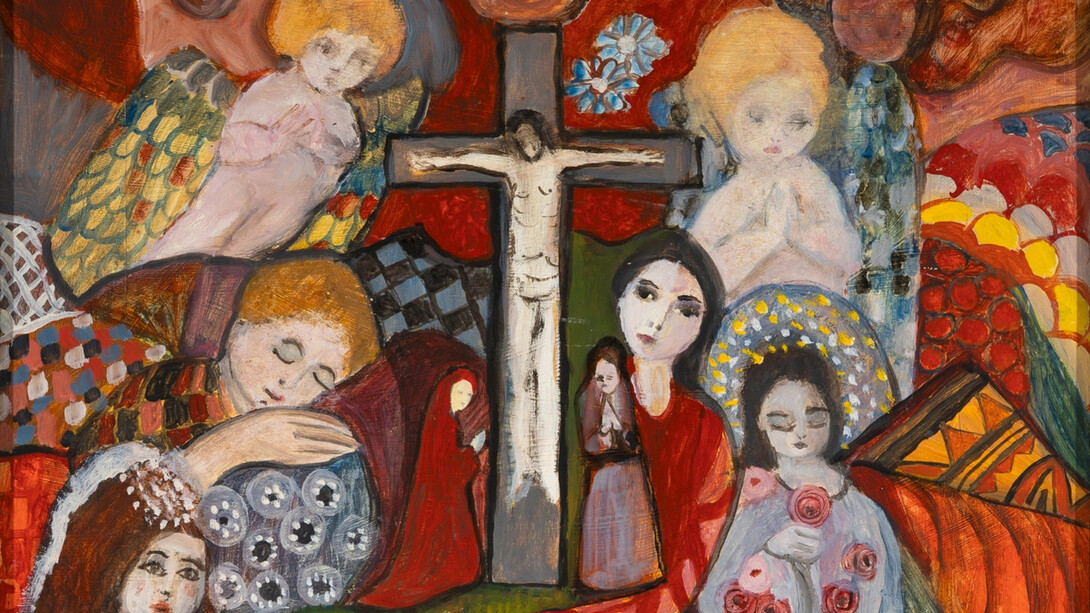
My dance with Picasso celebrates not only an unforgettable artistic encounter, but a lifetime dedicated to creativity.
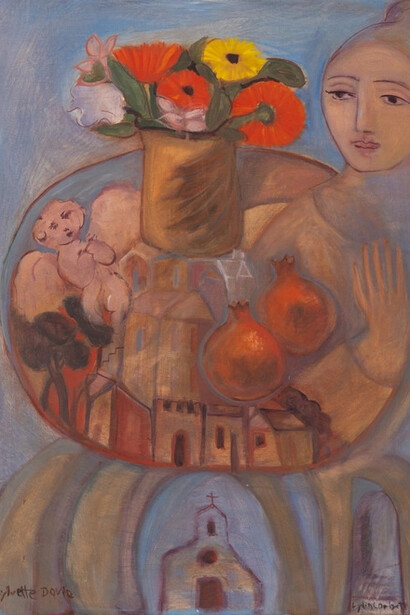
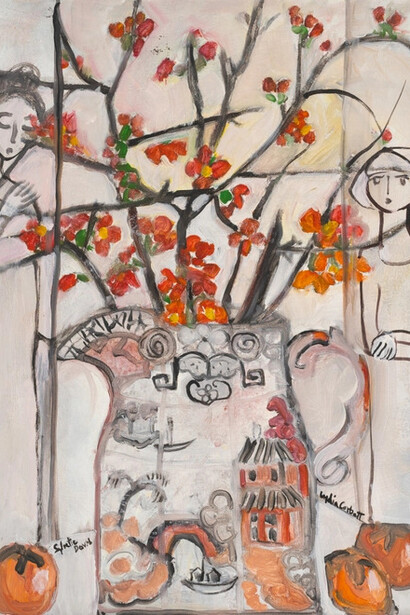
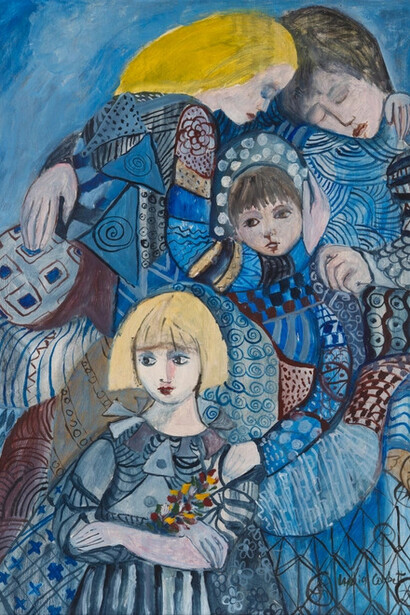
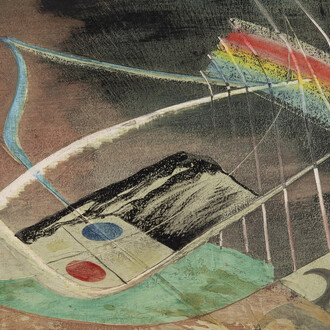
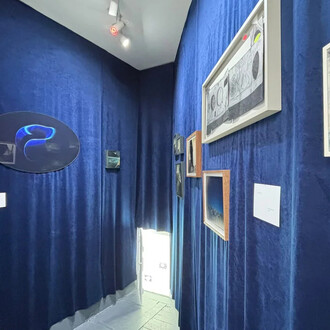
The Redfern Gallery is delighted to present My dance with Picasso, the first exhibition of work by Lydia Corbett / Sylvette David at the gallery. Bringing together paintings, drawings and sculpture from the early 1980s to the present day, the exhibition explores both an extraordinary episode in twentieth-century art and the independent artistic practice Corbett has developed over more than four decades.
Born in Paris in 1934, Sylvette David, now known as Lydia Corbett, grew up in an artistic family. Her English mother, Honor David-Gell, was a painter who had studied at the Académie Julian in Paris, while her French father, Emmanuel David, became an influential art dealer. Corbett spent part of her childhood on the Île du Levant, off the Côte d’Azur, before the disruption of the Second World War eventually brought her to England, where she attended Summerhill School in Suffolk.
In the spring of 1954, while living in Vallauris in the South of France, the nineteen-year-old Sylvette met Pablo Picasso. After seeing her with her distinctive long blonde ponytail, Picasso invited her to model for him. Over the following months he created more than sixty portraits of her in paintings, drawings, ceramics and sculpture, a body of work now known as the Sylvette Cycle. Examples are now held in major international collections, including Picasso’s Portrait of Sylvette David (1954) at the Art Institute of Chicago.
Corbett has always spoken warmly of the experience and of Picasso’s encouragement of her creativity. She later recalled that he “opened doors for me”, teaching her to look at a face as a collection of flat areas and, more broadly, that creativity could be a source of happiness and renewal.
Although creativity had surrounded her from childhood, Corbett did not begin painting seriously until the late 1970s, when her children were older. Around the age of forty-five she began drawing and painting on paper, canvas and ceramic pots, gradually developing the highly personal body of work for which she is now known.
The exhibition has particular resonance for The Redfern Gallery, whose history has long been shaped by exchanges between British and continental modernism and by its engagement with artists working in France. Its historic exhibitions of Picasso and other European modernists form a natural context for Corbett’s story, which itself moves between Paris, Provence and Britain.
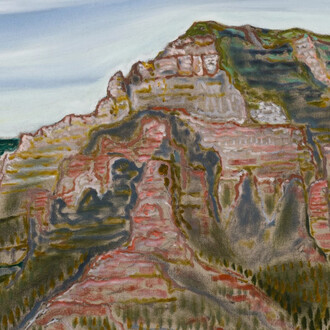
From her home in Devon, Corbett developed a visual language rooted in memory, family, nature, faith and the places that have shaped her life. Her subjects range from portraits and self-portraits to flowers, birds, animals, lovers, churches and the landscapes of Devon and Provence. As she has written, her inspiration comes from “everywhere”, including the sea, fish, animals and the moorland surrounding her home.
Working in oil, acrylic, watercolour, Indian ink and on ceramics, Corbett combines observation with memory, imagination and spiritual experience. Her work reflects her admiration for artists including Samuel Palmer, Piero della Francesca, Marc Chagall, Paul Klee and Gustav Klimt, as well as the impact of traditional Japanese art encountered during a visit to Japan in the 1980s.
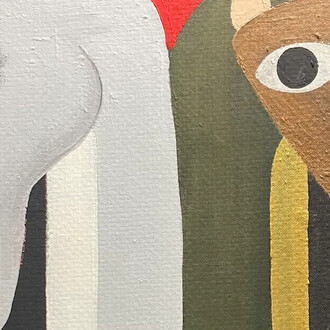
Picasso nevertheless remains an enduring presence within her work. In a number of later paintings and drawings Corbett has returned to the figure of Sylvette, absorbing elements of the lessons she learned in Vallauris into what she describes as her own “free line”. Works made decades after their meeting revisit the studio, the sitter and the memory of 1954 from the perspective of an artist looking back over a long life.
Now in her ninety-second year, Corbett continues to paint and draw. My dance with Picasso therefore celebrates not only her celebrated encounter with Picasso, but the substantial and deeply personal body of work she has created since beginning to paint in earnest in the late 1970s. The exhibition invites visitors to encounter Sylvette not simply as one of Picasso’s most recognisable sitters, but as Lydia Corbett: an artist whose own work has evolved over more than forty years.
Corbett’s life and continuing artistic practice have recently attracted renewed international attention, including features in The Wall Street journal and the September 2026 print issue of The world of interiors. As Picasso’s last surviving muse, she provides a rare living connection with his world, while the renewed attention surrounding her story has also brought greater recognition to her own work.