English
 Español
 Français
 Deutsch
 Italiano
 Português
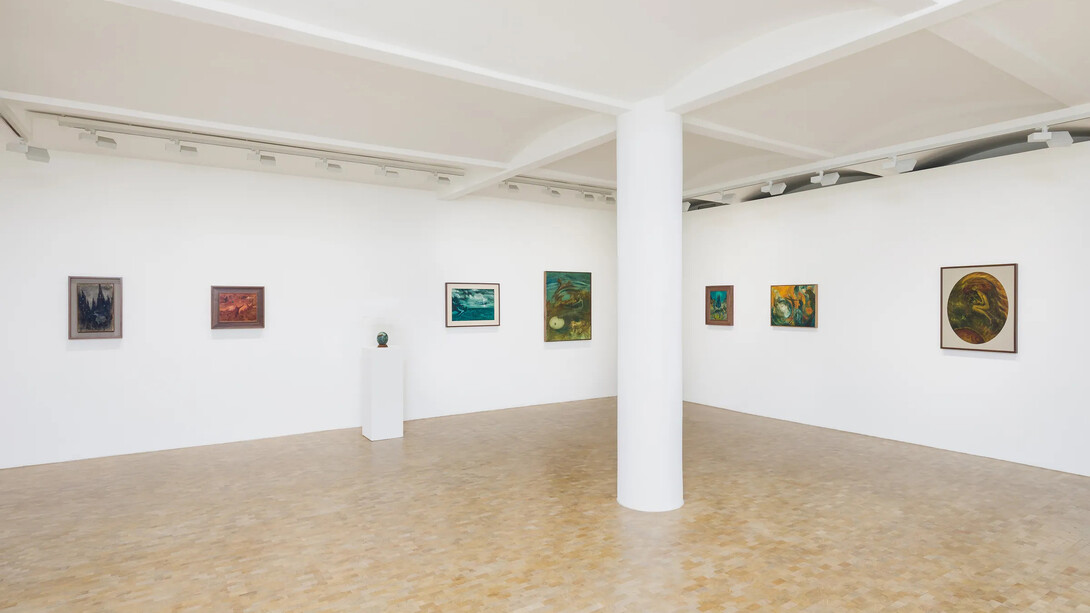
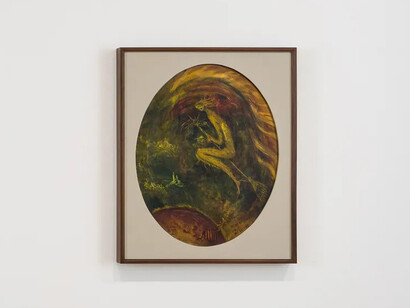
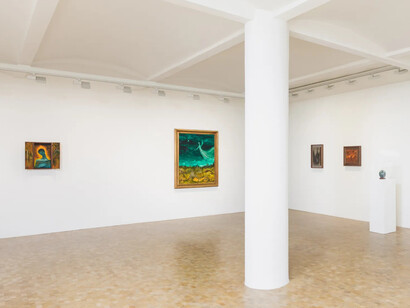
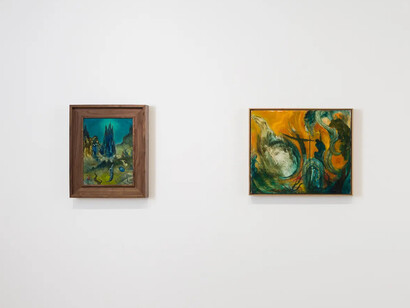
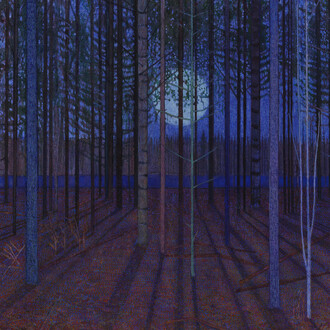
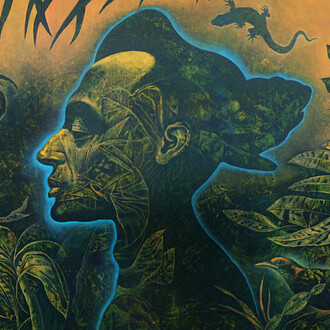
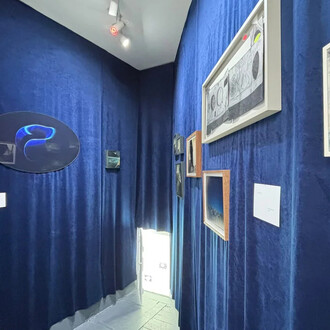
Pippy Houldsworth Gallery is proud to present Floating between Earth and sky, the first European solo exhibition of Mexican Surrealist painter Sofía Bassi. A contemporary of Leonora Carrington and Remedios Varo, Bassi's work has been underappreciated outside of her native country. The exhibition brings together paintings, works on paper, and a painted ostrich egg - one of just six examples made by Bassi, and the first time that this part of her practice has been publicly presented. At the centre of the exhibition is the rare and exceptional altarpiece, Caja del tiempo (1970), an iconic example of the artist's contribution to Surrealism.
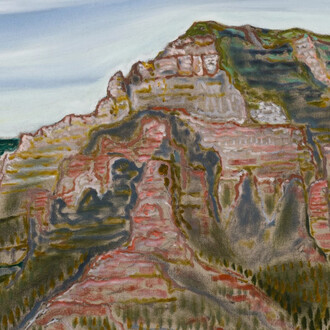
Interested in esoteric knowledge and a personal spiritual iconography, Bassi's paintings exist as windows onto memory, mythology, fear, desire and the vast territories of the subconscious. Flying spirits and castles reside in dreamscapes of fantastical swirling mountain ranges, deserts or seascapes. The motif of the egg holds particular resonance in her practice as a symbol of fertility and rebirth. Bassi saw imagination as a form of freedom: 'My paintings are portals to other worlds that we can inhabit. Careful observation and meditation of my work will take you to those worlds'.
The exhibition centres on important works from 1968 to 1972, signed 'ELC', or En la Cárcel, meaning 'in prison'. In 1968, Bassi pleaded guilty to the murder of her son-in-law in an incident that remains veiled in uncertainty. Sentenced to ten years in prison in Acapulco, she continued to paint prolifically while incarcerated, producing more than 250 works. Her physical world had contracted, but her inner world remained unbroken: through painting, the mind could travel where the body could not.
Also on view are three portraits of Bassi by Hungarian-born photographer Kati Horna. Renowned for bringing a feminist and antifascist perspective to photojournalism during the Spanish Civil War, Horna later turned her lens to the expatriate circle of Surrealist women artists who she became close to after her relocation to Mexico in 1969. Horna's striking photographs of Bassi present the artist alongside her paintings, staged in enigmatic tableaux that reveal a dialogue with Surrealist aesthetics while nonetheless preserving Horna's own artistic vision.