English
 Español
 Français
 Deutsch
 Italiano
 Português
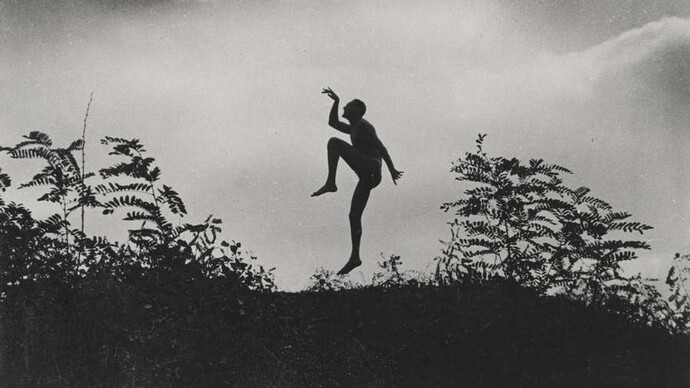
The exhibition New perspectives, distinct paths, featuring approximately 180 prints, presents three Hungarian-born artists who redefined 20th-century photography: André Kertész, László Moholy-Nagy, and Robert Capa. This is the first such comprehensive joint presentation of their work in Slovenia, exploring the development of three independent and enduring photographic languages. It takes visitors on a journey from avant-garde experiments through poetic visions to iconic war photographs, while opening a dialogue with the cultural environments that shaped the photographers lives and artistic practices.
The first half of the 20th century brought rapid changes to Europe – a continent transformed by wars and political turmoil – and saw three photographers of Hungarian origin set out on different paths: André Kertész, László Moholy-Nagy, and Robert Capa. Connected by the reality of emigration, their Jewish backgrounds drove them steadily westward. The sense of alienation, need to start over, and constant pressure to adapt were not just personal challenges they faced, but experiences that shaped their worldview and their work.
Co-produced with the Robert Capa Contemporary Photography Center in Budapest and with the support of the Liszt Institute in Ljubljana on the occasion of the 10th anniversary of its founding, the exhibition New perspectives, distinct paths. The Hungarian Pioneers of Modern Photography brings together approximately 180 exhibition prints to explore how three independent, enduring photographic languages emerged, and the shared experiences which led these bodies of work to become defining chapters in the history of modern photography.
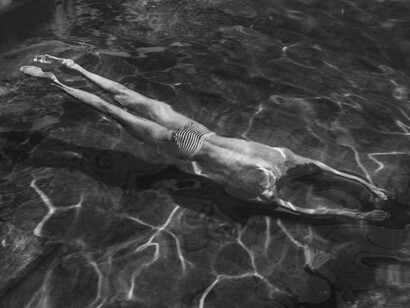
For André Kertész, photography was above all a form of connection, attentiveness, and sensitive presence. He trusted his intuition and waited for the moment when a detail of the world seemed almost to arrange itself into an image before him. In both the photographs he took in Paris, which coincided with the emergence of avant-garde art and Surrealism, and his later work in New York, he captured moments when the apparently ordinary came to hold universal meaning.
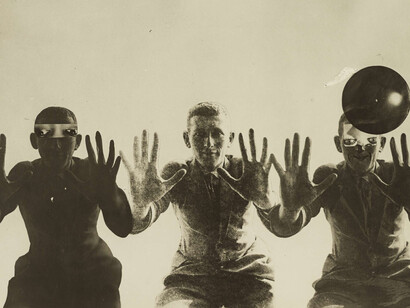
As a Bauhaus professor, artist, and thinker, László Moholy-Nagy delved into the connections between light, movement, material and technology. His photograms, unconventional perspectives, montages, films, and light experiments all sought to explore new possibilities of perception. For him, photography was not an imitation of reality, but an autonomous visual experience. His groundbreaking concept of “New Vision” proposed that, with the help of technology, we can fundamentally transform the way we see.
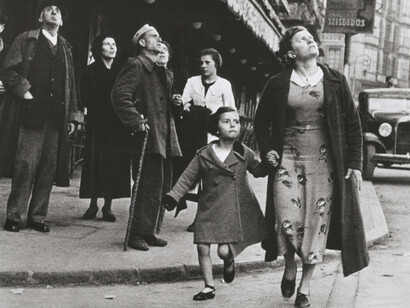
Robert Capa was working in the midst of historically significant events. During the Spanish Civil War and the Second World War – as well as in later assignments – he captured images that reveal history’s pivotal moments not as distant events, and instead via the fate of ordinary people. For Capa, getting physically close to the action was inseparable from ethical responsibility: his work was defined by direct presence, solidarity, along with a constant, deliberate willingness to take personal risks.
Bringing the works of Kertész, Moholy-Nagy and Capa together in the new context of an exhibition accompanied by a catalogue, enriches the dialogue between the cultural environments that shaped their lives and artistic practices. In this way, it also highlights that preserving photographic memory is not simply a matter of safeguarding images from the past, but also calls for a consideration of how they are presented and understood in the present.