English
 Español
 Français
 Deutsch
 Italiano
 Português
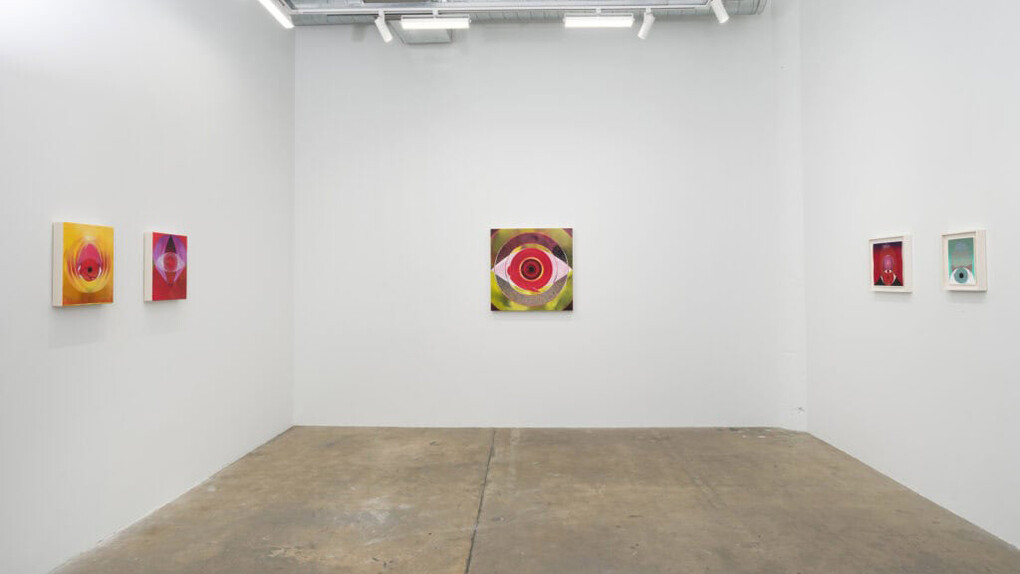
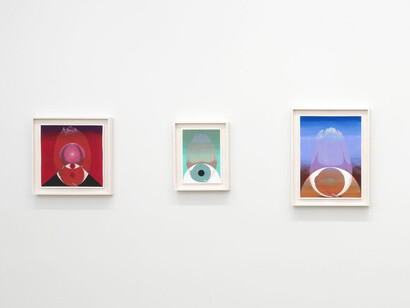
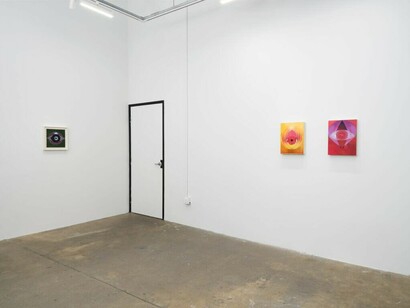
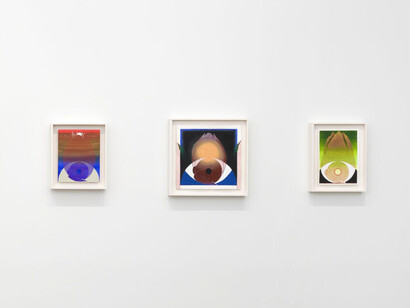
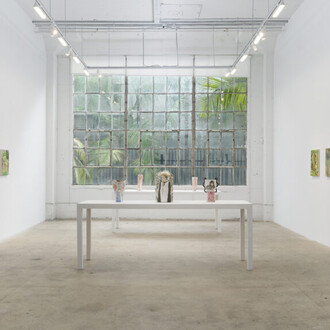
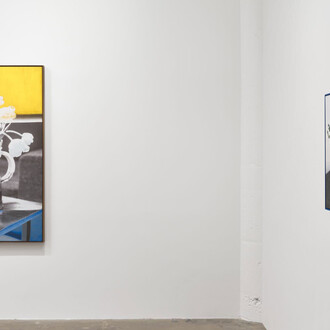
Vielmetter Los Angeles is excited to present a Spotlight exhibition of new paintings and works on paper by Los Angeles-based artist Brittney Leeanne Williams. On view from September 19th through November 7th, 2026, this group of works alludes to the body, to architecture, and to forms found in the natural world. Shapes reminiscent of eyes, blossoms, mountains, and curled bodies emerge from saturated red or blue gradients, their undulating surfaces rendered with pointillist precision.
Williams’ practice explores the body, specifically the female Black body, as a site of transcendence and as a liminal space between the corporeal and the mystical. Her works draw from a range of art historical influences, including the work of transcendental artist Hilma af Klint and Laura Aguilar’s desert portraits. The body in Williams’ works is posited as a shapeshifter, sometimes materializing and dissolving into tiny points of color that gather along the contours of each form.
In the artist’s own words:
The work in this show is from a current project that seeks to create images that act as talismans or icons. I think of these paintings as aspiring to the power that Simon Critchley ascribes to medieval Christian symbols: “Devotional objects and images impel the attentive viewer to both see the literal thing in front of them and to see beyond. To see both at once.” (Simon Critchley, Mysticism). I often use the eye as the center of these talismanic pieces, sometimes projecting out from a crouching form. The submissive yet entreating body becomes the source of vision, another shape shift of the red/Black female figure that recurs in my work. Another recurring motif in these talismans is the tulip, which acts as a structuring architecture for the image. I was originally drawn to the tulip because its dome-like structure evokes for me the bowed backs of an organized gathering and communing of women, a huddle. The red/Black figure is sometimes placed within this tulip-dome structure. The huddle encases, hugs and holds the curled form.
Each piece is centered on a “pupil,” either a black point or an absence of paint. Layering the centered figure with its empty pupil within the tulip’s blossoming top creates a compositional focus, a kind of stage which invites a visitation or provides a space for something to happen that the eye might excitedly glimpse. These pieces explore the tensions between a siloed pursuit of faith and a communal, even monastic practice, represented by the ascending, mountain-like tulip heights that enclose the red / Black figure and open an oculus of light.