English
 Español
 Français
 Deutsch
 Italiano
 Português
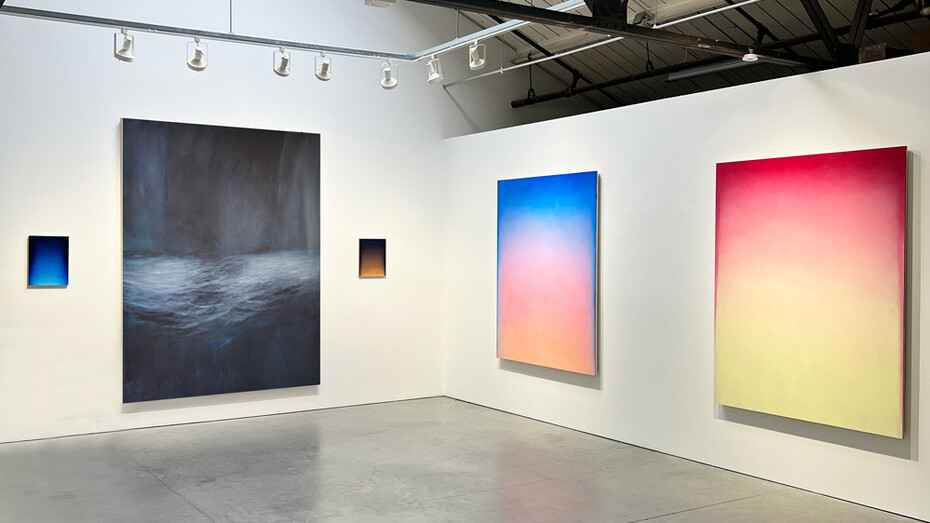
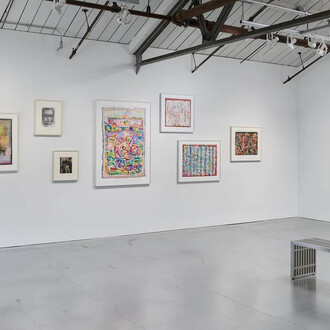
Nancy Toomey Fine Art is pleased to announce an exhibition of works by Alex Weinstein titled I’ll be your mirror on view from September 9 to October 31, 2026.
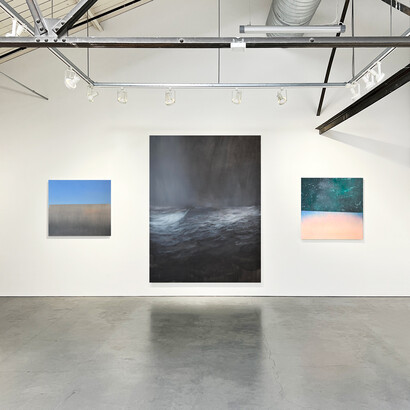
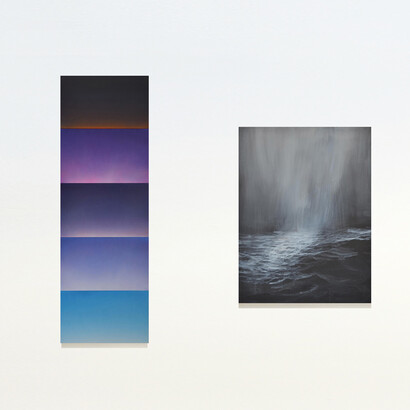
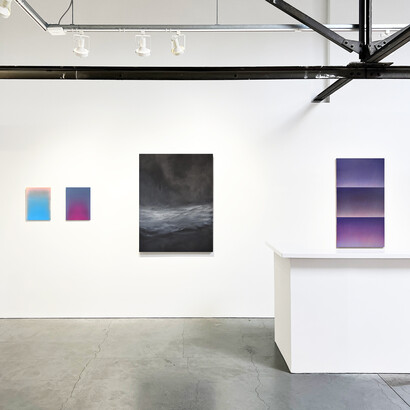
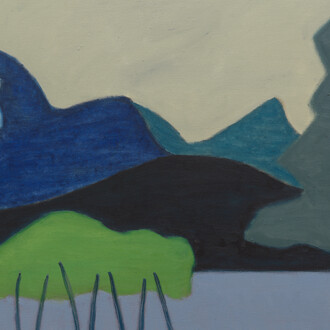
Alex Weinstein, in his I’ll be your mirror exhibition at Nancy Toomey Fine Art, continues to explore the transcendent potential of art in response to the sublime power of the natural world. Over the last year, Weinstein made several series of abstract and landscape paintings that were cued to the magnificent and waning light in the Western sky, and the ever-present urban forms that inevitably frame that scene in Los Angeles where the artist lives and works.
For Weinstein, architecture enforces hard geometric intervention to the air overhead. Power lines drape across otherwise limitless vistas. Everywhere is the encroachment of civilization. And yet, splendor is abundant and the human mark on the landscape is quite often compelling, offering new ways to perceive nature. He began introducing hard forms in the work that reframed the ambient color passages as a way of referring to both architecture and the horizon line.
Ironically, Weinstein’s paintings of the sky–which are effusive in color, emphatically illuminated and essentially bereft of any real figuration–led the artist to another series of paintings that are gray-scaled and deeply detailed imaginings of the roiling sea, under moonlight. The pivot is dramatic as the two bodies of work seem to operate diametrically, but this is inaccurate. Both groups of paintings are concerned with space–acreage both physical and metaphysical, the wonder of the natural world, and the interior wonder of it all.
The exhibition’s title “I’ll be your mirror” is a phrase borrowed from Lou Reed of the Velvet Underground and a timeless song, sung by Nico (Christa Päffgen), in 1967.
I’ll be your mirror
Reflect what you are, in case you don’t know
I’ll be the wind, the rain, and the sunset
The light on your door to show that you’re home.
“To me, the song champions the power of love found in deeper consideration: deeper consideration of both the people and the places around you,” says Weinstein. “That, despite the seeming banality of the urban world and its inhabitants, splendor and spectacle abound.”