English
 Español
 Français
 Deutsch
 Italiano
 Português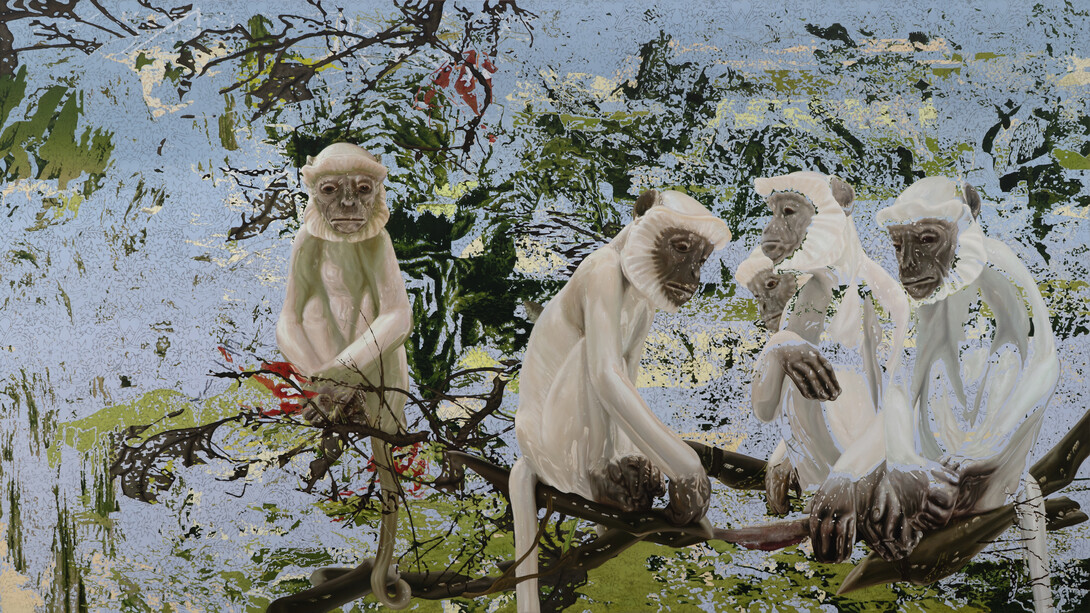
Mek Contemporary presents Idols in bloom, the gallery’s inaugural exhibition and Rafael Megall’s first solo exhibition in Los Angeles. On view from September 24 through November 6, 2026, the exhibition brings together paintings in which porcelain figurines and floral forms appear in states of repetition, fragmentation, and recombination.
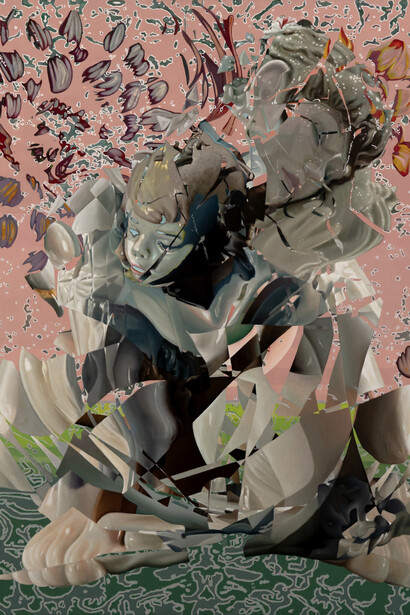
At the center of the exhibition is an expanded conception of the idol. In Megall’s work, an idol is not necessarily an object of worship, but something invested with significance through attachment, memory, and experience. His figures draw from decorative porcelain figurines associated with Soviet-era domestic interiors. Collected, displayed, and often passed between generations, these objects became part of the visual language of everyday life, carrying associations with family, home, and a social world that has since changed.
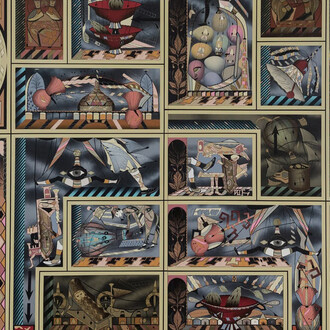
Megall subjects these familiar figures to a process of fragmentation and reassembly, reconfiguring their forms and combining pieces to create new composite bodies. Rather than reconstructing a lost original, the paintings allow new forms to emerge from what remains. Their instability reflects the way memory itself is reconstructed: partial, layered, and continually altered by time and experience.
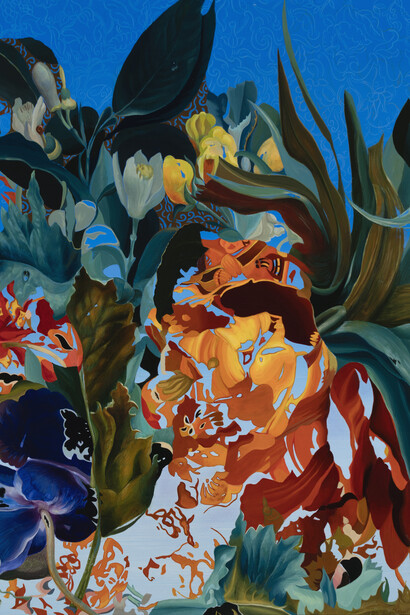
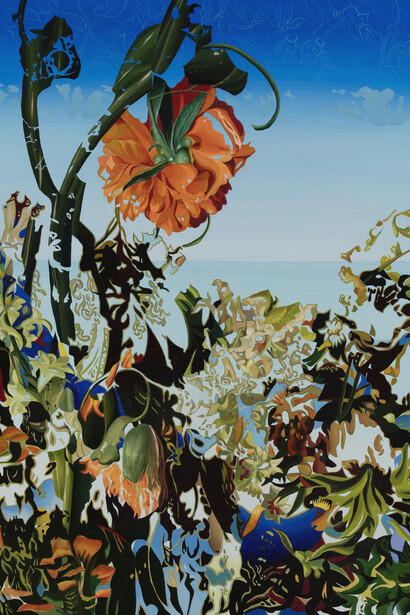
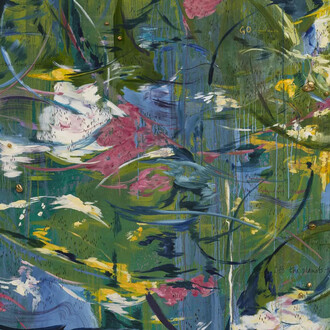
Ornament and flowers move throughout the paintings alongside the porcelain figures. Drawing on inherited patterns, Megall uses ornament as an active pictorial structure, weaving it through the figures and linking separate elements across the composition. Floral forms introduce a parallel language of growth and change, appearing within the larger paintings and independently in smaller panel works.
The title Idols in bloom brings these elements together. The idol suggests attachment and inherited meaning, while the bloom suggests emergence and continued life. Megall approaches fracture not simply as loss, but as a condition from which something else can take form. Across the exhibition, continuity does not depend on remaining unchanged, but on the ability of images, objects, and cultural forms to be transformed, reassembled, and seen anew.