English
 Español
 Français
 Deutsch
 Italiano
 Português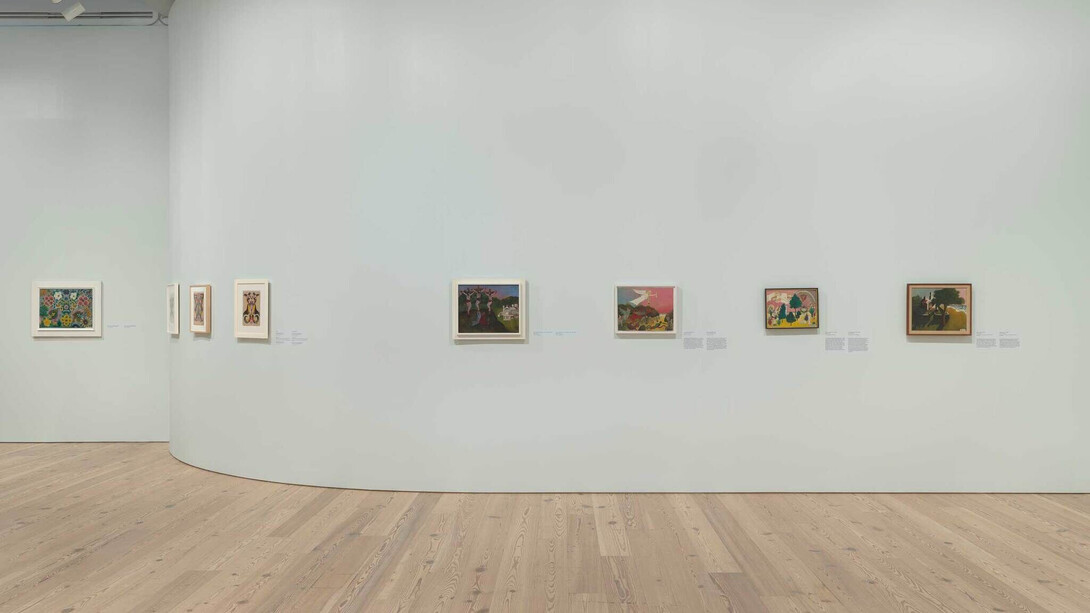
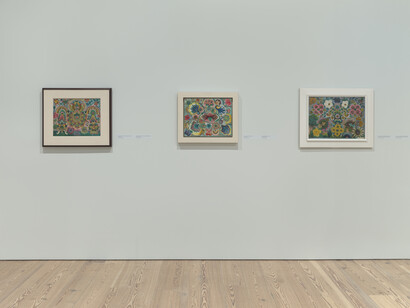
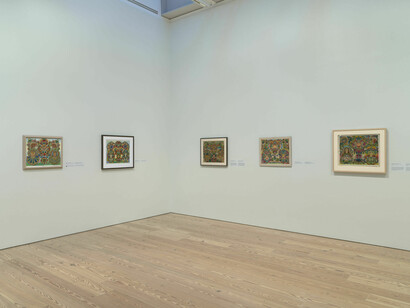
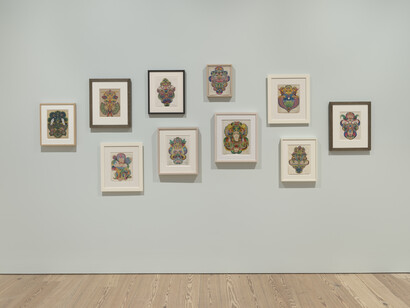
Inspired by vivid dreams and visions, Minnie Evans (1892–1987) made her first drawing in 1935 after the death of her beloved grandmother. During the subsequent decades, the artist created hundreds of radiant pencil and crayon drawings, oil paintings, and collages that combined imagery from her Afro-Caribbean heritage, mythology, religion, popular culture, decorative arts, and the natural environment of her native Wilmington, North Carolina.
Her dense, kaleidoscopic compositions include images of angels, mythical creatures, watchful faces, and intricate patterns that suggest harmony and transcendence amid hints of an unsettling disquiet. At once evocative and mysterious, these works imagine a protective, spiritual province that existed before the great flood in the Bible—what the artist referred to as the "lost world."
By the 1960s, Evans's work had begun to garner national recognition. After small gallery exhibitions in Wilmington and New York, she was profiled in Newsweek in 1969. Group exhibitions at museums followed shortly thereafter, leading to a one-person exhibition at the Whitney in 1975. More than five decades later, this retrospective offers an opportunity to experience the visionary merging of the everyday and the divine that runs through Evans's work.