English
 Español
 Français
 Deutsch
 Italiano
 Português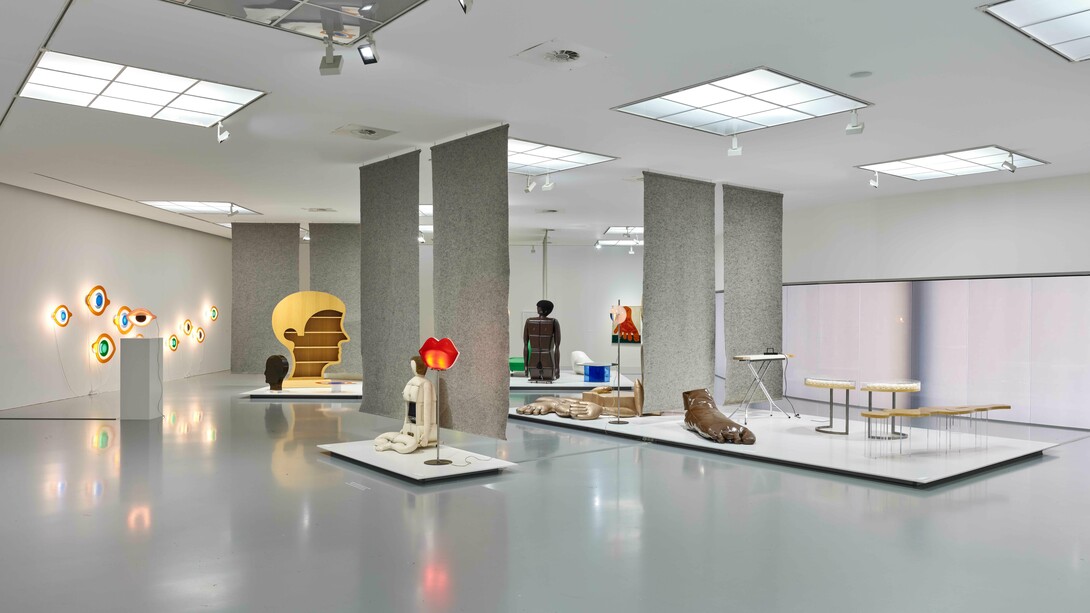
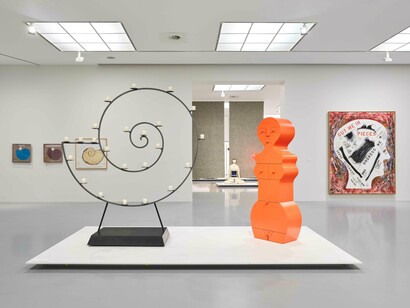
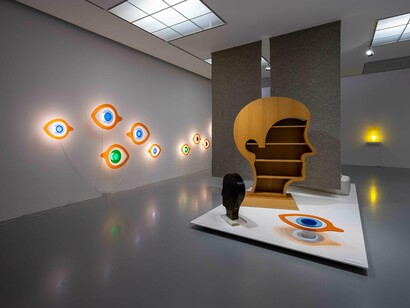
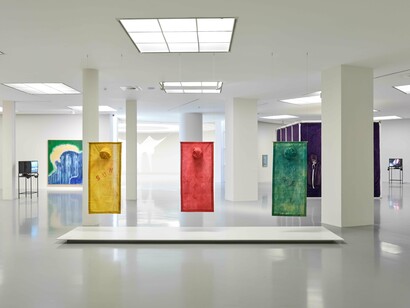
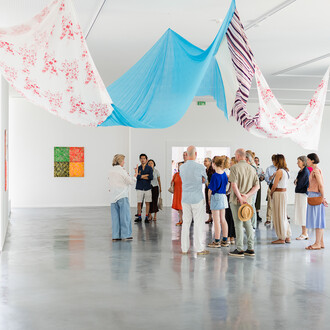
From 26 June to 18 October 2026, Muhka will present the first major retrospective in Belgium fully dedicated to Nicola L., an artist renowned for her groundbreaking, multidisciplinary work. Visitors will discover five decades of creativity in which sculpture, performance, painting, film, and design converge, and gain insight into her innovative approaches to gender, the body, and space.
First major retrospective
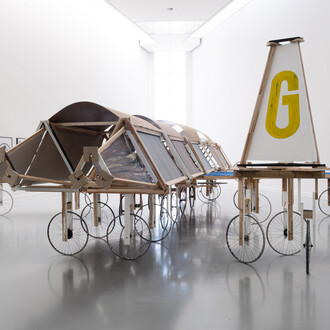
This exhibition presents one of the most comprehensive surveys to date of the work of Nicola L., a Morrocan-born artist whose multidisciplinary practice occupies a singular position within the post-war avant-garde. Bringing together over ninety works from international collections, the exhibition offers the first major retrospective of her work in Belgium, situating her practice within a broader European context shaped by mobility, exchange, and experimentation.
Spanning several decades, the exhibition traces Nicola L.’s artistic development with particular attention to her French and Belgian periods, foregrounding the close connections between different artistic scenes. It explores her formative years and her integration into the French art milieu, including her relationships with key figures of the avant-garde, while also examining the ways in which her work resonates with Belgian institutional and archival contexts. The exhibition reflects on the transnational circulation of ideas, artists, and experimental practices in the post-war period.
Exploring embodiment
Working across sculpture, installation, collage, performance and film, Nicola L. consistently challenged conventional boundaries between art and life. A central focus of the exhibition is her performative exploration of the body—not as an isolated entity, but as a shared, collective, and social form.
Her works often operate in the space between the public and the domestic, questioning how bodies inhabit, negotiate, and resist social structures. Particular emphasis is placed on her engagement with the female body, approached not as a fixed identity but as a site of transformation, participation, and political agency.
Expanded context
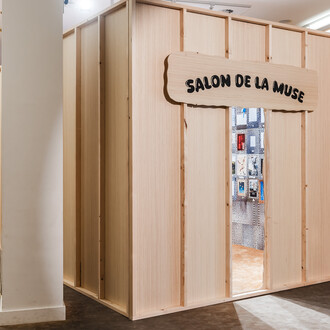
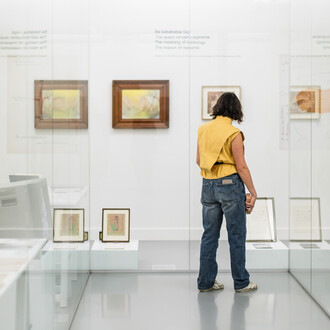
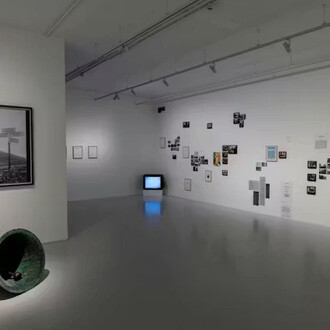
Alongside a substantial selection of artworks, the exhibition incorporates extensive archival material, including books, exhibition catalogues, video works, and documentation of performances. These materials provide insight into the conceptual frameworks underpinning Nicola L.’s practice and highlight the importance of collectiveness within her work.
Addressing themes such as feminism, diversity, equality, climate awareness, and political engagement, the exhibition situates Nicola L. ‘s practice within a broader historical and social perspective. Rather than presenting a linear narrative, it proposes a layered reading of her work—one that underscores its continued relevance and its capacity to speak to urgent questions of collective life today.
When the Earth turned the other way
The exhibition title When the Earth turned the other way derives from a series of drawings—a narrative, alternative science-fiction story by Nicola L. about Giants inhabiting the Earth. The series was created during a formative period in the artist’s practice. The title evokes a moment of quiet turning away from dominant systems that instrumentalise bodies, the environment, and social relations. In relation to Nicola L.’s practice, the Earth can be understood as a collective body, carrying ecological and feminist meanings. The title may also be read in a historical register, referring to the late 1960s and 1970s as a moment when alternative social imaginaries were often pushed to the margins. Turning “the other way” becomes a subtle, performative act—one that shifts attention, ethics, and bodily imagination, asking how small gestures can quietly reorient the world. The title can also be understood in relation to the present as a time of transformation and the reconfiguration of the world’s order.