English
 Español
 Français
 Deutsch
 Italiano
 Português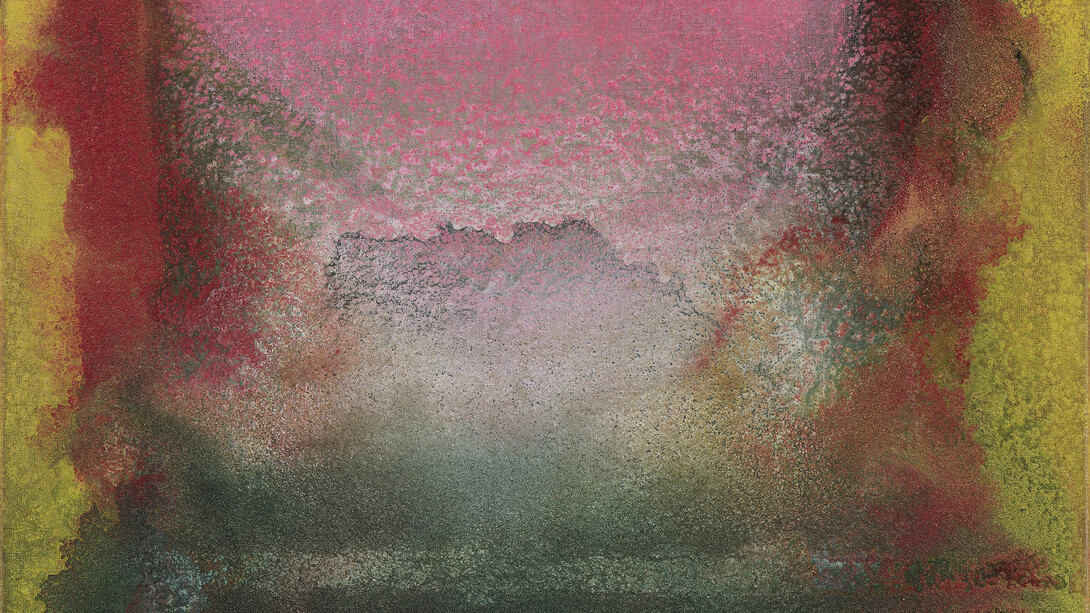
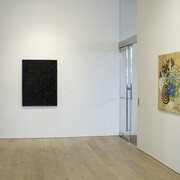
Berggruen Gallery is pleased to present an exhibition of recent paintings by the Northern California artist Liam Everett. This show marks Everett’s first solo exhibition with the gallery and will be on view from September 10 through October 29, 2026. The gallery will host an artist discussion, moderated by Mari Robles, Chief Executive Officer of Yerba Buena Center for the Arts, at 4:30 p.m. on Thursday, September 10, 2026, followed by an opening reception from 5 to 7 p.m.
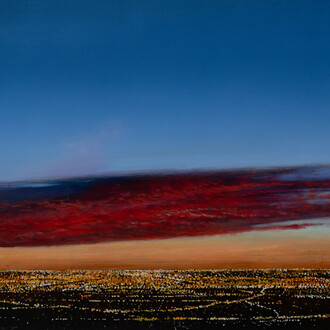
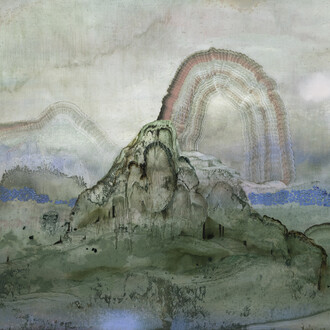
Liam Everett is not looking at light; he is reading it. Inspired by quantum biology, Everett’s most recent body of work is shaped by his research on the interplay between light and living beings, particularly the relationship between ultraviolet light, photons, and physiology. Pointing to the infra-visible electromagnetic field and the vital information it contains, Everett uses painting as a medium to articulate the place between the visual and the non-visual. He considers light beyond its symbolic or illuminating functions, understanding it instead as an intrinsic aspect of consciousness, one that embodies regeneration and growth and enables us to perceive the invisible.
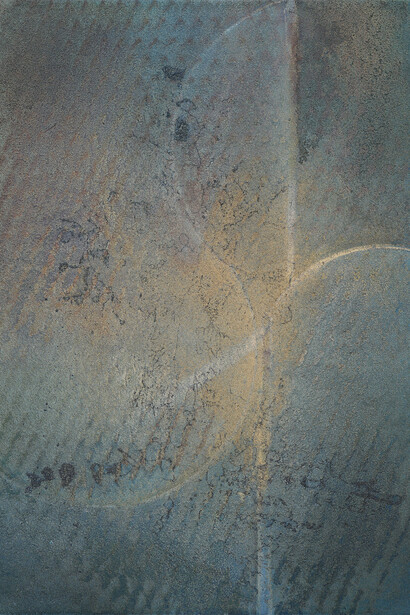
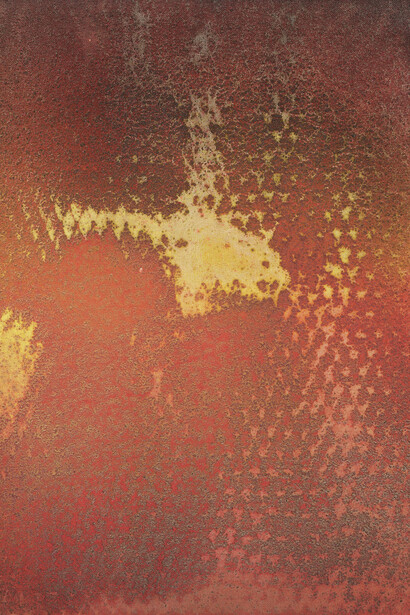
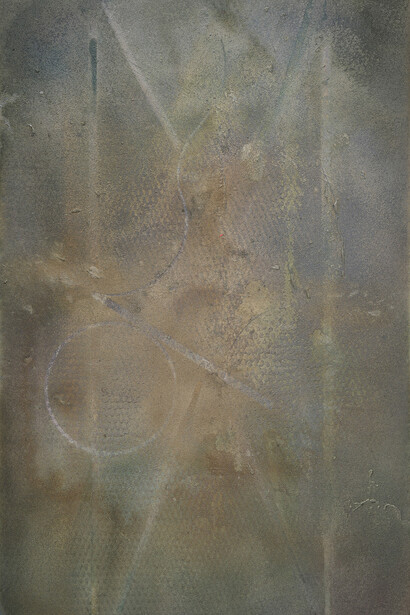
In the passenger, Everett paints with far less gestural accumulation than previous bodies of work. He removes his autobiographical mark, or the story of each painting, thus allowing the paintings to breathe on their own. Subtle hints of horizon and cosmological space appear in atmospheric floating fields. Layers of caustic materials –sand, pigment and alcohol– build up the surface through a process of erasure and experimentation. Everett's abrasions resolve in glowing residues of intuitive actions and phantom gestures. Each painting becomes a receptacle of its environment, responding to the conditions of Everett’s Northern California studio, namely the quality of sunlight to which each painting was exposed.
Everett's process draws on his experience of growing up in the theater. The possibility of total body integration through practice and sustained repetition, witnessed from actors backstage and during rehearsal, marked him at a young age. Everett works as an artist like that of a performer on stage. He moves above and around canvases laid on the floor, and marks his surfaces with prop-like tools such as a rusted trowel, an axe, a broken bean pole. Everett’s physical process extends to his garden, a site of inspiration and renewal. On some days he spends much of his day planting, landscaping and clearing beds. He sees the space as an extension of his studio, a closed loop between gardening and painting, in which elements not unlike each other are used to give life to form.
For Walt Whitman, the marker of a good poem was that it never ended. The paintings in the passenger elude quick answers; instead, they generate more questions with each viewing. One might loop back again and again and again, and find new readings. Language only helps us begin. What Everett does exists in a place we reach for in silence.