English
 Español
 Français
 Deutsch
 Italiano
 Português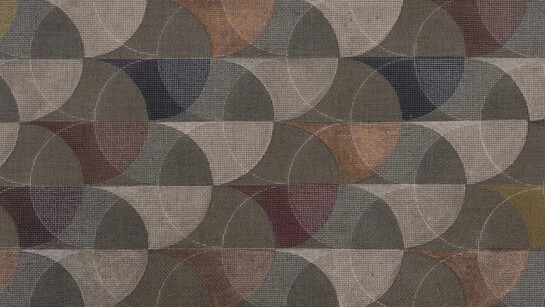
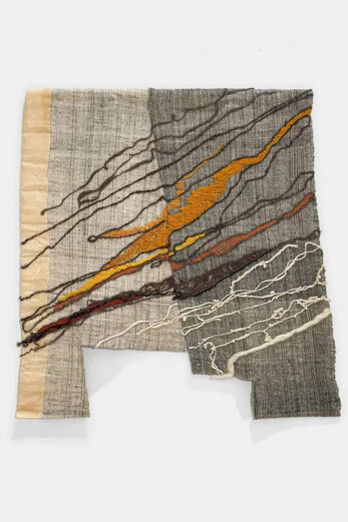
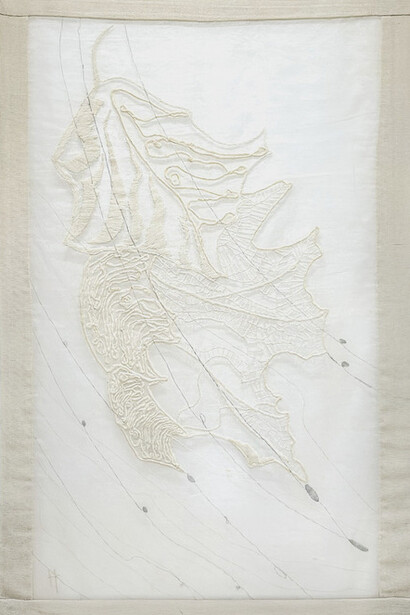
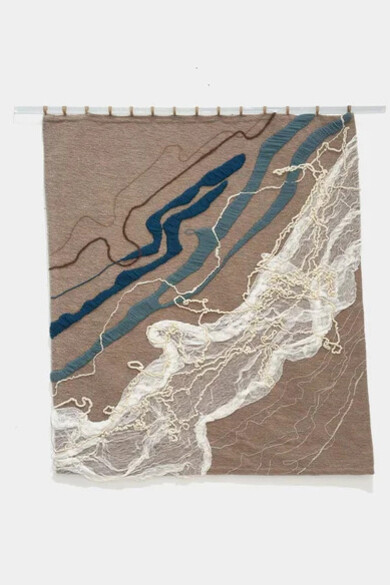
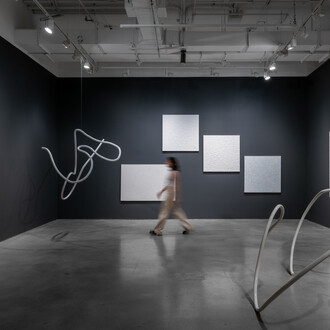
Sapar Contemporary is pleased to announce a two-person exhibition by Benigna Chilla (Germany/US) and Nancy Hemenway Barton (US, 1920-2008). The exhibition brings together original bodies of work that these two women artists created in the relative isolation of their studios in upstate New York and on the coast of Maine. The works on view were made in the 1990s and 2000s and are shown for the first time in New York. Nancy Hemenway Barton, who was a subject of a major retrospective at the Denver Art Museum last year, worked from her studio on a tiny island off Boothbay Harbor in Maine, where she developed a textile practice that was unlike those of her contemporaries. She called it “bayetage.”
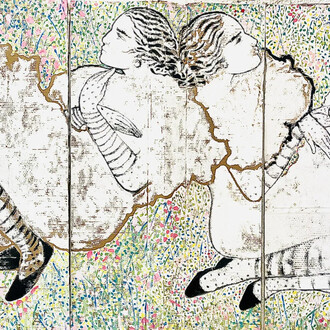
Barton, who was also a poet, used textiles and embroidery as collage or drawing to create lyrical textured compositions, sometimes abstract and soulful, and sometimes tentatively figurative. Benigna Chilla, educated in Berlin by Bauhaus instructors, has been working in her studio in Chatham, NY, since she moved to the US in the late 1960s. This particular body of work involves her original exploration of the printing process: The artist describes her works as layered “planar surfaces consisting of canvas or screen that together convey images with constantly changing focus and appearance”.
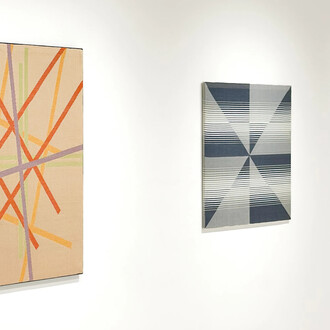
Chilla layers screens with printed and painted patterns over a painted background to create dynamic abstract compositions that are not prints, paintings, or wall sculptures. They defy definition and intrigue the viewer’s eye. Chilla’s formal inspiration comes not only from European and American abstraction but from ancient textiles and sacred geometry of archaeological sites. Chilla has spoken and published about her observations and theories on the relationship between mathematics and art in ancient patterns and in her own practice.