English
 Español
 Français
 Deutsch
 Italiano
 Português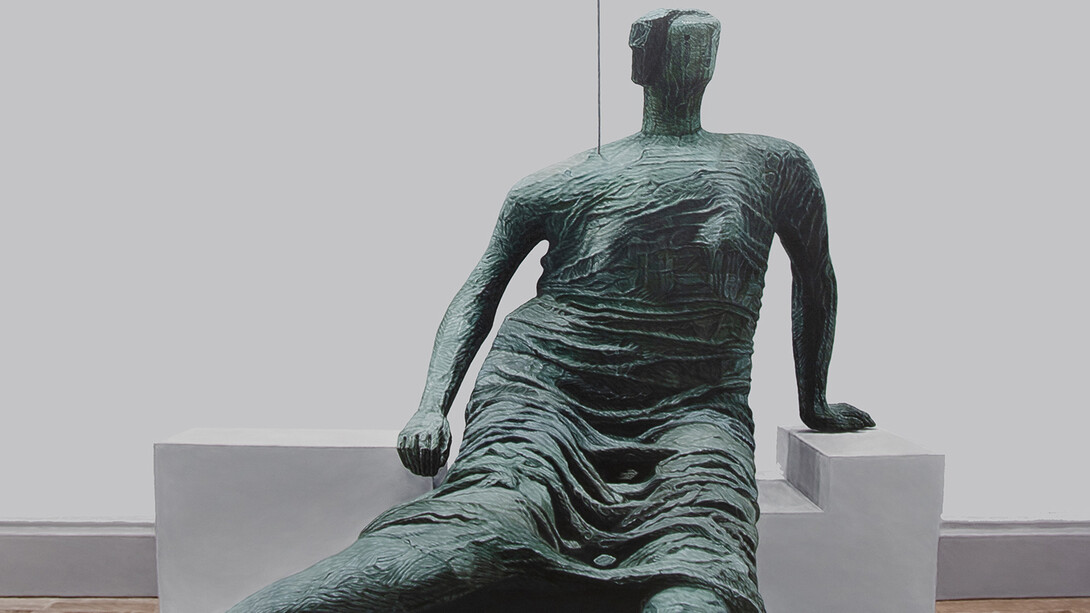
Sullivan+Strumpf is pleased to announce Those cold and timid souls, an exhibition by Australian artist Sam Cranstoun, opening at their Gadigal/Sydney gallery Thursday 23 July 2026.
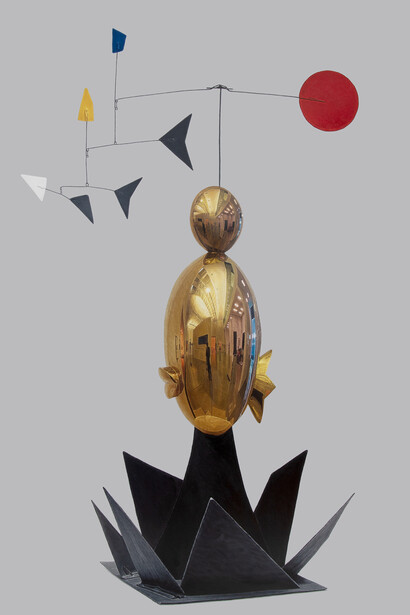
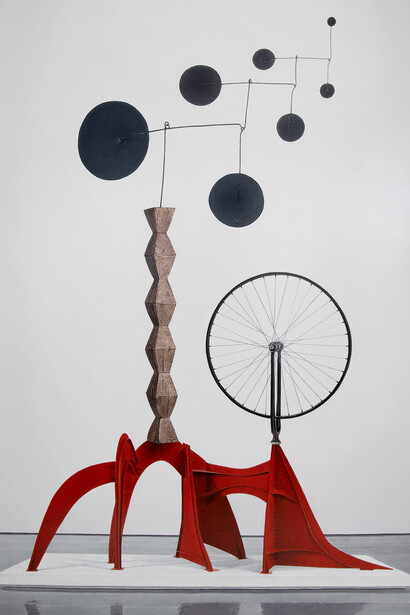
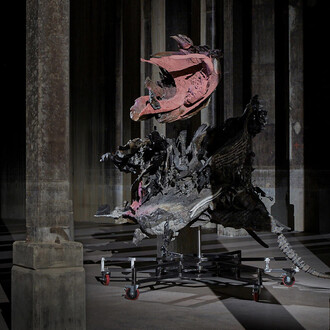
Expanding his Superstructure series, Those cold and timid souls, sees Cranstoun present large scale, speculative “superstructures” that recombine canonical modernist works into playful yet critical hybrid forms.
Through strategies of citation and reconfiguration, the exhibition questions how art history is constructed and understood – particularly from an Australian vantage point, removed from the traditional centres of modernism.
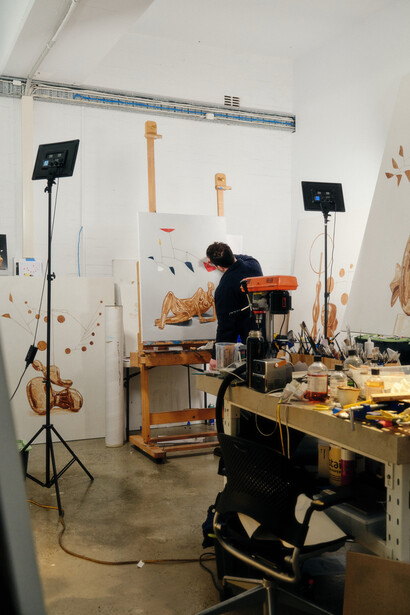
Sam Cranstoun’s practice engages critically with contemporary image culture and its role in mediating our understanding of the past. Working across painting, drawing, and installation, his approach resists linear art-historical narratives, instead assembling fragmentary, associative constellations that foreground the instability of meaning and the contingency of cultural memory; often drawing attention to what is omitted or marginal within dominant histories, opening space for alternative readings and suppressed narratives to emerge.
In this exhibition, Cranstoun extends his Superstructure series with a more ambitious sense of scale and complexity. These paintings propose speculative, often tongue-in-cheek modernist “super structures”—composite sculptural forms that collapse and reconfigure the legacies of canonical figures including Alexander Calder, Constantin Brâncuși, Marcel Duchamp, Jean Arp, Barbara Hepworth and Henry Moore. Through strategies of citation, montage and spatial dislocation, Cranstoun destabilises the authority of the modernist canon, re-presenting it as something contingent, mutable and open to reinterpretation.
By staging these hybrid forms within imagined architectural and exhibition contexts, the works draw attention to the conditions under which art is encountered and historicised. From an Australian vantage point, geographically and culturally distanced from the traditional centres of modernism, the Superstructure series underscores the disjunctures inherent in inheriting and recontextualising these histories, prompting reflection on how meaning is produced, circulated and re-authored across time and place.