English
 Español
 Français
 Deutsch
 Italiano
 Português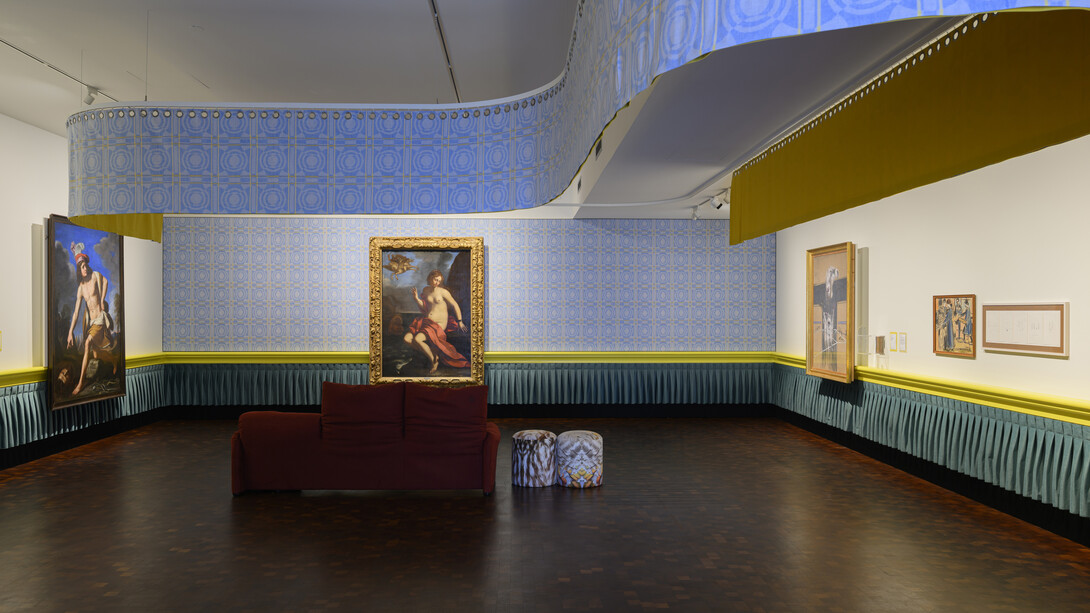
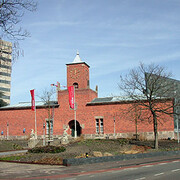
The Van Abbemuseum looks to the next chapter of its collection with a major reinstallation of its holdings. Collection as cosmos, which opens 6 June 2026, takes the cosmos - and its expansive relationship to time - as its inspiration. The reinstallation will coincide with the opening of the Dommelplein - a newly developed ground floor located along the Dommel River - along with the launch of a new initiative, System thinkers.
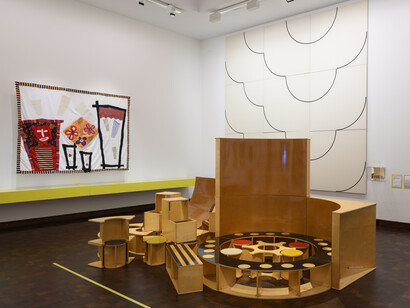
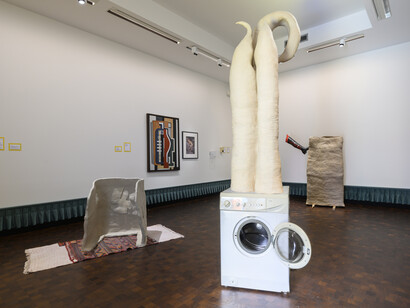
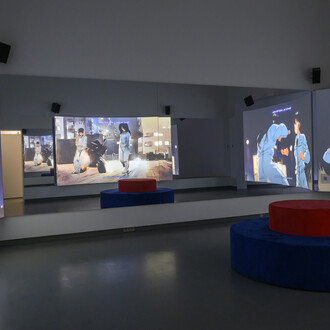
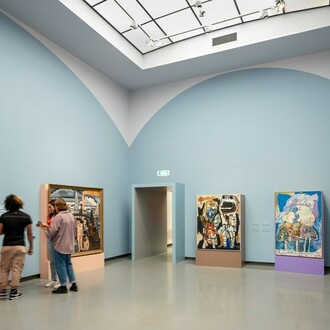
Collection as cosmos brings together more than 250 works in the museum’s collection developed in collaboration with artists, researchers, and educators. Across 11 galleries of the museum, the newly-installed collection invites visitors to experience different kinds of time simultaneously, with each gallery unfolding as a series of interconnected environments. Throughout the collection, artworks are positioned like stars, clustered, dispersed, and re-aligned, inviting visitors to navigate multiple temporalities simultaneously, with each gallery forming part of a larger cosmological order. Highlights include sculptural works by Karel Appel, whose Between banner and flag (1987) is shown for the first time in 40 years; The moon, the child and the river of anarchy by Rebecca Horn (1992); and the oldest work in the museum’s collection Andromeda (circa 1660) by Italian Baroque painter Guercino, which also marks the museum’s deaccession initiative; as well as recent acquisitions of works by Ima-Abasi Okon, Nolan Oswald Dennis, Haegue Yang, and Carolyn Lazard.
The collection is arranged in relation to four different modes of time; Unchronological, Regenerative, Public, and Cosmic, with each strand having been developed in collaboration with artists, researchers, and educators.
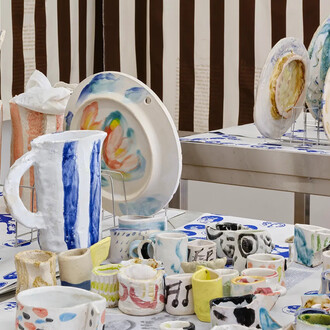
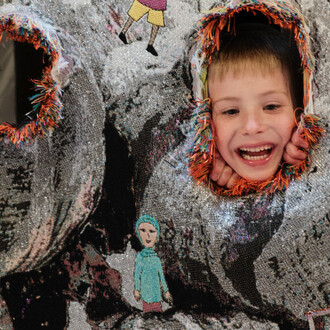
Unchronological Time has been developed with the Johannesburg working group, Another Roadmap Africa Cluster (ARAC). Contained within these galleries is a grotto modelled after prehistoric cave dwelling, in Southern Italy. Household objects on loan from 90 museum neighbours are put in relation to the museum’s collection and the grotto explores how artworks relate both the history of art and our own personal histories.
Developed with artist and death researcher G, Regenerative Time draws on explorations of grief, loss, and transformation, translating cycles of life and mourning into the institutional context. Part of the museum’s research into the lifecycle of artworks, this gallery brings to light the oldest work in the museum’s collections, Guercino’s Andromeda (c. 1660) which has only been shown twice since entering the collection in 1942.
Public Time is inspired by the work of artist Ima-Abasi Okon, and builds on her recent solo exhibition at Van Abbemuseum in 2025 which built on her road running practice. At the center of Public Time is a sculpture forest, which reflects on the role of public space and hosts artworks contemplating different kinds of outside. Here, visitors will encounter Okon’s large inflatable sculptures, designed to resemble the gates of marathons, Between banner and flag by Karel Appel (1987), Untitled (Bamboo sticks) (1994) by Basque artist Cristina Iglesias which resemble a dense bamboo forest made from industrial material, and Rasheed Araeen’s Sculpture no. 3 (Silver grey) (2017), large-scale sculptures made from discarded steel.
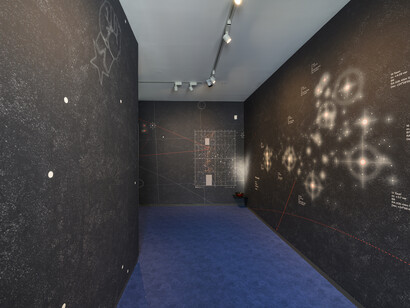
Finally, Cosmic times, developed in collaboration with Nolan Oswald Dennis, connects celestial and earthly rhythms, drawing on Dennis’ work Black liberation zodiac and references to link the Pleiades star cluster to cycles in agriculture. The landscapes on show in this section are arranged in dialogues across time and include Ana Mendieta’s Atabey (Mother of the water) (1981) and Lubaina Himid’s Meat mountains (1984-1985) which are shown alongside earlier examples of landscapes in the collection such as Henrik Chabot’s Slapende boer [Sleeping farmer] (1936).
Returning to the word ‘kosmos’ in ancient Greek, meaning both ‘order’ and ‘chaos/ornament’, with Collection as cosmos the museum explores a fundamental dichotomy between orderly structure and formless potentiality. While ‘order’ and ‘disorder’ are antonyms in modern usage, the exhibition is about embracing non-linear temporalities and the possibilities that occur when we collage works together rather than arranging them along a strict timeline. The launch of Collection as Cosmos features two keynote speeches on 6 June 2026, namely sociologist Gargi Bhattacharyya, author of We, the Heartbroken, and astrologer and Alice Sparkly Kat, author of Postcolonial astrology: reading the planets through capital, power, and labour.
Collection as cosmos takes place over the museum’s 90th anniversary year, which also includes an expanded programme of long-term engagement with artists and temporary exhibitions that activate the breadth of the institution.
Director of Van Abbemuseum, Defne Ayas, says: “At the Van Abbemuseum, we are committed to activating artistic intelligences to explore and prototype how people might live, (un)learn, and move together. From our new collection display, shaped through artists’ practices, to the launch of our new initiative, System Thinkers, we are signalling how the museum will operate in the years ahead, more deeply attuned to the rhythms of the stars, the river that runs through our city, and the communities we serve: from children to designers, from engineers to stargazers.” Senior Curator Yolande Zola Zoli van der Heide says: “We need to change ourselves in order to change the stories we tell about our history, the stories we tell around collections. This is a great lesson from reading the stars because the stories that we tell about the night sky are not objective truths but mythologies we project outward. So by changing ourselves and collective behaviour, we can in fact change what we see in the night sky and what we see in collections. Or following Alice Sparkly Kat’s reminder: “as above, so below,” but also “as below, so above.”