English
 Español
 Français
 Deutsch
 Italiano
 Português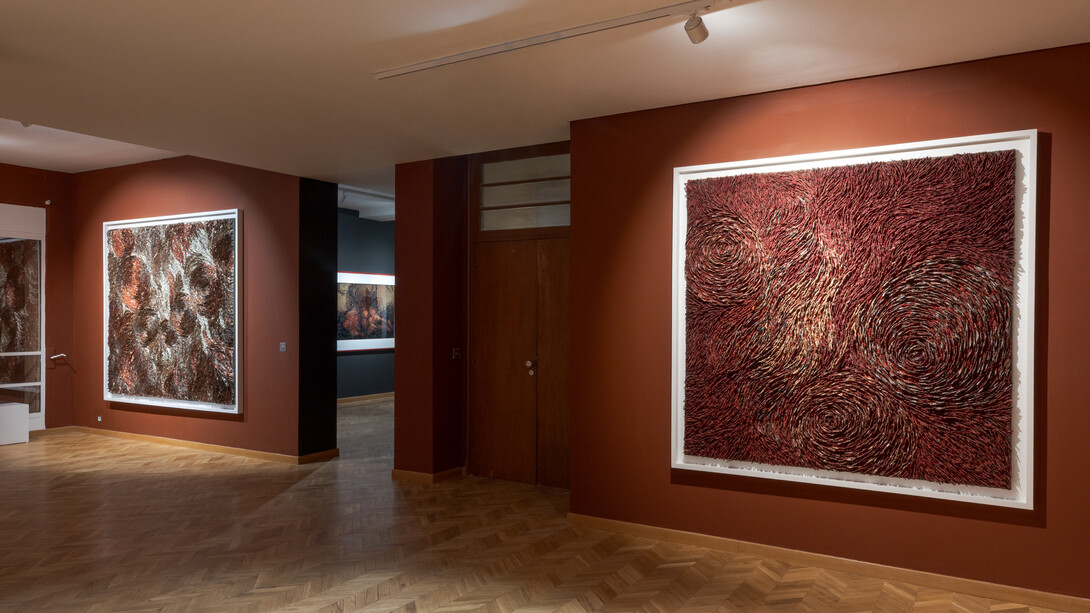
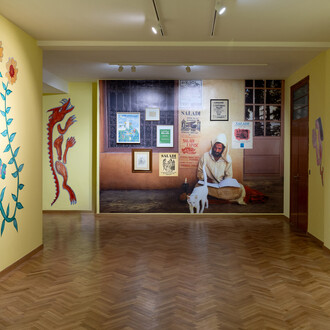
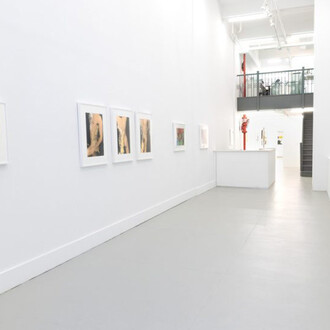
To close its artistic season, Comptoir des Mines Galerie presents Après le feu (Beyond fire), a major exhibition by Khadija Jayi, an artist with whom the gallery has maintained a fascinating dialogue for several years. Khadija Jayi has continued to develop a demanding and deeply inspired body of work since her first solo exhibition at Comptoir des Mines in 2022, where fire becomes a medium, a language, and a revelation. The use of “fire” is never a spectacular gesture here, but an inner necessity: a way of testing the material to bring out emotionally charged forms, constantly oscillating between pain and light, tension and calm, collapse and hope.
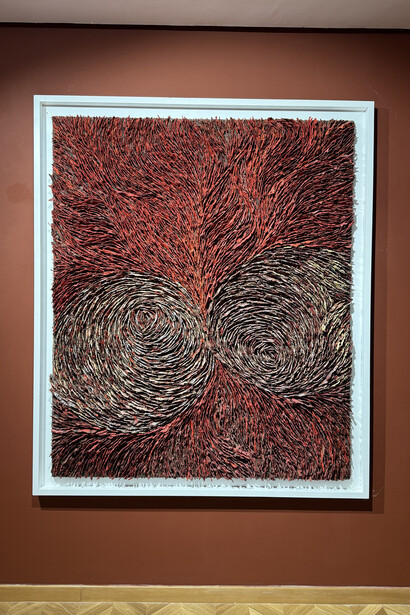
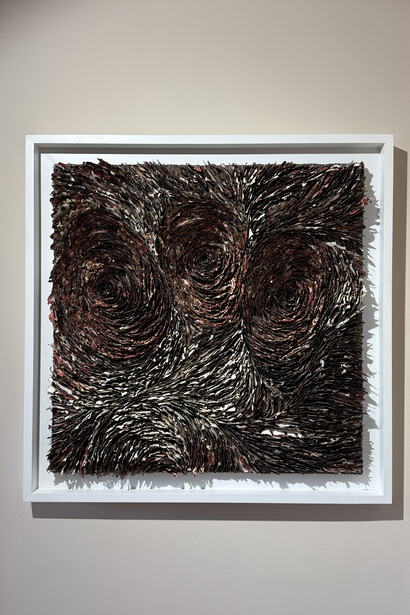
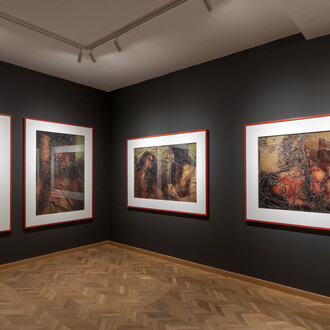
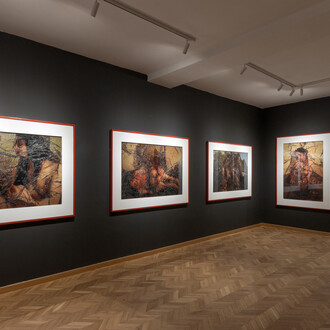
For more than fifteen months, Comptoir des Mines has been supporting the artist in the design and production of this exhibition, conceived as a coherent and immersive whole. The works on display sometimes reveal burnt paper, worked by fire and representing motifs inspired by the traditional sewing of territories subjected to the violence of war and internal conflicts. These fragile and incisive forms evoke the memory of gestures, cultures, and transmissions, while suggesting the traces of larger burns: collective wounds that mark certain landscapes and certain histories.
Other works delve into a more intimate dimension, echoing the artist's inner past. Fire becomes a witness to a heavy social gaze, sometimes judgmental, sometimes destructive. Burning, here, exposes the invisible violence of projections, expectations, and judgments imposed on the bodies and life trajectories of women fighting for their emancipation. Khadija Jayi thus asserts herself as a lucid and sensitive witness of her time, capable of accurately translating the feelings that run through and consume us, without ever illustrating them directly.
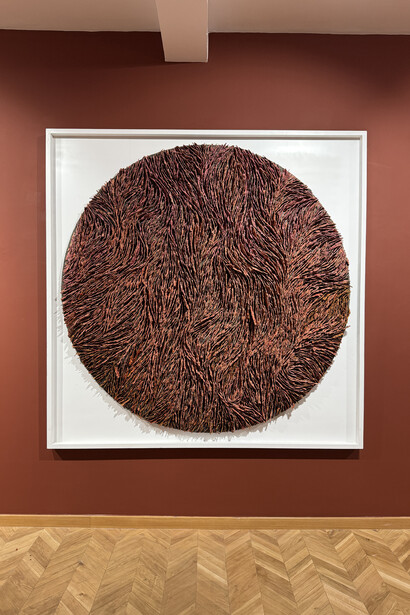
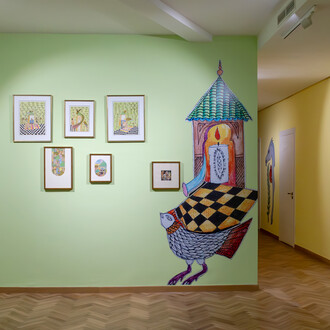
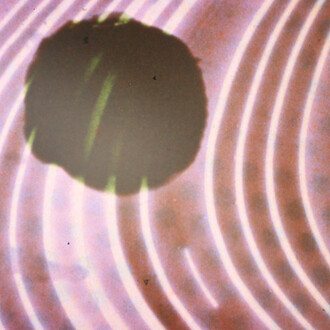
Finally, Après le feu opens onto a space of rebirth. When everything seems consumed, the ashes become fertile. Circular or rectangular shapes emerge, bathed in luminous vibrations and sweeping movements, like so many signs of possible regeneration. After destruction, life appears and establishes a new lexicon of colors and shapes. It is in this fragile balance between loss and renewal that Khadija Jayi's work finds its strength and serves as an example to us.