English
 Español
 Français
 Deutsch
 Italiano
 Português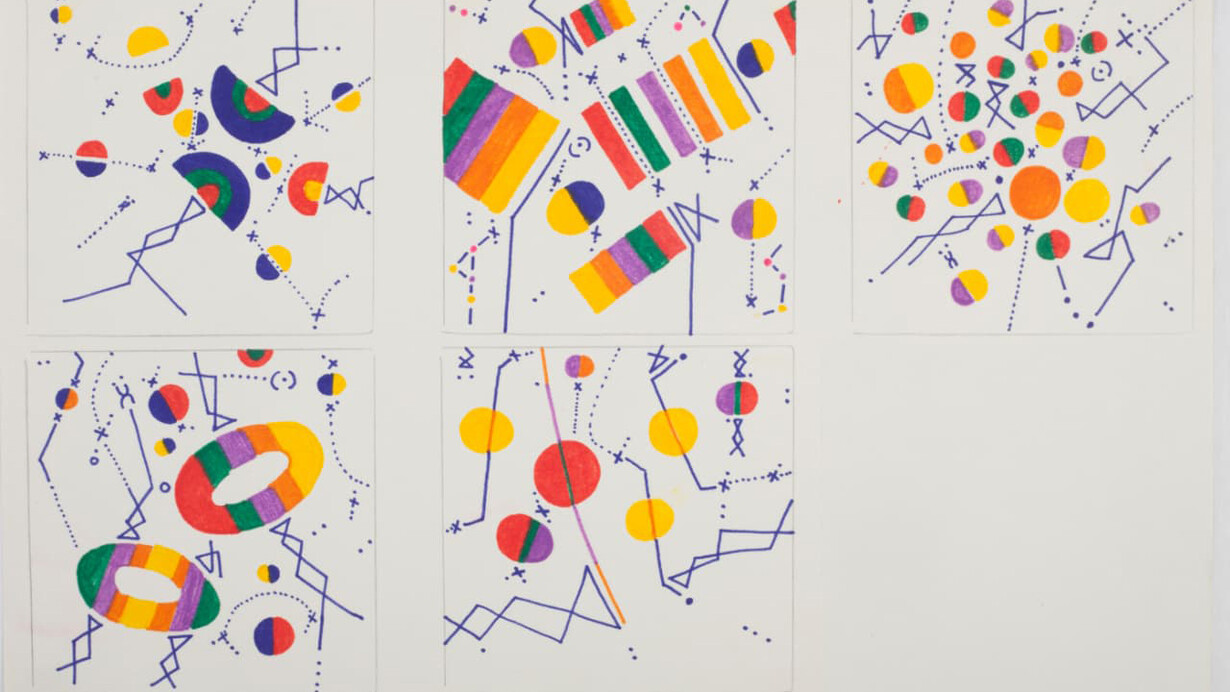
Geometric abstraction forms a territory that remains active, shaped by constant reinventions thanks to its inexhaustible capacity to transform the perception of what surrounds us. In a present dominated by the opacity that concentrates the vital and figurative mimesis of algorithms and machines, it continues to operate as a sensitive system of formal and spatial operations that alter new physical-visual habits, dismantle naturalized perceptions, and make tangible certain structures that silently organize contemporary experience. Like oxygen, its presence often goes unnoticed: it moves through bodies, spaces, rhythms, bonds, and ways of inhabiting that we rarely pause to observe.
Across different generations, contexts, and languages, the works gathered in this exhibition depart from a shared intuition. Geometry appears as a tool for reimagining the invisible dimensions of reality: energies, tensions, cultural frameworks, political structures, affective systems, and spatial relations that remain hidden beneath the surface of everyday life. Abstraction thus becomes a sensitive infrastructure of experience.
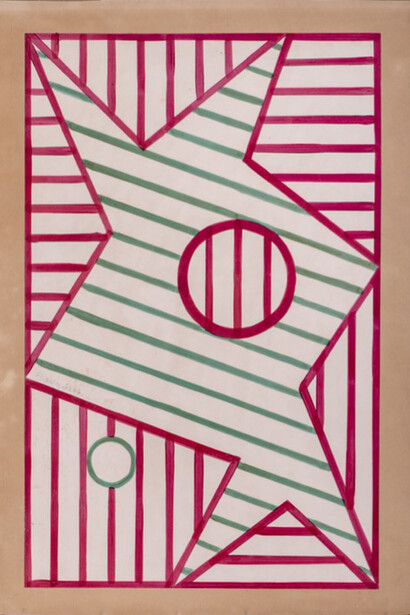
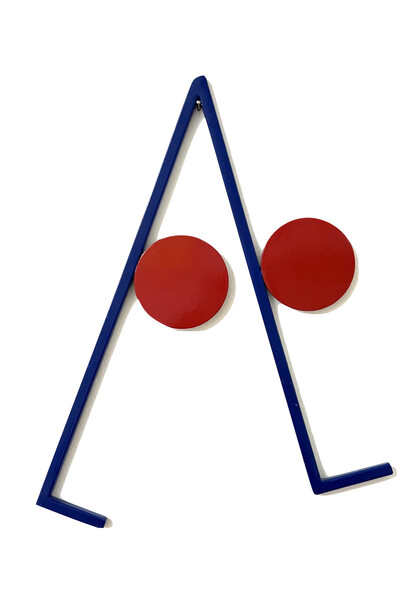
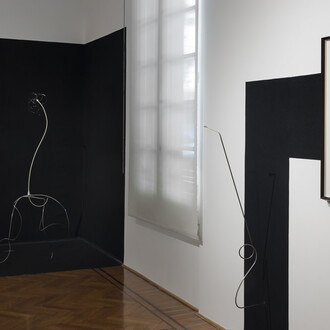
In the investigations developed by Margarita Paksa, Rodolfo Elizalde, and Noemí Escandell during the 1960s and 1970s, geometry operates as a mechanism of displacement and critical overflow in relation to the institutions and inherited languages of traditional representation. Within the experimental and politically radicalized context of the Argentine neo-avant-gardes, the passage from plane to space, the ambiguous relationships between figure and ground, minimal structures, material austerity, and the literalness of objects did not imply an apolitical retreat. Rather, it pursued a necessary transformation of sensibility, capable of calling established conventions into question.
The artwork asserts itself as physical presence, situation, and perceptual structure; it no longer represents the world, but intervenes directly within it. The broken, folded, or expanded plane reaches into real space, demanding a physical experience and a temporal presence from the viewer. Where modern abstraction had sought order and balance, these practices introduced fluctuations, voids, and tensions that announced new conceptual and political ways of understanding the relationship between art, body, and experience.
In earlier years, the cosmological investigations of Víctor Magariños D. had already prefigured a perceptual expansion, though one projected in parallel with the new scale of scientific and technological changes that emerged during the first half of the twentieth century and would radically transform the perception of the world in the postwar period. His lines, points, reliefs, and suspended structures attempt to capture invisible forces, energetic fields, and systems of balance in constant transformation.
Here, geometry becomes a tool for imagining a universe as dynamic as it is unstable, traversed by nuclear physics, magnetism, cosmic expansion, and new conceptions of matter and time arising in the atomic age. His works propose a sensibility oriented toward perceiving that which exceeds the human scale: forces, vibrations, rhythms, and connections between the mind, space-time, and the cosmos.
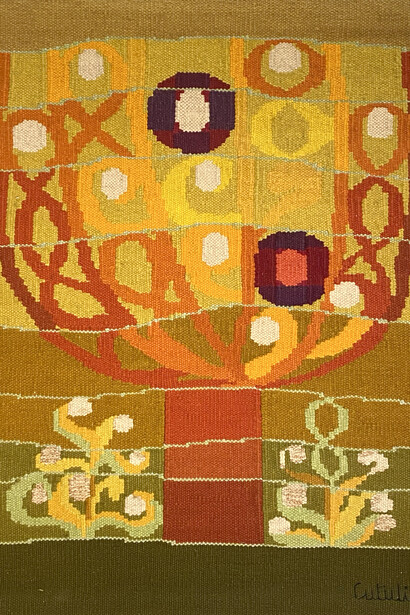
The textile practices of Guido Yannitto, Gracia Cutuli, and Pajita García Bes shift these inquiries toward territories where abstraction intertwines with cultural memories, technologies, and collective forms of knowledge. Geometry thus acquires a situated, porous, melted, or frayed condition. Textiles function as surfaces of translation between diverse temporalities and worldviews: between the digital and the manual, between contemporary cartographies and Andean traditions, between nature and rationality. In these works, oxygenating geometry means restoring to it a historical, material, and political density; allowing it to become once again contaminated by territory and body, where line and color coexist with a tactile, historical, and affective dimension in order to recover forms of knowledge long displaced and to unsettle the Western and presumptuously universal narratives of art. The textile weave thus functions as a form of silent resistance to the logics of cultural homogenization associated with Western modernity. Abstraction ceases to aspire to purity and instead assumes its inevitably mestizo, situated, and relational condition.
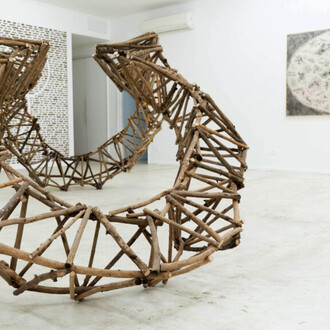
The weightless architectures and spatial assemblages of Mariela Vita extend these inquiries into contemporary scenarios where the intertwining of design, fiction, urbanism, and everyday experience responds to the need to imagine new forms of coexistence. Vita constructs open environments in which objects seem to reorganize themselves constantly, as though space could become flexible, mutable, and affective. Bodies reorganize their relationships with objects, with architecture, and with others, turning geometry into a platform for spatial reimagination and experimentation. Far from the modern rationality of functional architecture, laden with both utopia and control, Vita draws inspiration from Eastern cultures to propose fantastical environments that enable other ways of moving, relating, and inhabiting.
Through different historical trajectories and sensibilities, the works of these artists contaminate one another in space, offering each other oxygen and sharing a common question: how can new forms of relation between the subject and the world be imagined in contexts deeply transformed by politics, science, technology, and cultural disputes? From the cosmological expansion of the postwar period to the experimental and political neo-avant-gardes of the 1960s; from contemporary discussions of territory, identity, and memory to the invention of future habitats, these works unfold languages capable of moving between plane and space, between reason and intuition, between structure and sensuous experience. To oxygenate geometry means to free it from its historical rigidities and restore to it mobility, breath, and critical power, so as to reimagine our position within an increasingly abstract contemporary world.
(Text by Javier Villa)