English
 Español
 Français
 Deutsch
 Italiano
 Português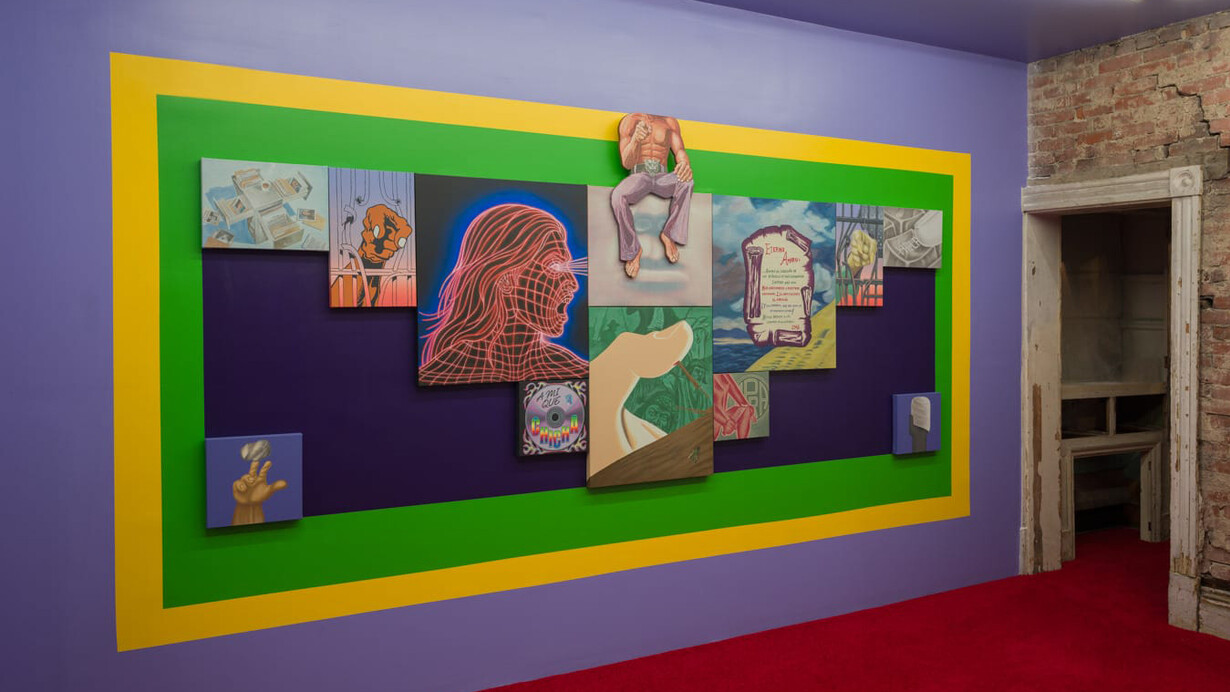
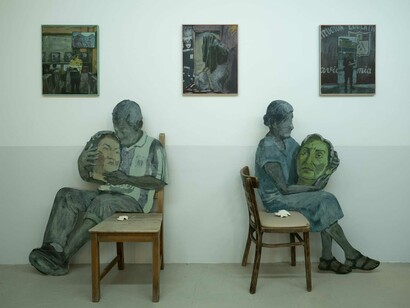
In La ceniza ya no recuerda qué causó el incendio. / The ash no longer remembers what caused the fire., each room of the Mattress Factory’s 516 Sampsonia Way building has been transformed into a narrative environment that brings together Claudia Martínez Garay and Arturo Kameya’s distinct approaches to space, materials, and imagery. Drawing on their shared Peruvian heritage, this collaborative presentation is deeply rooted in lived experience, offering layered visual interpretations of the region.
Visitors pass through nine interconnected rooms across three floors, where new and commissioned works converge around the mythologized figure of Túpac Amaru II—an Indigenous leader and descendant of the last Inca ruler Túpac Amaru. Best known for leading the final major rebellion against Spanish colonial rule, his actions became a lasting symbol of emancipatory movements across the Americas.
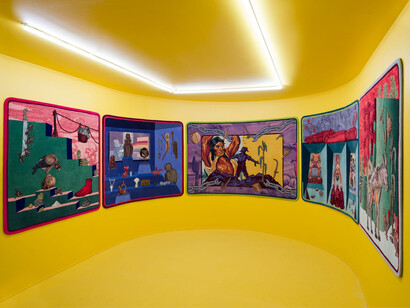
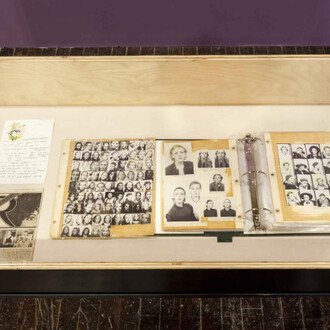
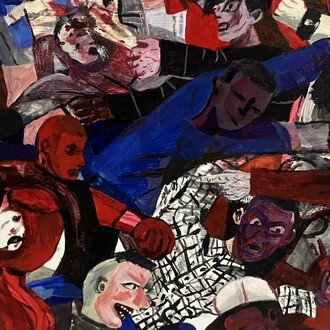
You might experience these constructed spaces as a sequence of encounters, each unfolding like a layered memory or a threshold into another world. Martínez Garay’s tuftings and acrylic paintings draw deeply from archival Andean imagery, where fragments of the past and future gather, overlap, and begin to speak anew.
In a luminous, circular yellow room, the works presented echo historical engravings and colonial visual language while opening onto the Quechuan concept of “pacha,” where time and space are intimately entwined. She describes researching archives as “they appear—across different years, motives, and formats,” emphasizing her interest in re-reading (or even misinterpreting) them to bring forgotten histories back into orbit.
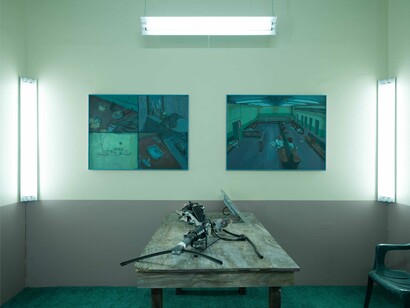
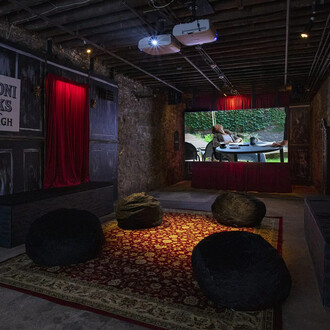
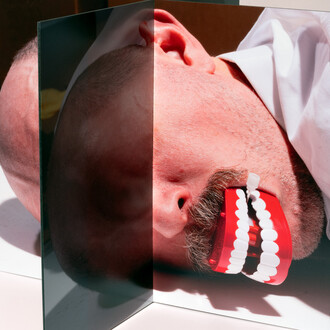
Works such as Agavote (2022), made of sublimated aluminum, emerge from soil-like landscapes that blur the boundaries between interior and exterior space. Kameya’s contributions unfold as atmospheric architectures, where space itself seems to hold resonance and vibration. His desaturated palette recalls the plastered adobe houses of his childhood neighborhood. Found and sculpted objects—painted plastic cockroaches, mechatronic entities, and ceramic chickens—populate debris-filled interiors reminiscent of schools or offices, shaping the viewer’s experience through light, texture, and rhythm, a choreography of tonalities.