English
 Español
 Français
 Deutsch
 Italiano
 Português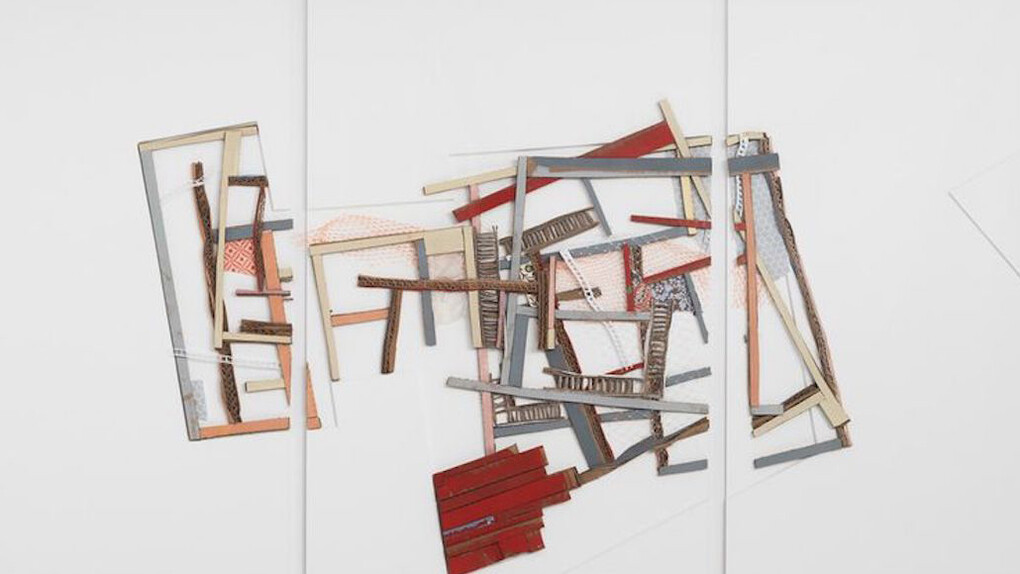
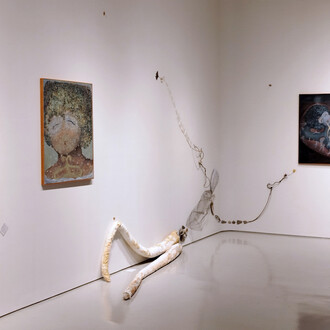
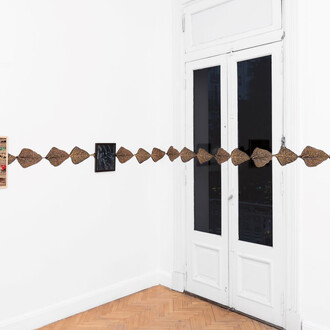
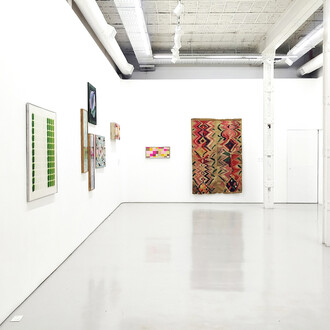
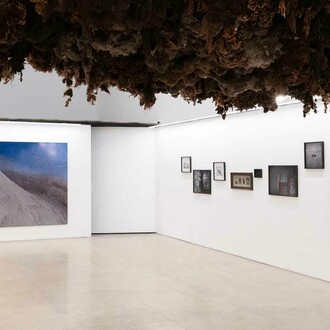
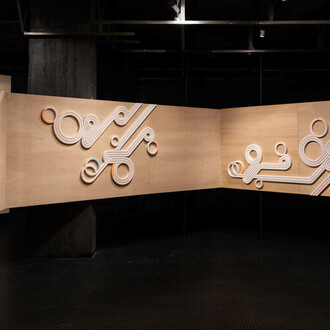
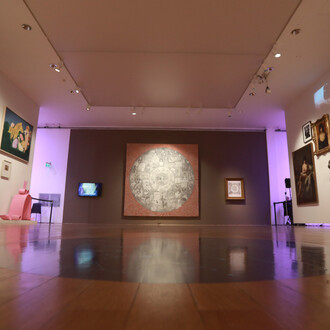
The three rooms on the first floor present an anthology of works by the Uruguayan artist Ana Tiscornia in dialogue with a selection of works by Alicia Mihai Gazcué, a key figure in Latin American political conceptualism of the 1970s.
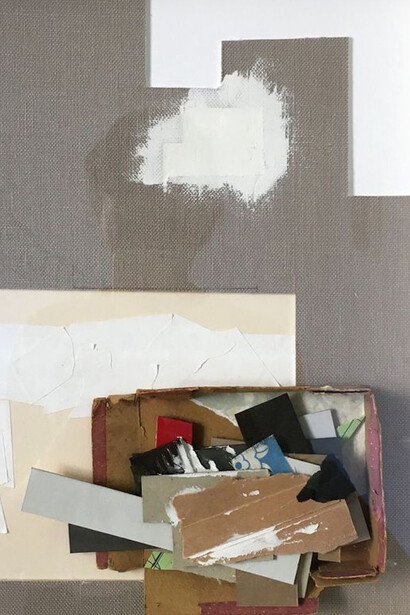
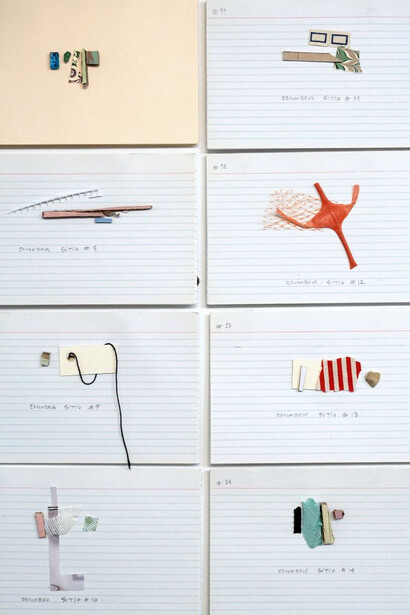
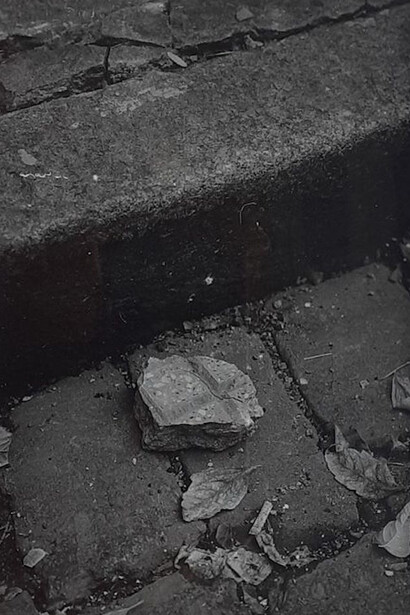
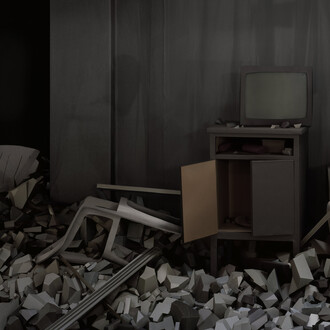
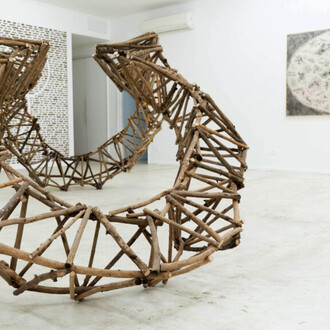
In Ana Tiscornia’s practice (Montevideo, 1951; based in New York since 1991), a subtle sense of humor, a drive toward repair, and a lucid optimism prevail, all of which underpin her socially engaged perspective. Trained as an architect, references to inhabited space recur throughout her work. The exhibition brings together pieces produced over the past fourteen years: collages that evoke collapsed and subsequently rebuilt architectures; photographs of deteriorated walls “repaired” with cement applied by the artist herself; and series in which she reveals a distinct poetics within found objects and remnants. Her practice is defined by a restrained, precise gesture capable of drawing poetic intensity from modest, everyday materials—a transformation that grants discarded matter a renewed order and possibility. It speaks to a desire to hold together what is falling apart, or to reframe its conditions of visibility.
Tiscornia has received numerous awards, including the Konex Mercosur Prize, a Special Mention at the Havana Biennial, and a Pollock-Krasner Foundation Grant. Her work has been shown internationally in institutions and galleries in New York, Boston, Montevideo, and Madrid. She has also collaborated with Liliana Porter on performative works presented at venues such as The Kitchen in New York and the Museo Moderno in Buenos Aires, among others. In 2027, the Museo Nacional de Artes Visuales in Montevideo will present a major retrospective of her work.
Alicia Mihai Gazcué (Montevideo, 1949; based in Bucharest, Romania) was “invented” through the playful imagination of Ana Tiscornia and Liliana Porter. Through the complicity of a network of international curators and critics, she developed a fully fledged artistic career that included participation in the Shanghai Biennale and the BP17 Performance Biennial, as well as exhibitions in galleries in Madrid, Boston, and Buenos Aires, along with critical texts authored by scholars such as Inés Katzenstein and Gabriela Rangel.
Alicia adopted her surnames from the grandmothers of Ana and Liliana. She was “discovered” after decades of exile in Romania, where she is said to have taken refuge following political persecution during the Uruguayan dictatorship. Her figure constitutes a narrative device characteristic of the humor that permeates the collaborations between both artists. She unfolds as a large-scale performative construction, sustained by a network of strategic collaborators within the art world, while also operating as a sharp deconstruction of the contemporary impulse to recover radical yet forgotten figures.
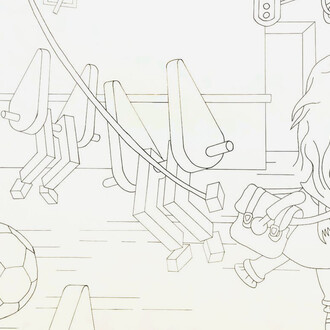
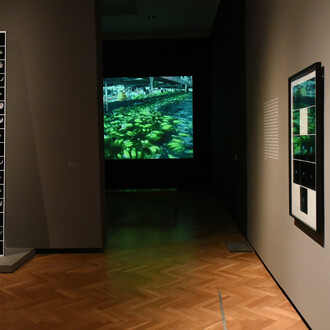
The film Passing between them documents a fictional yet forceful performance from the 1970s, in which visitors are compelled to pass through a narrow passage between two armed soldiers. This work crowns a body of Alicia’s pieces marked by an intimate, emotive atmosphere that tempers the austerity of her political conceptualism. Across them, the intertwined sensibilities of Ana Tiscornia and Liliana Porter quietly resonate.
In her architectural training, Tiscornia learned to read space through plans—a logic she later translates into her visual practice to examine the fragility of simple materials and, by extension, of the domestic spaces that sustain us. A similar logic underlies the existence of Alicia Mihai Gazcué: an artistic figure born from the meticulously humorous construction of her own fictional documentation. These records, arising from poetic invention applied to modest materials, form an evidentiary body that projects a sense of presence, where artifice does not function as deception but as a construction endowed with its own internal truth.