English
 Español
 Français
 Deutsch
 Italiano
 Português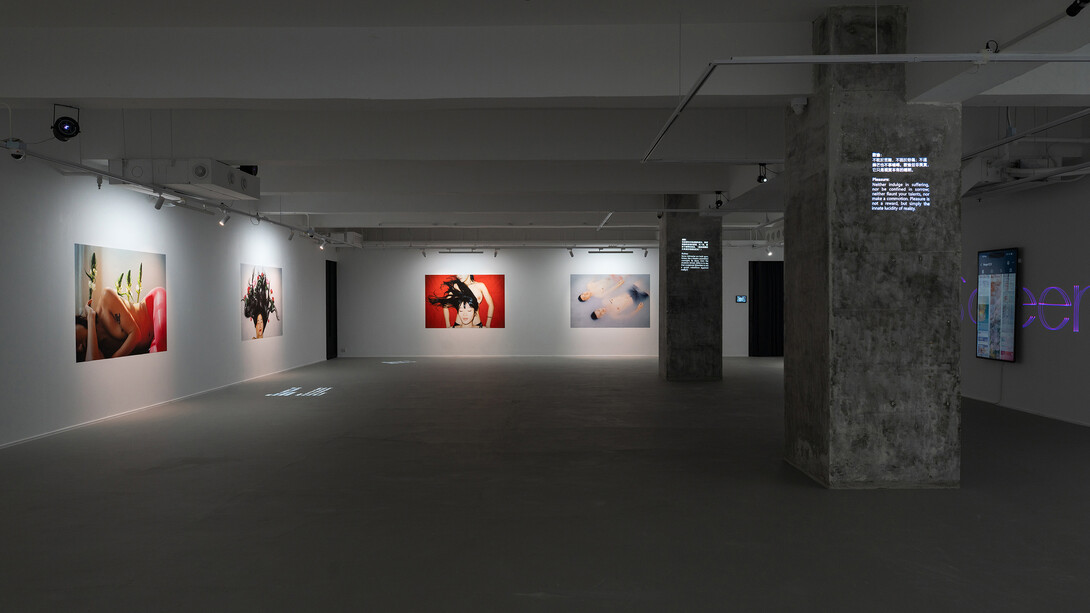
De Sarthe is pleased to present Relationship duplicates, the gallery’s second solo exhibition by Beijing-based artist Lin Zhipeng (No.223). A seminal figure in contemporary Chinese photography, 223 has long utilized the lens to explore the pluralistic forms of relationships. This exhibition highlights the tactile quality of relationships, where each intimate moment presents a sample of a “duplicate”. The term “Duplicates” is redefined here. Far from being an imitation or a copy, these “duplicates” serves as a supplementation and extension of relationships. Without weakening or replacing the relationships, these lived excerpts preserve the nuanced emotions and secluded moments in each encounter. Presenting as a "black box" of modern intimacy, Relationship duplicates opens on May 16th and will be on view until June 27th.
In this digital era, human connections are often mediated by screens that bridge geographical gaps but widen emotional ones, creating a paradox central to 223’s practice. For 223, while the rise of technology enables unprecedented convenience, it also isolates people, catalyzing a social atomization the younger generation has to navigate. Despite being an artist who rose to international recognition through social media and built his professional connections online, his work does not stem from technological motifs but reveals a strong focus on the physical world.
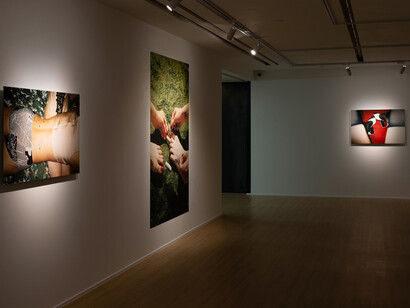
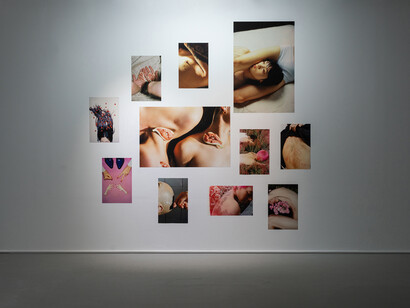
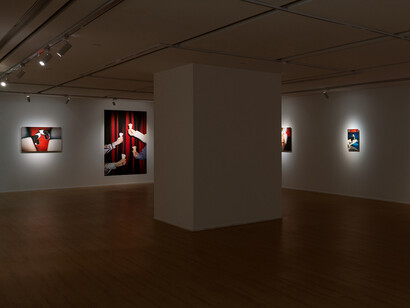
Driven by a pursuit of authenticity, 223’s practice revolves instinctively around the tactile. Upon entering the gallery, visitors will find themselves surrounded by four 2-metre-tall photoprints of different body parts, set against smaller and more sensual images. These juxtapositions emphasize a raw bodily experience, stirring a heightened awareness of viewers’ own physicality. Through the artist’s gaze, physical expressions are elevated. The temperature of the skin, the dampness of breath and the weight of a limb, all constitute an undeniable reality that substantiates our presence.
Moving into the expansive secondary space of the gallery, the focus shifts to a 1.6-meter smartphone installation featuring 223’s social media presence. While social media serves as the primary interface for his work, here it represents an unbreakable boundary that distances people from deeper connection. The capacity to bond offline is stripped away when virtual connections can be builtwith such promptness, ease and instant gratification. Positioned on both sides of the smartphone are two curated photo collages enveloped in physical motions and temperatures, posing a rebellious gesture against the screen. Nudity emerges here as a tool for inward exploration to extract the "purity of being" from a world of artifice. By removing the clothing that is often deemed as markers of social surveillance and consumerist identity, the body is liberated and returns to its natural state, offering an ontological rescue to the alienation fueled by the intervention of technology.
223’s visual practice extends beyond humanity. He explores the relationship between humans and other beings, objects, nature and the world. This experimentation highlights a prominent motif in this exhibition: time. Every material possesses its own clock, forging a rhythm of constant transformation. Through a splash of water, the burning embers of a cigarette, and the blossoming of flowers, the fluidity of time is materialized. And beneath the passionate vitality of these images lies an inevitable question: when and how does the moment pass?
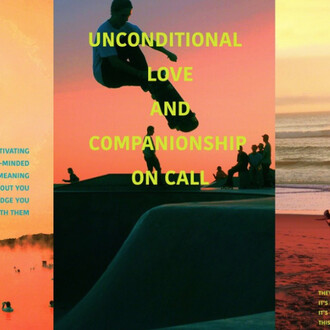
Weaving between the artworks, projected text shares the artist’s interpretation of the exhibition motifs. Rather than an attempt to define the images, these texts serve as another form of “duplicates”, continuing and contextualizing the generation’s collective unconsciousness, inviting viewers to reconstruct the stories hidden behind these sealed moments.