English
 Español
 Français
 Deutsch
 Italiano
 Português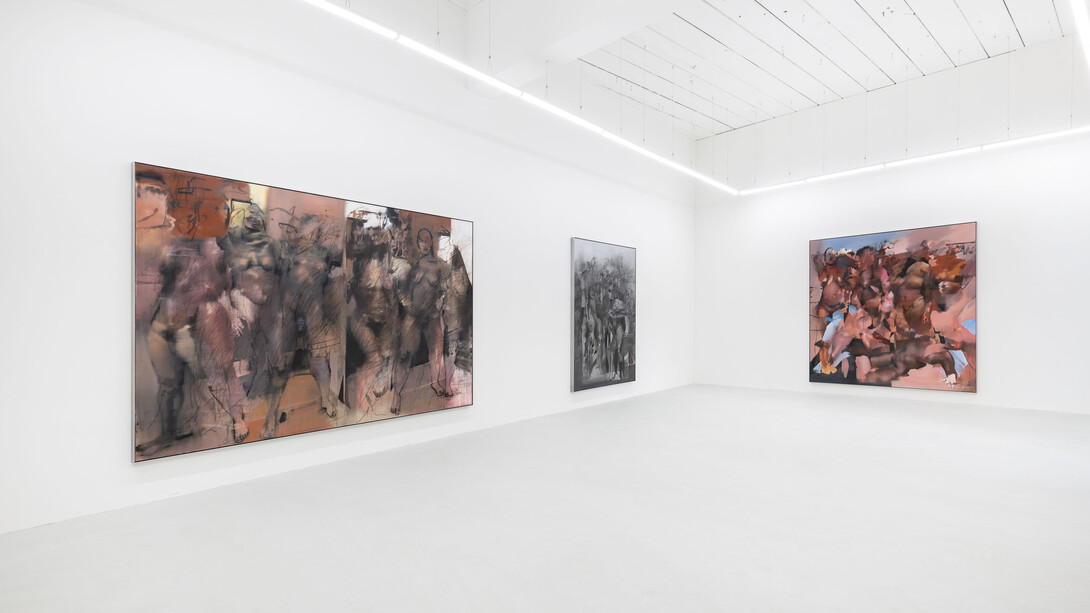
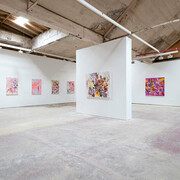
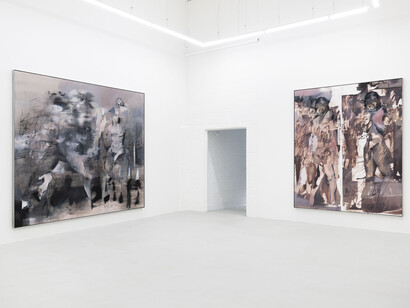
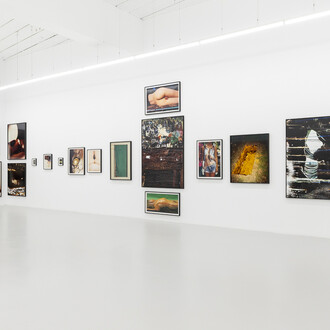
Reprise unfolds across two exhibitions: at Hannah Barry Gallery (4 June - 12 September) and at Hauser & Wirth New York (10 September - 24 October). While both exhibitions emerge from the same body of work and conceptual framework, each presents a distinct group of paintings rather than a restaging of the same show. This is George Rouy’s fourth solo exhibition at Hannah Barry Gallery since 2017.
The title of the show Reprise comes from the Old French reprendre (“to take up again” or “resume”). Continuing his episodic approach to exhibition-making, Rouy uses the term to revisit and expand recurring ideas within his practice, the pluralized body in states of transformation, reconstruction, reformation and becoming. Across these works, repetition is not treated as sameness, but as a process through which difference and change emerge.
In contemporary culture, reprise is no longer only a musical or performative repeat. Repetition is a propulsive strategy for navigating information overload, nostalgia and digital memory. The reprise — the return of a theme, image or gesture through variation — shapes how identity is performed, how media is consumed and how history is processed. Through loops, sampling, and continual reworking, images, gestures and meaning return in altered and refreshed forms. Rouy approaches painting in a similar way: recurring motifs, symbols and compositions become sites of instability, renewal, and reinvention.
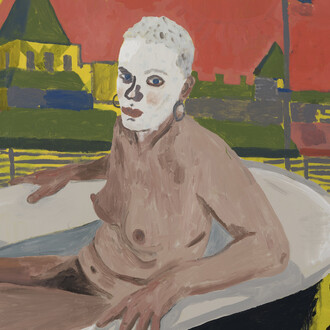
The new paintings in Reprise began in drawing. Torso, a single charcoal work on paper, is a moment of micro-observation: a return to the real, revisiting the body in back-to-basics mode. Torso is transferred to its counterpart life-scale coloured painting not in a straightforward leap of reproduction, but as an extraction exploring translucency of skin, muscle and fat as a co-existent semiabstract surface: the act of repeat introduces newness, context, and evolution.
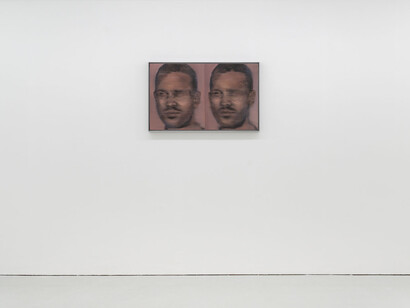
The show looks at time, two times - images of the same figure, body or face shown a few seconds apart or as doubled temporalities. Paintings that seem almost to be looking at themselves, creating an unstable mirror, memory imprint, or physiological and pathological ‘after image’: profound repetition can equal profound difference.
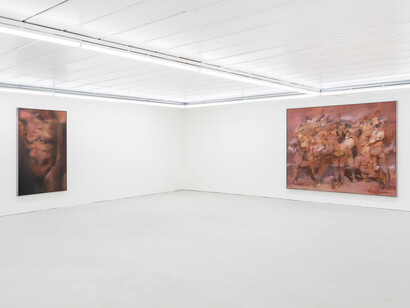
The new series of ‘carry’ paintings which are all titled Procession, and all earth or mud coloured, red tones degraded or diffused to the point the surface of the painting feels faraway or faded. The compositional structure is of a single, larger than life body who is being carried, a large-scale depiction of collective care. The genealogy of these works could be in the pity, compassion and mourning of classic pieta or deposition images, but Rouy’s responsibility is to understand the time in which the work is being made, and the mood of the Procession paintings is part of this consciousness. To this end the feelings of limbo, limpness, lifelessness are as much part of his subject and preoccupations as the energetic survival impulses of carrying, care and community. Overall, this group of paintings has the feeling they both ask and answer a wider question: what can we do together and what do we do to each other? Today’s question is also a reflection on historical precedent: we have carried responsibility; we have done this before.
Hannah Barry Gallery Peckham since 2007. By contrast to this reflection on flesh and blood mortality, the immaterial formless being and otherworldly phantom are ideas that Rouy has pursued in a series of monochrome works which make visible transient aspects of form and atmosphere - anatomy briefly indicated. In Reprise new silver and graphite paintings present states of inner solitude in the shadow of the crowd, movement with stasis, the solarised with the unexposed, the closed interior and the expanded landscape. These disembodied worlds are governed by an internal language of gesture, where the presence of many hands make space - fist, clasp, grasp, grip, hold - for their own self-determined symbolic meanings.
Rouy also introduces Unknown, a series of small paintings depicting fabricated account identities used by bots. These works should not be read as direct commentary on AI, but rather as anti-portraits: autonomous nonentities, composites of technology without stable origin or natural truth onto which nevertheless we might find we project belief, symbolism and emotion.
In philosophy, repetition has long been understood not as the reproduction of the identical past but as a creative act capable of producing the radically new. Thinkers including Søren Kierkegaard, Gilles Deleuze, Simone Weil and bell hooks approached repetition as a force tied to becoming, attention, discipline and change. These ideas resonate throughout Reprise, where the body appears variously as an unstable carrier of memory, sensation, and projection — continually shifting between recurrence and reinvention.
In our own time Nikolaj Schultz - whose work has heavily influenced George’s practice - frames repetition and metamorphosis as central to a new existential condition shaped by ecological crisis and the Anthropocene: in our own age of reprise, it is the recomposition of questions which offers a vital structure for survival, memory and transformation, for eventually saying something new.
Reprise proposes not as return to sameness but a condition of continual transformation, resisting fixed identity and singular resolution; remaining in a state of transition, reappearance and reformation. No one guards time — the work guards its own time.