English
 Español
 Français
 Deutsch
 Italiano
 Português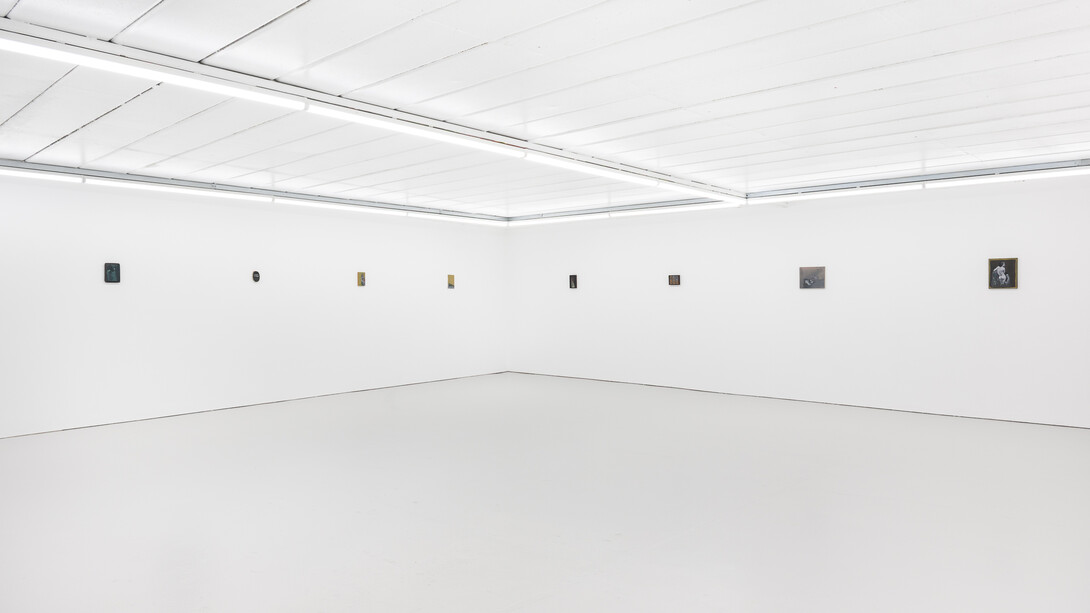
Born in East London, Norman received his BFA in Painting from Chelsea College of Art in 2006 and completed the Turps Banana Painting Programme in 2016. We organised two solo shows of his work, Ethos in 2017 and Serious pursuits in 2018. Norman died after a short illness last autumn. Prior to his becoming unwell we had - after long dialogue and persuasion - agreed on a third exhibition, though we had not yet discussed its focus or contents.
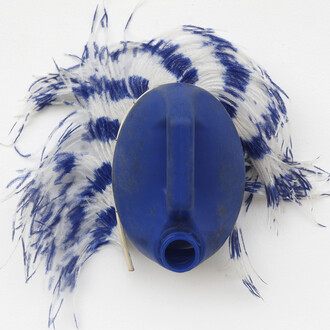
As Norman described it, painting was a process of teaching himself how to see. He left behind many paintings, sculptures and painted sacks of all materials, shapes and sizes. Norman’s work and Norman as a person fell both in and outside time. He scrutinised everyday life through enigmatic, highly personal paintings and sculptures and a series of recurring motifs.
His subjects were consistent and few, pursued and repeated in hypnotic loops (sometimes the loop a subject in itself). We may be familiar with his paintings of tennis courts (tightly cropped white service lines and side lines on bright green or net and headband sagging between two posts); the party (always the same celebration; corner of a table loaded with fancy cakes and sandwiches, children in hats seated with attendant adults), the island (always the same view; rocky outcrop, mosque and minaret, little pastel houses at water’s edge, little white church atop the hill, sea very still, small swells of surf), and the boxing (observations of obscure fights, boisterous nocturnal energies). The question was always were you looking at a painting from a photograph or its negative, or from a fragment of memory or from the pure play of the imagination. In the end it didn’t matter because you were there, or as he might say, “in the loop”. Such was the vibrancy of each picture.
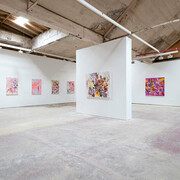
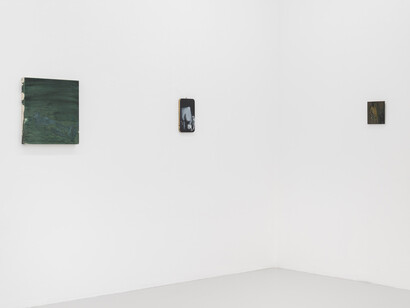
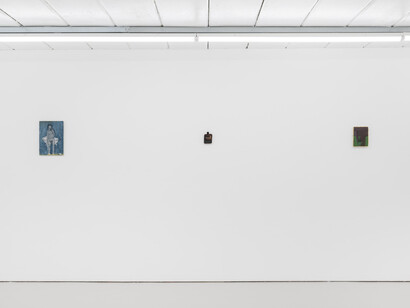
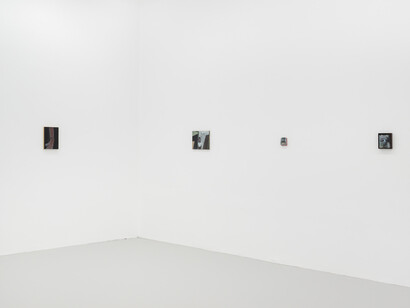
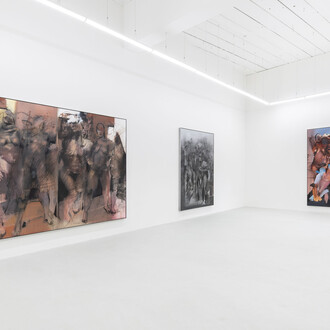
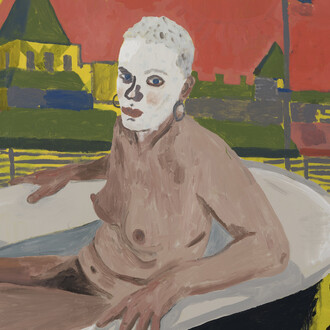
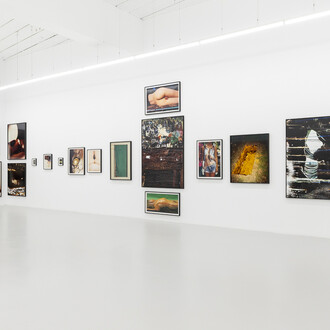
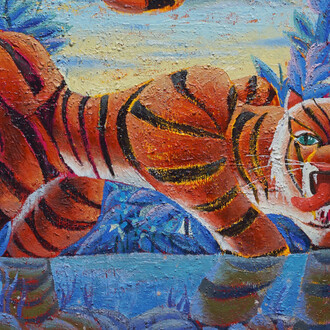
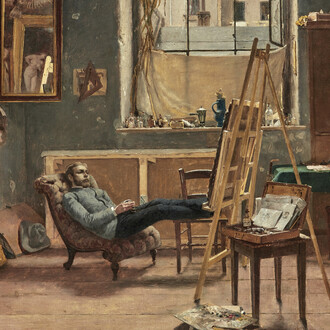
This first posthumous exhibition has been selected from works in Norman’s Shepherd’s Market studio. Setting aside those subjects which we knew we have chosen to exhibit 32 unseen works: self-portraits, paintings made from life or through life drawing, and a number of paintings of repose (images of lying down, resting, floating or sleeping). Narratives, if there are any, remain hidden, nevertheless inviting the viewer into a generous space where the mind can wander.
Norman had a few near-death experiences in his lifetime, one in particular after a car accident recounted by his wife Sacha: “...whilst in the coma, he saw his family around his bed side and during this out of body experience, he felt like he had an encounter with a higher power. He told the presence he hadn't finished his work, and if allowed to return, promised to paint every day for the rest of his life.” Partly because he was always tired and never felt rested, and partly because of these profound experiences, the recurrence of resting, floating and lying down positions hold significance in his visual language.
The self-portraits - which feel by contrast wide awake - are a noble reflection of how Norman saw himself, a representation without words in which deeply personal identities and emotions are embedded. Norman had many demons that he battled and conquered over the years. He was acutely sensitive to the state of the world and suffered terrible anxiety, insomnia and self-doubt rarely witnessed by those around him, held mainly in his head. We notice him lurking in the background, other times front and centre of the composition, and even shown in the guise of a sharp-toothed monster or red-eyed demon. Taken together this variety of self portraits reveal a deep exploration of identity, an unresolved puzzle of inner selves, and overwhelming presence of magical inner worlds past and present.
This show is titled No rush as Norman never liked to rush things. Religiously wearing a watch he took his time in whatever he was doing, measured, reliable and thorough in taking his time to complete at his own pace. Equally if he asked for something, he always qualified it by saying “no rush”. The tragic irony is not lost on any of us.
(In memoriam, text by Norman Hyams)