English
 Español
 Français
 Deutsch
 Italiano
 Português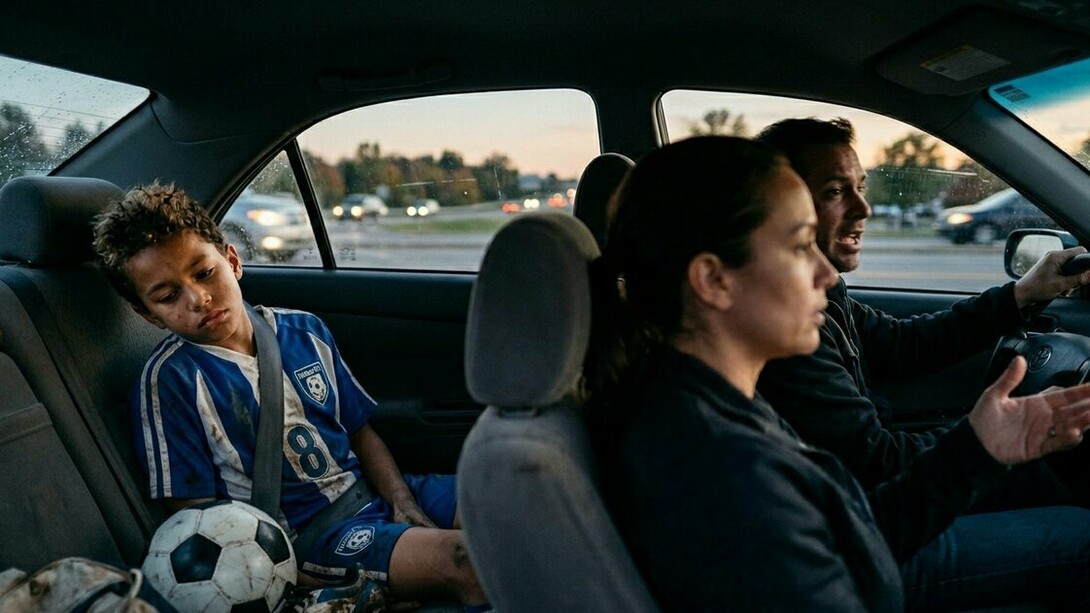
Your 14-year-old is walking up to the “spot” to take a penalty kick that will win the game for their team.
The fans go silent.
The goalkeeper is jumping around nervously.
Your child places the ball carefully and deliberately and takes one, two, three, or four paces backwards. They inhale a deep, anxious, full breath and exhale slowly to calm their nerves – just as their coach has taught them to do.
The referee blows their whistle.
Your child moves in…they kick…and…they miss!
Your heart sinks.
The coach throws down her cap in frustration.
The other players sink to the ground in disappointment.
The parents of the other players are at once devastated, angry, sad and feeling bad for their own kids.
When the dust settles, you and your child hop into the car and start the drive home.
It is this moment, right here and right now and in that car, that the relationship between your child and sport is on the line.
More importantly, it is also the moment when their relationship with you faces its greatest challenge.
The car ride home: what you say in the next ten minutes will shape your child's relationship with sport – and you – forever.
When sport is more than just sport – moments that matter!
There is a popularly held belief that sport builds character.
There’s a more accurate and more apt belief about sport: sport reveals character.
Sport offers opportunities for “moments that matter” where humans often unwillingly expose who they are.
Under the pressures and pain of competition, people will often show signs of their personality that are routinely hidden, even from themselves.
The challenges and demands of competing in sport can sometimes unleash powerful emotions like anger, fear and frustration – emotions that can be disguised and camouflaged away from the sports field.
It is in these moments that the power of parenting truly comes into its own. These moments present unique opportunities for parents to guide, to support, to model and to help their kids navigate through their own emotional minefields and to teach life lessons that will prepare their children for whatever their future may hold.
Ostensibly, a running race around a track is just a 400-metre athletic event. There is a child who wins and gets a gold medal slung around their neck and there are seven others who don’t. On the face of it, that’s all that sport is: winning and losing, success and failure, medals, ribbons and records.
But for parents, it is so much more. For the child who wins, it’s about modelling modesty, humility and respect for their competitors.
For the children who do not win, it’s an opportunity to learn resilience and patience, to overcome setbacks, to deal with frustration, to accept losing with grace and self-respect and to learn how to bounce back more determined and more inspired than ever before.
Sport offers every parent the chance to demonstrate to their children the attitudes and behaviours that will sustain them for a lifetime.
The question then becomes, how can parents master the art of sports parenting in these critical life-shaping moments?
Waves and rocks: the geography of sports parenting
One consistent characteristic of kids is they are not consistent.
Some days they are “up” – happy, connected, joyful, positive, constructive and energetic.
Other days, for no apparent reason, they are “down” – flat, sad, de-motivated, negative, frustrated, difficult and angry at the world and everyone in it.
They are, if you like, “waves”: waves rolling up and down, high and low, through life’s ocean. They are subject to the normal but enormously powerful physical, mental, emotional, social, sexual and intellectual changes raging through their bodies and minds.
Parents are the rocks on the shoreline. No matter how up or down or high or low their child’s “waves” may be, we are strong, stable, unchanging, and unflinching.
The art of sports parenting and indeed parenting per se, is to be that “rock” when and where it matters regardless of the power and flow of the emotional “waves” raging over us in those difficult and demanding sporting moments.
When our kids are angry about an unfair decision from an umpire, we are their rocks.
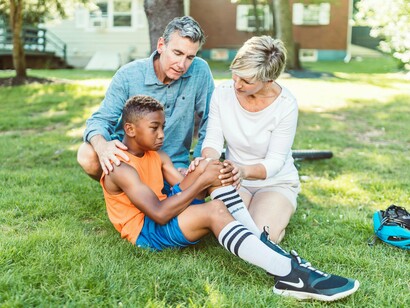
When they are sad and shattered after making an error that cost their team the game, we are their rocks.
When they feel that their world is at an end because they didn’t get selected for the team, we are their rocks.
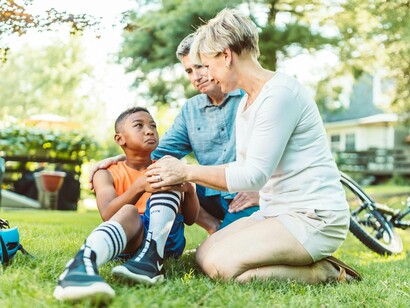
When they are sitting in the back seat of the car, deep in self-recrimination or mired in a mixture of hateful emotions against everyone and everything – yes – even then, we are their rocks.
For the vast majority of kids, sport isn’t who they are. It is just something they do.
They will some day be an ex-football player or a former basketball player or someone who “used to swim” as a kid.
But they will always be a human being. And someone’s co-worker. And someone’s partner. And one day – perhaps someone’s parent.
Our role as sporting parents is so much more than keeping scores, buying new boots and posting our kids’ success stories on social media.
It is to seize upon the moments that matter in our child’s sporting life and help them to become that remarkable human being we believe in our hearts they are.
Final thoughts
Parenting is a gift.
There is an indescribable joy in knowing that your life and your love have contributed to your child’s happiness, growth and success.
There are many moments that matter as a parent.
How you say goodbye to them in the morning as they head off to school.
Birthdays when you surprised them with a special, unique gift that they will treasure forever.
Family dinners where you just smile and laugh and love the experience of being together with good food and old stories.
And there’s the car ride home from sport.
In that moment what really matters isn’t how much you know: it’s about how much you care. Let the coach teach your child to kick straighter or to hit that tennis ball harder or to swim that race faster.
The car ride home is your moment to be the exceptional, kind, loving parent you are: the kind of parent we all wish we could be – the kind of parent we all wished we had when we were growing up.
That moment is being handed to you as a wonderful opportunity to not just show your child you “get” them, but to potentially shape their views on parenting for their own car rides home in the future, when they themselves are behind the wheel and your grandchildren are sitting sullenly and silently in the back seat.
Make the most of it.
References
Bengtsson, D., Svensson, J., Wiman, V., Stenling, A., Lundkvist, E. and Ivarsson, A. (2025) 'Health-related outcomes of youth sport participation: a systematic review and meta-analysis', International Journal of Behavioral Nutrition and Physical Activity, 22, p. 89.
Jaf, D., Wagnsson, S., Skoog, T., Glatz, T. and Özdemir, M. (2023) 'The interplay between parental behaviors and adolescents' sports-related values in understanding adolescents' dropout of organized sports activities', Psychology of Sport and Exercise, 68, p. 102448.
Laurier, C., Pascuzzo, K., Jubinville, V. and Lemieux, A. (2024) 'Physical activity and its benefits on adolescents' mental health through self-esteem', Frontiers in Child and Adolescent Psychiatry, 3, p. 1503920.
Moulds, S. et al. (2025) 'Why do children and young people drop out of sport? Development and initial validation of the Youth Sport Dropout Questionnaire', Youth, 5(2), p. 50.
Project Play / Aspen Institute (2025). State of Play 2025: Annual Report on Youth Sports Trends. (Accessed: 19 May 2026).