English
 Español
 Français
 Deutsch
 Italiano
 Português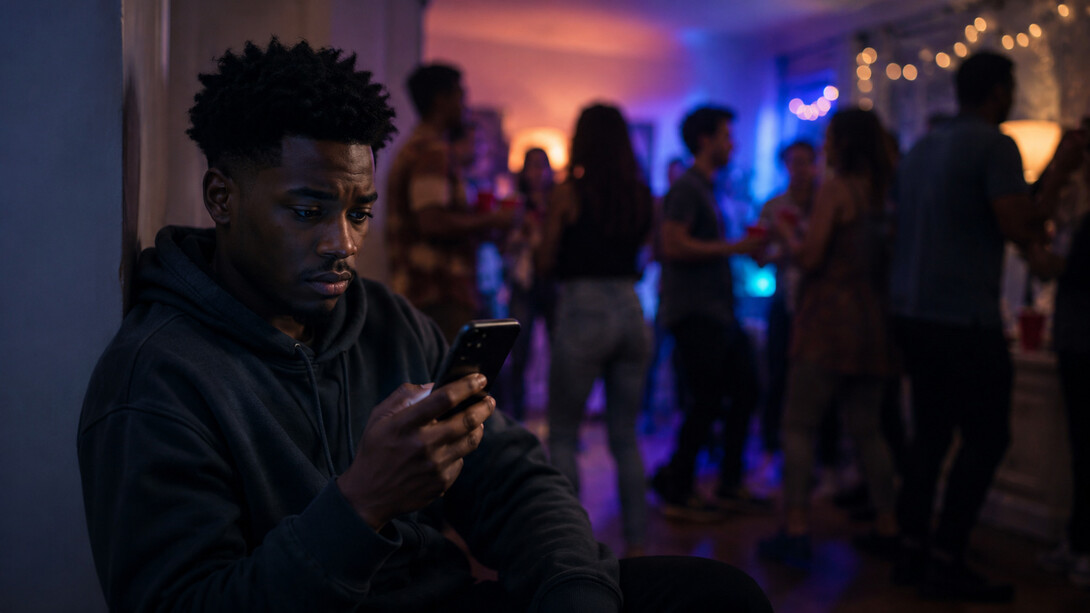
Over the past two decades, social media has fundamentally changed how people communicate and interact. Platforms such as Facebook, Instagram, and Snapchat allow individuals to create profiles, share content, and maintain visible networks of relationships online. While these platforms provide opportunities for connection, researchers have increasingly raised concerns about their potential psychological consequences, particularly for young adults who use them most frequently.
One psychological issue closely associated with social media use is social anxiety. Social anxiety refers to the intense fear or apprehension individuals experience in social situations where they believe they may be judged negatively by others. This fear may occur during real or imagined social interactions and can significantly affect individuals’ social functioning, academic performance, and emotional well-being.
Research indicates that social anxiety is relatively common among young adults and university students. Global estimates suggest that between 7% and 33% of college students experience social anxiety, while studies in China report that 12–14% of students experience high levels of social anxiety (Lai et al.). If left unaddressed, social anxiety can develop into social anxiety disorder and negatively affect students’ academic achievement, career prospects, and mental health.
At the same time, social media use has grown rapidly across the world. Young adults are among the most active users, often spending several hours daily on platforms that allow constant interaction, self-presentation, and information sharing. Because social media has become embedded in everyday social communication, researchers have begun to examine how it may influence psychological outcomes such as anxiety, loneliness, and well-being.
Understanding how social media use relates to social anxiety is important, particularly for young people whose social interactions increasingly occur online. This article looks at the relationship between social media use and social anxiety, focusing mainly on the roles of active and passive social media use, communication capacity, and psychological processes such as social comparison and self-presentation.
Social media use in modern society
Social media platforms are web-based communication systems that allow users to create personal profiles, form networks with others, and share or consume content in a continuous stream of interaction. These platforms enable users to communicate through posts, comments, messages, images, and videos.
Young adults are the most frequent users of social media. Studies show that a large majority of individuals aged 18–29 engage with social networking platforms daily. Many users maintain accounts on multiple platforms simultaneously and access them several times throughout the day.
People use social media for a wide range of purposes. These include maintaining relationships with friends and family, meeting new people, expressing opinions, sharing life events, following public figures, seeking entertainment, and accessing news or information. For many users, social media has become a primary channel for communication and identity expression.
While these platforms provide opportunities for connection and social engagement, their widespread use has also raised questions about their effects on psychological well-being. Some studies suggest that social media can enhance social support and connectedness, while others associate it with negative outcomes such as reduced self-esteem, depression, loneliness, and anxiety.
These mixed findings highlight the need to examine not only how often individuals use social media but also how they use it.
Active and passive social media use
Researchers often distinguish between active and passive social media use.
Active use involves direct interaction with others on social media. Examples include posting updates, commenting on friends’ posts, sharing content, sending messages, or engaging in discussions. This type of engagement facilitates communication and social exchange.
Passive use, by contrast, refers to browsing social media without direct interaction. Individuals may scroll through news feeds, view photos, or read posts without commenting or engaging with others.
Studies suggest that these two forms of engagement may have different psychological effects. Active social media use is often associated with increased feelings of social support, connection, and well-being. Because users actively communicate with others, they may receive feedback, encouragement, and social validation.
Passive use, however, is more strongly associated with negative outcomes such as envy, loneliness, and anxiety. When individuals passively observe the curated lives of others, they may engage in upward social comparison, evaluating themselves negatively in relation to seemingly more successful or happier peers.
These comparisons can contribute to dissatisfaction and emotional distress, particularly among individuals who already experience social insecurity.
Theoretical explanations for social anxiety in social media contexts
Several psychological theories help explain why social media use may contribute to social anxiety.
Self-presentation theory
Self-presentation theory suggests that individuals carefully manage how they appear to others. Social media platforms intensify this process because users curate their online identities through photos, posts, and interactions.
Many users become highly sensitive to how others might evaluate their online presence. Fear of receiving negative feedback or criticism may increase anxiety when posting or interacting online. Individuals may even assume that others judge them negatively, which can heighten social anxiety.
Social comparison theory
According to social comparison theory, individuals evaluate themselves by comparing their abilities, appearance, and life circumstances with those of others. Social media environments provide a constant stream of information about other people’s achievements, lifestyles, and relationships.
Because most users present idealised versions of their lives, these comparisons often become upward comparisons, where individuals perceive others as more successful or happier than themselves. This process can contribute to feelings of inadequacy, low self-esteem, and anxiety.
Behaviourist perspectives
Behaviourist theories suggest that social anxiety may develop through conditioned emotional responses. Negative experiences during social interactions can lead individuals to associate social situations with fear or discomfort.
In the context of social media, experiences such as cyberbullying, negative comments, or social rejection can reinforce these anxieties. Over time, individuals may begin to avoid social interactions both online and offline.
Communication capacity as a mediating factor
An important factor linking social media use and social anxiety is communication capacity, which refers to an individual’s ability to effectively express ideas, emotions, and opinions and to interpret the communication of others.
Effective communication skills are essential for maintaining relationships and navigating social interactions. Individuals with strong communication capacity can manage conversations, interpret social cues, and respond appropriately to others.
However, heavy reliance on online communication may reduce opportunities for face-to-face interaction, where many communication skills are developed and refined. When individuals spend large amounts of time communicating online rather than in person, they may have fewer opportunities to practise social skills.
Research suggests that excessive internet use may be associated with poorer emotional regulation and reduced interpersonal communication abilities. Adolescents and young adults who spend extended periods on social media have been reported to exhibit greater social skill deficits and reduced intimacy in real-world relationships.
These communication deficits can contribute to social anxiety. Individuals who feel uncertain about their communication abilities may avoid social interactions, reinforcing anxiety and limiting opportunities to develop social competence.
Social anxiety and online behaviour
Research shows that individuals with higher levels of social anxiety often behave differently on social media compared to their less anxious peers.
Socially anxious individuals frequently prefer online interactions over face-to-face communication because online environments provide greater control over self-presentation. Users can carefully craft messages, edit responses, and avoid immediate reactions from others.
However, social anxiety often carries over into online environments. Studies have found that socially anxious individuals may post less frequently, disclose less personal information, and engage less actively with others online. They may also have fewer online connections or display less activity on their profiles.
Additionally, socially anxious users often experience persistent fears of negative evaluation, even in online settings. They may worry about how their posts will be perceived or fear making mistakes in public interactions.
These concerns can lead to inhibited online behaviour, limiting the potential benefits of social media engagement.
Social media use, loneliness, and social anxiety
Social anxiety is closely related to loneliness. Individuals who fear negative evaluation often avoid social situations, which can reduce opportunities to build meaningful relationships.
Because of this social avoidance, socially anxious individuals may turn to social media to compensate for limited offline social connections. Online platforms provide an environment where communication can occur without the pressures of face-to-face interaction.
However, research suggests that socially anxious individuals do not always receive the social support they seek online. Their anxiety may limit their willingness to engage with others, reducing opportunities for meaningful interaction.
Lonely individuals also tend to use social media more frequently and intensely, often in an attempt to feel more connected to others. Yet excessive use can sometimes reinforce feelings of isolation, particularly when individuals engage in negative social comparisons.
Studies indicate that loneliness may predict increased social media use over time, suggesting that individuals turn to online platforms as a coping strategy. However, the relationship between social media use and loneliness remains complex, with evidence suggesting both positive and negative outcomes depending on how platforms are used.
Overall, existing research indicates that the relationship between social media use and social anxiety is complex and influenced by multiple factors.
Individuals with higher levels of social anxiety and loneliness tend to use social media more frequently and may rely on it as a substitute for offline social interactions. However, their anxiety often shapes how they engage online, leading to passive browsing, limited interaction, and increased social comparison.
The distinction between active and passive social media use appears particularly important. Active engagement, which involves communicating with others and building connections, may promote feelings of belonging and social support. Passive browsing, on the other hand, may increase opportunities for negative comparison and emotional distress.
Communication capacity also plays a key role in this relationship. Individuals who lack strong interpersonal communication skills may experience greater anxiety in social situations and may rely more heavily on online interactions, potentially reinforcing their social difficulties.
Although existing studies provide valuable insights, much of the research has relied on cross-sectional designs and self-reported social media use. Longitudinal and experimental studies are needed to better understand the direction of these relationships and determine whether social media use causes social anxiety or whether socially anxious individuals are simply more drawn to online environments. (O’Day and Heimberg)
Conclusion
Social media has become an integral part of modern communication, particularly among young adults. While it offers opportunities for connection and social engagement, its relationship with psychological well-being remains complex.
Research suggests that social media use is associated with social anxiety, particularly when individuals engage in passive browsing, negative social comparison, or excessive online interaction. Communication deficits and fear of negative evaluation may further intensify these effects.
However, social media is not inherently harmful. The psychological impact of social media depends largely on how individuals use these platforms. Active, supportive engagement may foster social connection and reduce loneliness, whereas passive or comparison-driven use may contribute to anxiety and emotional distress.
Future research should continue to explore how patterns of social media use influence psychological outcomes and identify strategies that encourage healthier digital interactions among young people.
Works cited
Lai, Fengxia, et al. “Relationship between Social Media Use and Social Anxiety in College Students: Mediation Effect of Communication Capacity.” International Journal of Environmental Research and Public Health, vol. 20, no. 4, 18 Feb. 2023.
O’Day, Emily B., and Richard G. Heimberg. “Social Media Use, Social Anxiety, and Loneliness: A Systematic Review.” Computers in Human Behavior Reports, vol. 3, no. 100070, 2021.