English
 Español
 Français
 Deutsch
 Italiano
 Português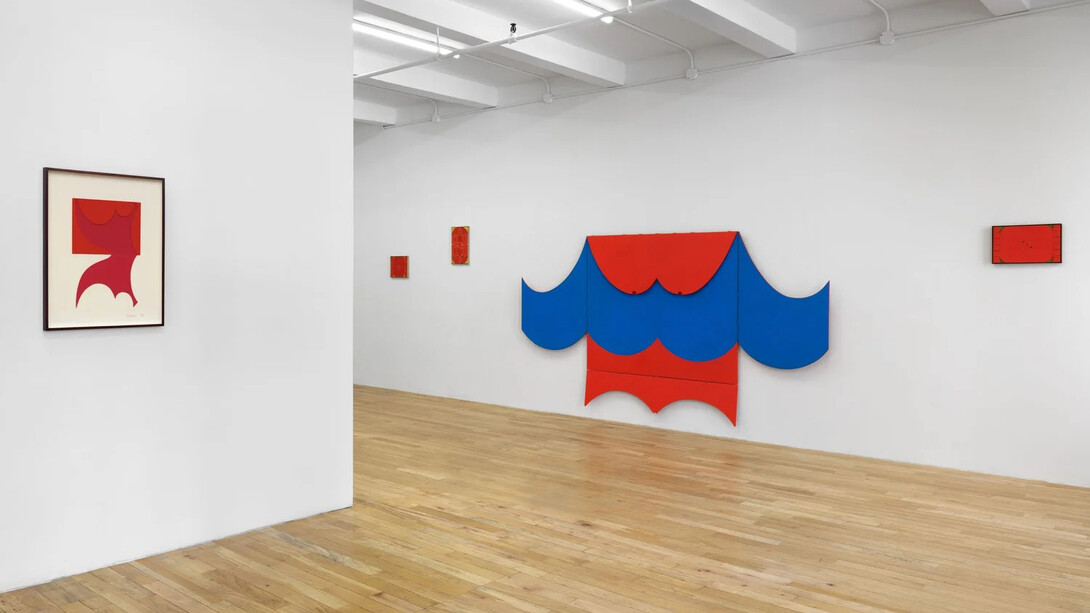
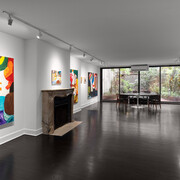
Polina Berlin Gallery is pleased to present Katsumi Nakai: works 1965-1997, a collection of works by the late Japanese artist Katsumi Nakai (1927-2013) that span a three-decade period of the artist’s defining years in Milan. This presentation marks the first solo gallery exhibition in the United States for the artist, as well as marking the 70-year anniversary of the artist’s first ever solo exhibition held in Osaka in 1956.
Katsumi Nakai was born in 1927 in Hirakata, Osaka, and in 1953, he entered the Institute of Fine Arts of Osaka to study painting. Nakai belonged to a generation of artists who spent their formative years of working in Japan during the aftermath of the Second World War. His first solo exhibition was held in 1956 at Omote Gallery in Osaka, and in 1958, he was among the seven founding artists of the avant-garde group Tekkei-Kai, whose experimentalism and informalism was active from Kyoto to Osaka until the mid-1960’s. As a direct result of the trauma of the war, Nakai, like many of his generation, had the desire and impulse to explore the commercial and artistic cultures of the West.
In 1964, the Japanese government first issued visas for independent travel abroad, and at 37 years old, Nakai set out on a trip that would take him to Europe and the United States, “following the sun”. In the late spring, he visited Paris, Athens, Rome, and then Milan, where he found the city “more ancient than Paris yet similar to Osaka.” He decided to stay in Milan, and the years he spent there would become the most significant in his artistic practice. He never made it to the States as he had planned in his lifetime.
Nakai soon entered the circle of artists that writer and art critic Guido Ballo described as the Nuova sculoa di Milano (New Milanese School). Lucio Fontana, Tomonori Toyofuku, Enrico Baj, Agostino Bonalumi, Paolo Scheggi, Enrico Castellani and Nanda Vigo were all part of this group. Toyofuku, who provided him with his first studio space, Fontana, whose ideas in Spazialismo (Spatialism) became a foundation, and gallerist Renato Cardazzo, who gave him his first exhibition in Venice, proved to be pivotal in the shaping of Nakai’s career in Italy.
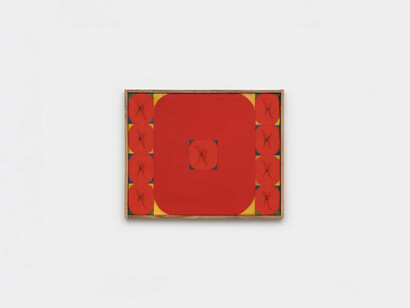
In 1965, departing from the expressive paintings he produced in Japan – influenced by the 1950’s schools of Osaka’s Gutai, Paris’ Tachisme and New York’s Abstract Expressionism – Nakai began to develop a practice experimenting in surface flatness and spatial three-dimensionality, completely void of the gesturalism of his previous work. It was then that Nakai became interested in the ideas of time and space as concepts through which to enter the canvas, totally defiant of the artistic conventions and studies prior. In the early months of 1966, working with wooden board and hinges, Nakai began to form the visual foundation of his subsequent oeuvre, works that probe and breach the pictorial surface.
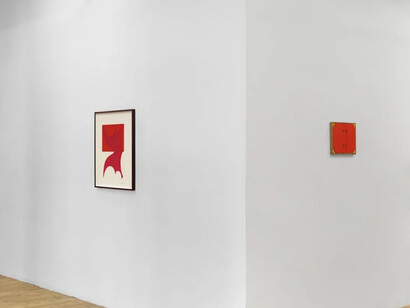
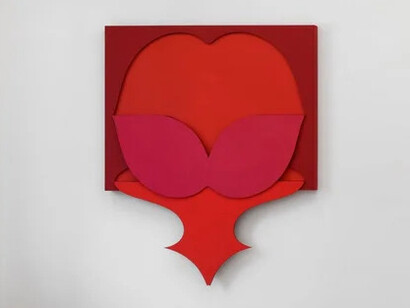
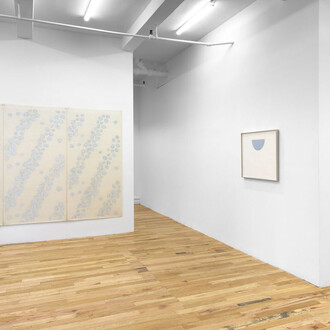
The collection of works that comprise Katsumi Nakai: works 1965-1997 encompass his paintings, reliefs and collages spanning the three decades of his life in Milan, with the exception of Untitled (Collage) (1997), which was made during the first year after his return to Japan. The paintings, all produced during the early chapter of his Milanese period, were seminal, knitting together the principles of Western abstraction with Eastern tradition. His multi-colored reliefs test the levels of dimensionality, and as they are delicately folded and unfolded challenge the viewer’s space, staging interplay between projection, form and volume. Devoid of categorization, the works at once contain the conceptual sensibility of Spazialismo and the spiritual, metaphorical interest of the Japanese artistic culture and history. The collage works, made in the later years in Milan and back in Japan, channel the Japanese heritage of art-making, perhaps akin to the craft of origami or paper-cutting. Nakai’s range and breadth of work extended his transnational contemporary output to consider an inventive concept of temporal movement, spatial theory and time.
Nakai returned to live in Japan in 1996 and died in Hirakata in 2013. In 2004, the Italian Kyoto Institute of Culture organized the seminal exhibition Katsumi Nakai – Open in celebration of the artist and his achievements. He has been the recipient of notable awards such as the Prix Piazzetta, the Ambitions Moderate Award, and the Silver Award at the XV Milan Triennale in 1973. Nakai’s work resides in the collections of the Centre Pompidou, Paris; the Nakanoshima Museum of Art, Osaka; the Okawa Museum of Art, Kiryu; The Tokushima Modern Art Museum, Tokushima; and The Miyagi Museum of Art, Sendai. The leading galleries supporting his work today are Luxembourg + Co. in New York and London, and Ronchini Gallery in London.