English
 Español
 Français
 Deutsch
 Italiano
 Português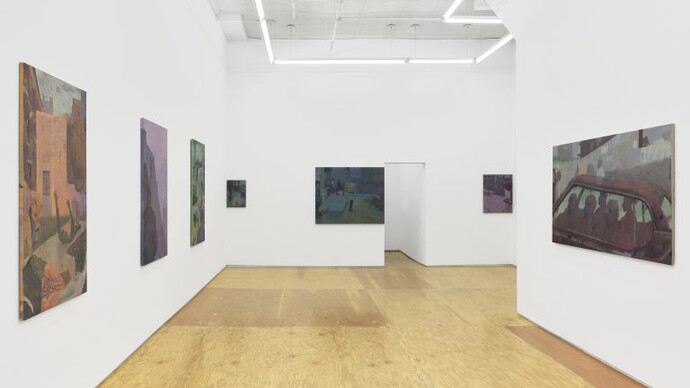
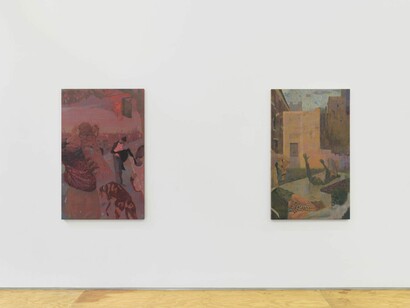
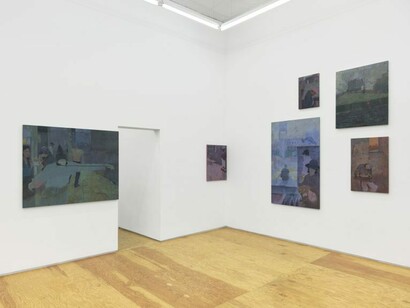
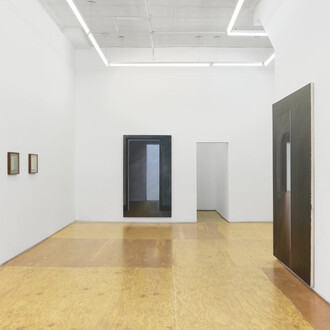
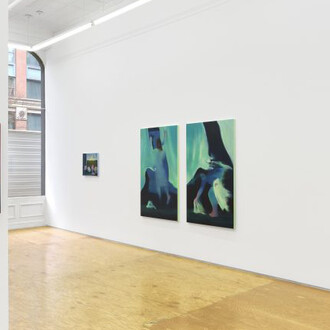
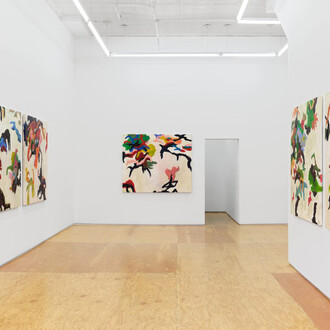
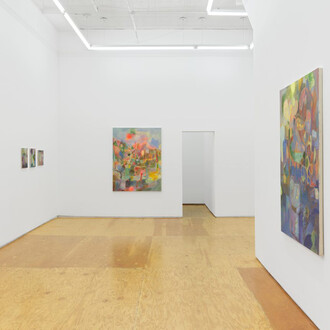
Margot Samel is pleased to present Dwelling place, a solo exhibition of new works by Sasha Brodsky (b. 1995, Moscow). Based in Brooklyn, NY, this is Brodsky’s first solo exhibition with the gallery and his first in New York.
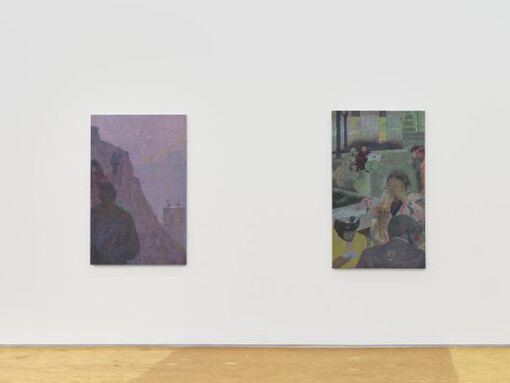
In these scenes of urbanity, characters are enmeshed within doors, streets, cemented parks, alleyways, and dormant city lots, thresholds between the built environment and the experience of living within it. Brodsky approaches urban space as something formed through individual presence while simultaneously shaping that presence in return. They are not separate. Rather, they co-determine one another, evolving continuously as an animated ensemble and bound entirely by composition.
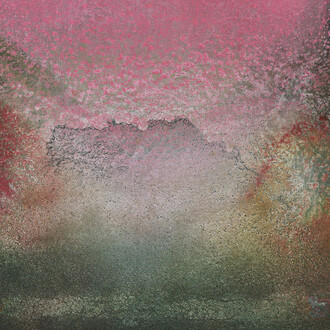
In Amber lot, 2025, the world is at rest in an overgrown parcel. Buildings that cradle the lot reach upward, their stacks, fences, and towers stretching toward the sky. A central reclining figure, cast in shadow, reaches its arms up as well, echoing these surrounding forms. Another figure undresses to the left, its bare body mirroring the softened, near-bare surfaces that anchor the image.
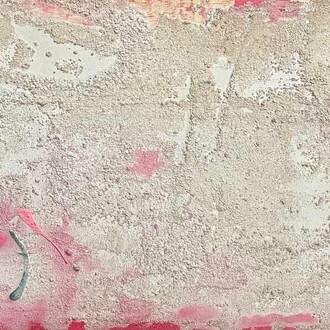
Working in pastel on raw linen, Brodsky approaches painting as an extension of printmaking, particularly etching, which formed the basis of his earlier practice. The textured surface of the fabric holds the mark in a way that recalls the etched plate, where line, pressure, and gesture accumulate into a sense of spatial depth. This connection also informs his approach to color. Rather than saturation, tones remain muted, as if filtered through layers, echoing the softened tonalities of prints pulled over washes.
These fantastical, colorful, jittering scapes, always on the cusp of change, are not literal or “real” places. Brodsky is interested in a mood and disposition that walks the line between an imagined ideal city and the city as it exists now, where figure and architecture are one and the same, and where desires, dreams, and creations exist in continuous tension.
Searching for the spirit of a place, the elements Brodsky incorporates, from figures to the notation-like markings of numbers and symbols against the skies or walls of his works, operate as ways of seeing that move beyond the immediately visible. The artist describes this as a form of placemaking through what appears forgotten. As Georges Perec writes in Species of spaces and other pieces, “Space is a doubt… I have constantly to mark it, to designate it… My spaces are fragile.”
Rather than locating a fixed or universal spirit, Brodsky’s paintings register the city as something provisional and continuously remade. The built environment holds encounters, absorbs historical time, and bears witness to aesthetic and moral shifts across eras.
Particularly relevant to the present moment, Brodsky’s work responds to the homogenizing forces of contemporary construction under dominant global flows of capital and resources. Many cities have begun to appear similar, with modern quick builds that box inhabitants in with cheap materials, assembling themselves in rapid succession and raising whole neighborhoods. This turns both cities and their inhabitants into non places of modernity, ecosystems of convenience where public life becomes foreclosed through private interest. Instead, Brodsky insists on the unruly liveliness of the city in spite of these conditions. He locates a kinship between figures and the expanded spaces of urban life. This ensemble emphasizes specificity, experience, and the persistence of place, attending to the markings of history and the particularities that carry a city’s character from one era to the next.
(Text by Emily Small)