English
 Español
 Français
 Deutsch
 Italiano
 Português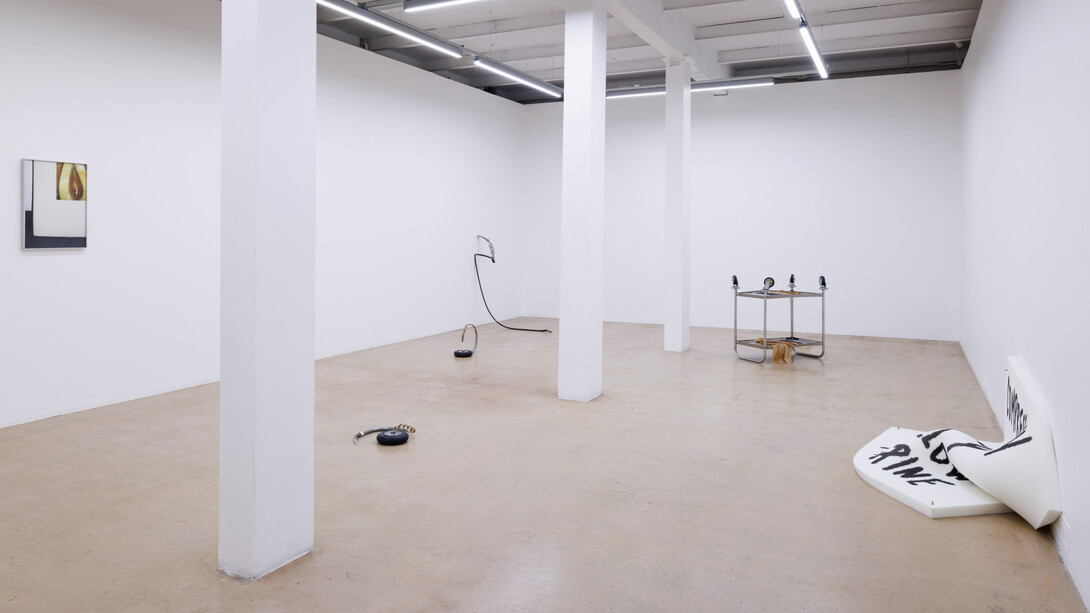
What remains when we strip ourselves back to an essential core—and can that core ever be stable?
In The arrows of concerns, Paula Punkstiņa approaches identity as liminal, wounded, and continually reconstituted. The exhibition unfolds through material and psychological compressions in which the self bends, fractures, dissolves, and reforms. Oscillating between vulnerability, naivety, resistance, playfulness, and detachment, Punkstiņa’s works trace how subjectivity adapts under pressure without vanishing entirely.
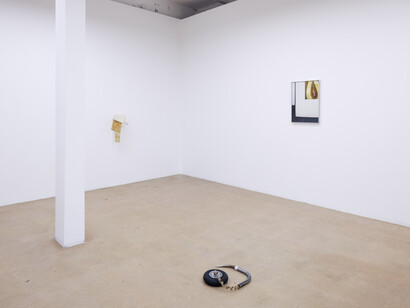
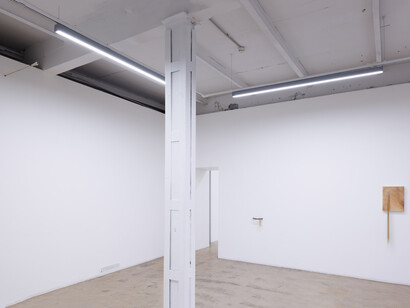
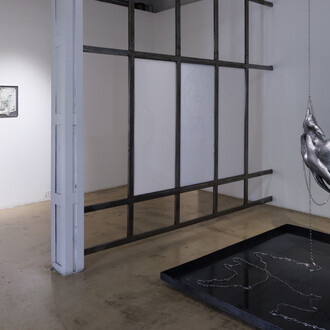
At the exhibition center is flexible polyurethane memory foam serves as both structure and metaphor for exposed corporeality. It absorbs impact, yields, and slowly returns to form. Punkstiņa treats it as a model of “essence”: mutable yet retentive, marked by experience but resistant to permanent distortion. Coated, pierced, or coupled with intrusive elements—bamboo arrows, taxidermy fragments, bicycle parts, synthetic hair—the flesh-like material becomes a site of exposure. At times, it is sheathed in a honeyed, porous membrane resembling a second skin, suggesting protection without fully sealing the boundary between inside and out.
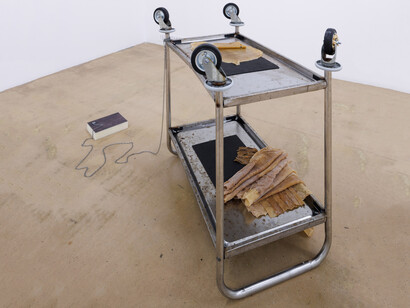
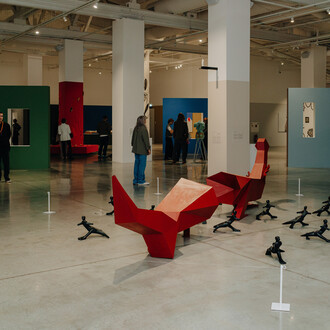
The sculptural objects on display operate as prosthetic frameworks for an existential narrative. Fragmented human and animal anatomies—hair, antlers, legs—embody unstable states of being, resonating with Julia Kristeva’s concept of abjection, in which the body oscillates between identification and repulsion. Clinical and industrial references—forms reminiscent of operating tables and components of indeterminate transport mechanisms—introduce an atmosphere of calculated intervention and constrained movement. This sterility stands in stark contrast to the tenderness of the materials they penetrate, support, or encircle. The resulting tension echoes the artist’s own gesture—notes that often accompany her thinking: (..) to dodge the bullet, yet still bear the wound.
The deer recurs as a collective symbol rather than a literal figure. Connoting innocence, youth, and belonging, this Bambi stands in for a once-coherent identity later dismantled. By disassembling the image, Punkstiņa questions permanence and explores thresholds between life and death, presence and erasure. Passing appears not as an end, but as a transformation— redistribution rather than disappearance.
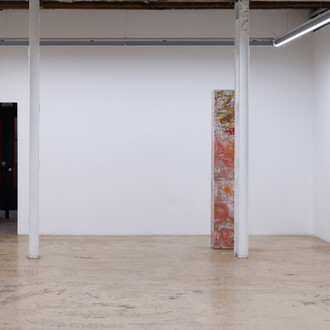
Photographic collages drawn from personal archives and found images extend these concerns into memory. They evoke searching and distortion, asking whether fractured or unwanted recollections can unsettle the self. Individuation begins with a cut. Over time, a second skin accumulates, layered with suppressed affects and disavowed experience. Though pride and self-narration attempt to overwrite them, these traces persist, quietly shaping identity.
In Heideggerian terms, being-in-the-world is inseparable from becoming; existence is engagement, not stasis. Punkstiņa’s practice inhabits this tension between dissolution and reconstruction, foregrounding vulnerability, interdependence, and an uneasy proximity to the object-subject.
Initially conceived as an open experiment, the exhibition marks a shift in material and conceptual approach. Moving beyond earlier work with aluminium plates and UV printing, Punkstiņa embraces processes that translate ideas directly into matter: burned edges, perforations, melted coatings. Translation itself becomes central—between language and material, experience and form, rupture and resonance.
Inflected by the artist’s formative years, The arrows of concerns centers on the fluidity of identity—its oscillation between stability and disintegration—and on the intimate calculus of choice, separation, loss, and self-redefinition. The work traces a subject in the midst of becoming, where each rupture recalibrates the terms of coherence. How many times must the “I” be wounded before adaptation hardens from reflex into structure—and when it returns to its seemingly “original” form, what sediments of memory and transformation continue to course through it?