English
 Español
 Français
 Deutsch
 Italiano
 Português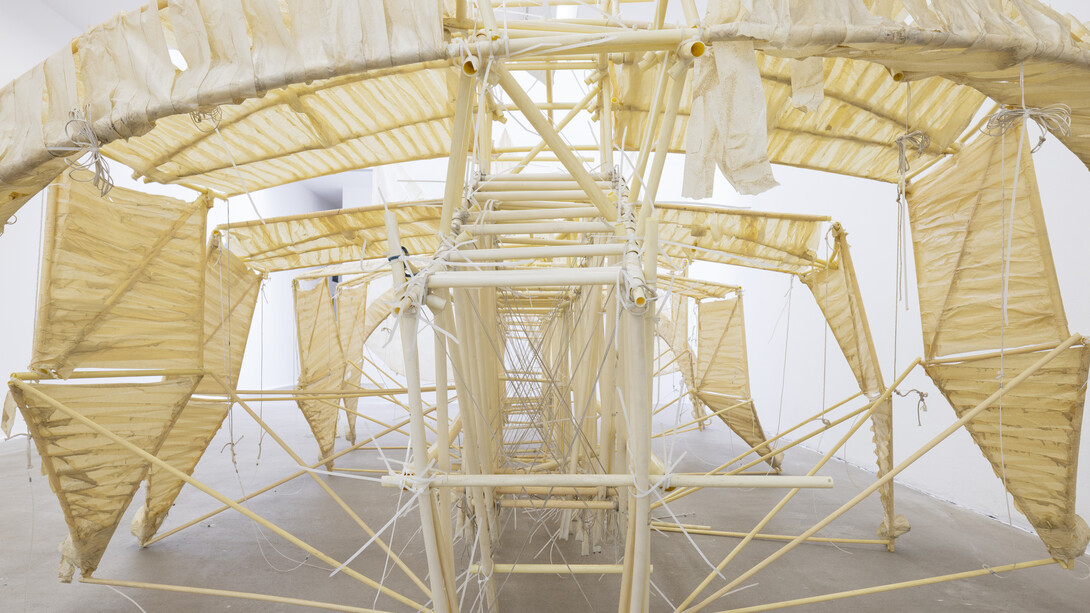
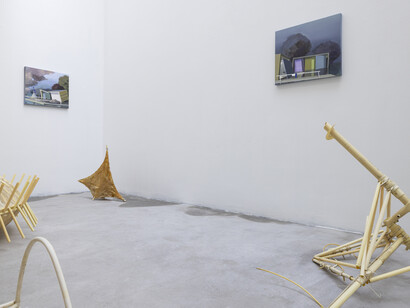
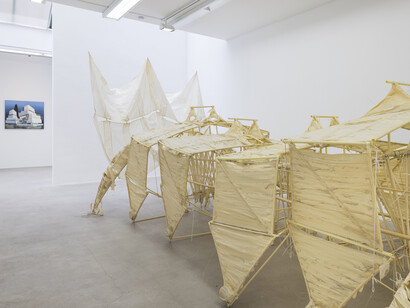
Akinci is proud to announce the upcoming duo exhibition vita activa by Theo Jansen (1948) and Ulf Puder (1958). The exhibition will be an exploration of ‘vita activa’, expressing artistic craftsmanship as an active way of life. Ulf Puder presents new paintings while Theo Jansen focuses on the deconstructed remains of his Strandbeesten, as well as a new mutant evolving from an earlier species, the Mimicrae (2019).
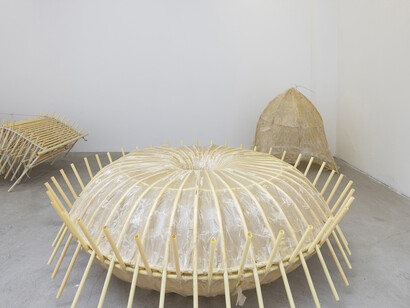
Theo Jansen’s famous Strandbeesten (Beach animals) embody an evolution, as they become extinct and transform over time. The upcoming exhibition will show a paleontological display of their different body parts. Among them are noses, tails and wings, to name a few. Each of these represents a period of the Beach Animal evolution, bringing them together in the exhibition as Partes Corporis. The Strandbeest Mimicrae is part of this evolution, as it developed from the previous ‘Uminami’ which featured a caterpillar mechanism. By moving with a unique wave-like motion from tail to head, the Mimicrae resembles a seal on land.
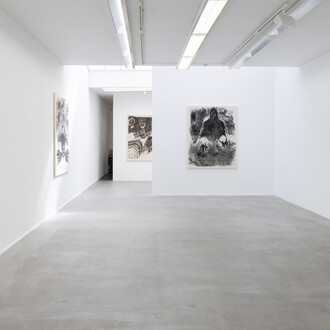
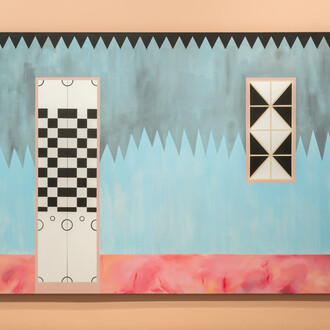
Ulf Puder writes about his work in the upcoming exhibition as a romantic sense of transience: “My scenes take place at the border between nature and civilization, where urban life and nature alternate”. In his paintings it is unclear whether the visualized objects are still in use, or if they have been repurposed. Both artists bring a mixture of real and magical elements, creating a space for imagination and reflection.
In the exhibition vita activa, the artists respond to a constantly changing environment. They explore society’s and nature’s force and evolution. Their works are in conversation with the alienated relationship with the world around us. Central to Puder’s works are the subtle dystopian architectural depictions of landscapes and uninhabited houses, sometimes on the verge of sinking. Jansen’s Strandbeesten first developed as a way to solve the danger of rising sea levels, by giving them life and purpose in moving sand grains from the bottom of the beach to the top. Now, they respond to nature’s forces themselves, as they reply to movement independently.