English
 Español
 Français
 Deutsch
 Italiano
 Português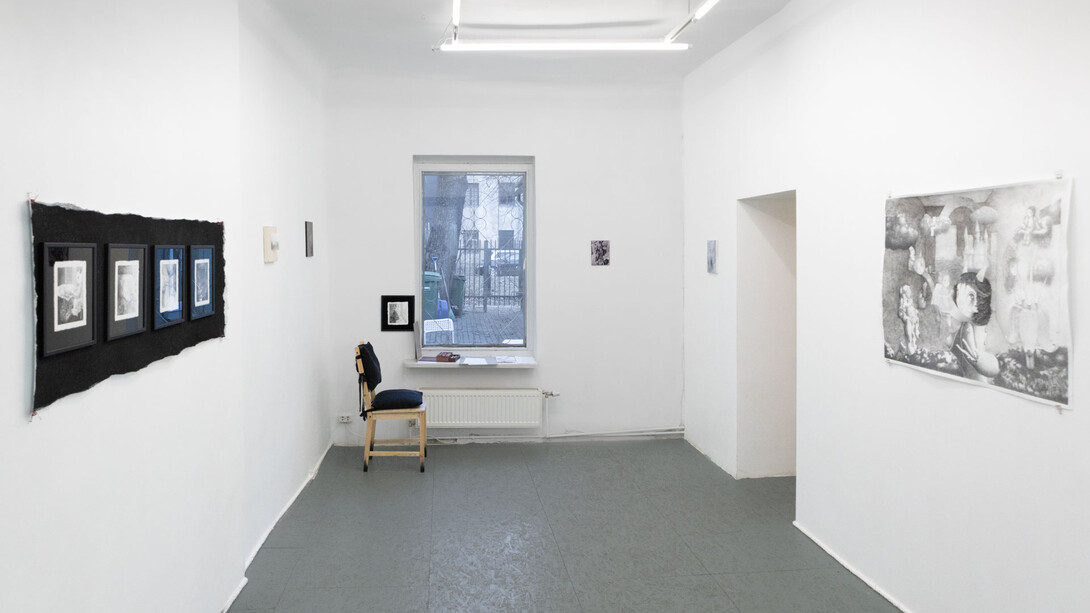
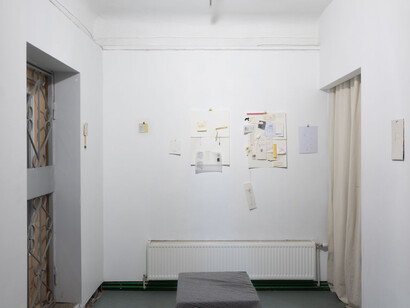
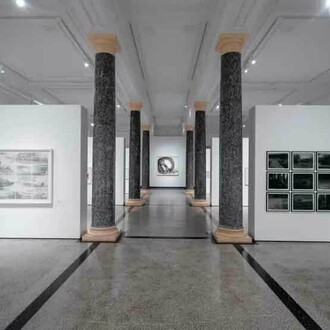
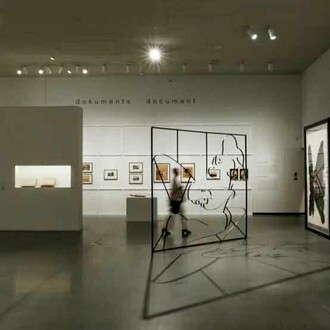
There is no single way to speak about home and the warmth within them. A home can also be a refuge – a space where the entire world is concentrated within a closed interior. The outside world loses its significance, while within the home a new meaning is born. It is a place where another, intimate form of subjectivity can emerge. In the exhibition Warm nevertheless, the Dom exhibition space is arranged like a home – an inhabitable place where objects, furniture, and images mark a particular expression of warmth created by close and intimate relationships.
A homey atmosphere can be experienced through the invitation of another. Through such an invitation, one can enter a place shaped by a particular warmth of its inhabitants, expressed as care – as the ability to set oneself aside in order to be there for another. In this way, the other is welcomed by being offered one’s place, time, and warmth.
Within a home, a particular form of togetherness arises, united by shared affects. In Baruch Spinoza’s theory of affects, love (amor) and desire (cupiditas) are understood as forces that form the shared space of human beings. In this sense, love also possesses a political dimension – it brings forth the idea of the common. The common does not belong to a single subject and can be shared. Yet every form of commonality also marks its own boundaries. These boundaries arise from the difference between our own being and that of others. Thus, even if everyone experiences desire and love, different spaces are formed in which other lovers may not even be invited at all, because they are considered too foreign.
In this context, warmth is not merely a feeling – it structures inhabited space and intimate relationships. It determines how people live together and how they care for the places they occupy. Housekeeping – cleaning, rearranging furniture, decorating – becomes a practice of reorganizing affects. Eventually, spaces are arranged for conversation, work, rest, and so on. In this way, movement within one’s living space already changes moods and sensations. At times, while engaging in housekeeping – rearranging and tidying the home – older and long-forgotten memories can be evoked. They are often forgotten not so much in a biographical sense, but rather the feelings present at the moment of the event have been forgotten. Therefore, frozen memories come alive again in materiality – in objects we can touch, in images that suddenly appear different on this particular day, and so on. These objects and images can be arranged once again, thus creating new and different affects. Memories are released from their rigidity, from false objectivity. Editing, reviewing, and montage can thaw these images – returning them to movement. In such a moment of thawing, the past and the present briefly merge into a single image, and the boundary between a dreamlike state and reality becomes uncertain.
The exhibition Warm nevertheless turns to this subtle, often almost imperceptible warmth between people, spaces, and memories – between home and the simple act of settling into an unfamiliar place.
(Text by Ainārs Kamoliņš)