English
 Español
 Français
 Deutsch
 Italiano
 Português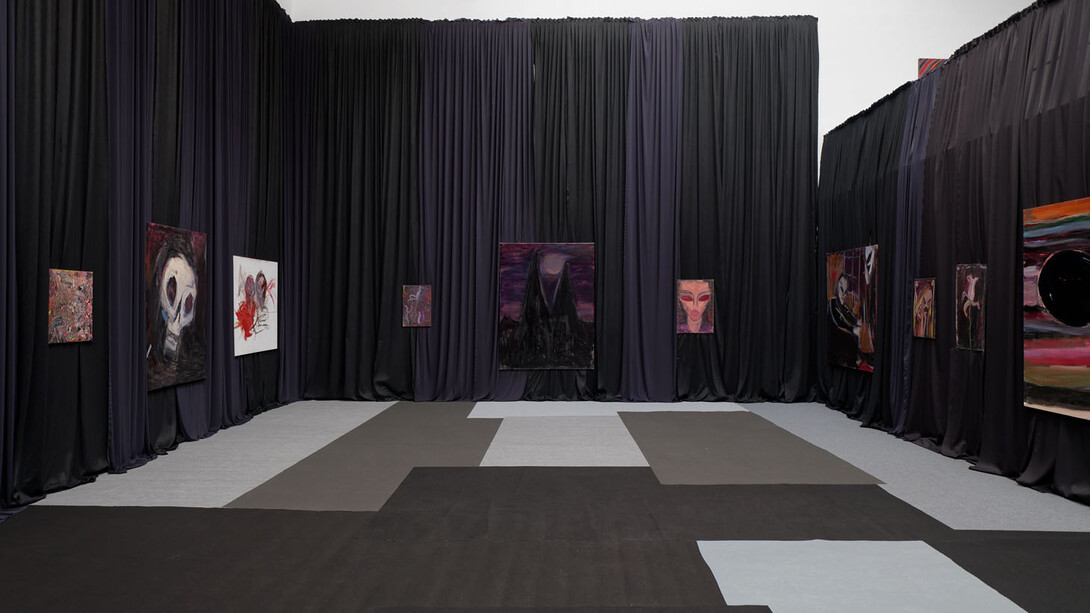
Painting as an act of adoration — a way of staying close — to feeling, to others, to a beauty that might otherwise bruise or disappear.
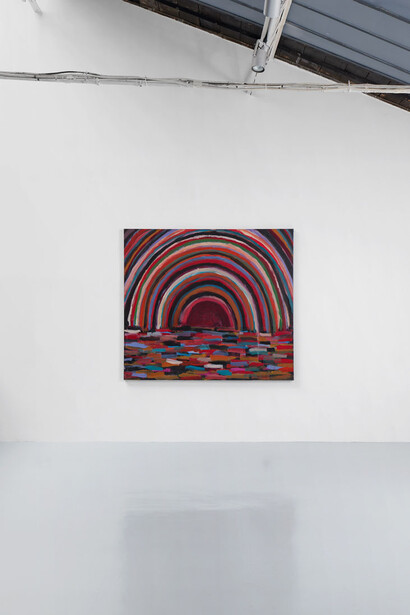
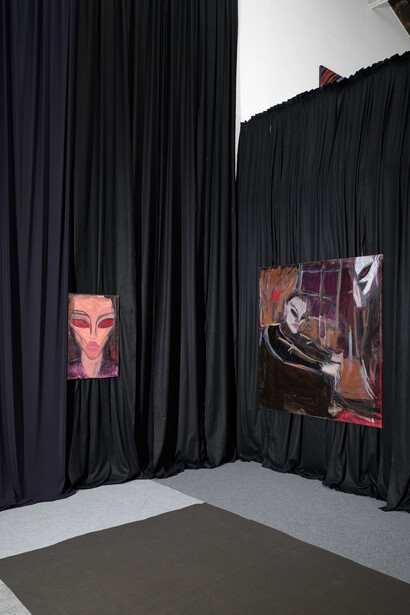
When a joke becomes a prayer, Tobias Spichtig’s first solo exhibition in Paris, brings together new paintings made in the city. The paintings linger on scenes of intimacy and solitude: lovers on a sofa smoking by an open window; a shadowed piano player; someone walking through the streets of Paris; a lover taking pictures; mountains titled Twin peaks; flowers carried, offered, remembered.
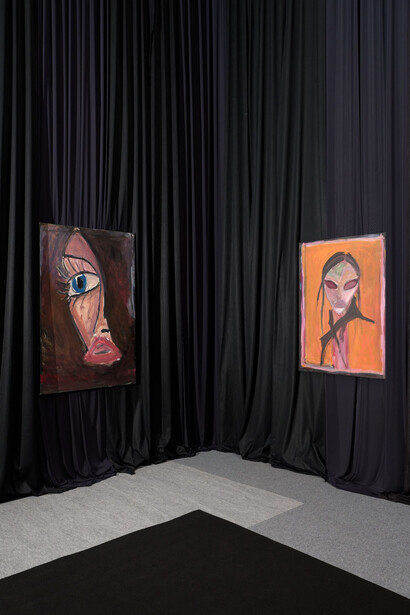
At Galerie Hussenot, black stage curtains drape around the space and carpet softens the room. The atmosphere is closer to backstage than to spectacle — a place of preparation, rehearsal, and vulnerability rather than of performance. The exhibition unfolds like a love song played backstage, long after the lights have gone down. Romantic, excessive, and slightly awkward.
The new paintings move between genres — portraits, landscapes, and scenes. Feeling acts as a reference point. What unites the new works is a singular way of painting and seeing that carries across all subjects. The paintings are simple but deliberate gestures. The candle is a sign of presence. The dried rose carries beauty beyond its moment of bloom. These are not symbols of decay but of duration — of moments and moods that persist. There is humor in their directness, a sincere and precious one. The gesture that appears obvious or even funny begins to feel precise. Nothing insists on irony. Everything leans toward devotion and an urge to believe.
Titles such as Death afraid of death speak directly, without disguise. They do not explain themselves. They repeat, almost like lyrics. Love and fear sit side by side. Beauty is not polished here; it is lived, handled, unguarded, but sincere. The funniest ideas are often the most serious ones.
There is something here that recalls the perspective of the “idiot”1 — easily mistaken for naïveté. What appears foolish or ridiculous gradually reveals itself as something precious. The joke has its depths.
Throughout the exhibition, what remains is Spichtig’s unwavering viewpoint — reverent, almost fan-like in its devotion. Whether he paints lovers, friends, musicians, or solitude itself, the gaze does not retreat into cynicism. The feeling remains direct even when it trembles. Especially then.
The exhibition is about the beauty of life. The sunset watched through one’s favourite sunglasses. The rose carried home. The song played too often. A joke so funny that it becomes a prayer.
(Text by Samuel Staples)
Notes
1 Dostoevsky, Fyodor. The idiot. 1869.
![Mary Cassatt, Fillette dans un fauteuil bleu [Enfant dans le salon bleu] (detail), 1878. Courtesy of Musée d’Orsay](/attachments/3ddcf3630b2e6b21d055a8488350d949784be8fa/store/fill/330/330/9b97dc5b17cad42577b6453f0968e961b1231ceb2b8b5ceb2c09057b2695/Mary-Cassatt-Fillette-dans-un-fauteuil-bleu-Enfant-dans-le-salon-bleu-detail-1878-Courtesy-of.jpg)