English
 Español
 Français
 Deutsch
 Italiano
 Português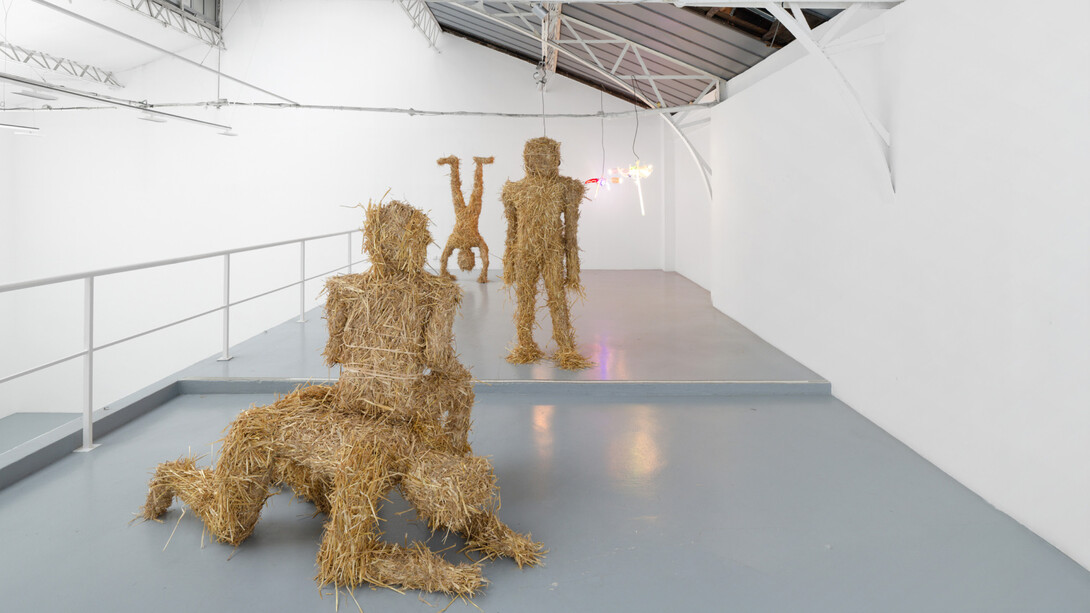
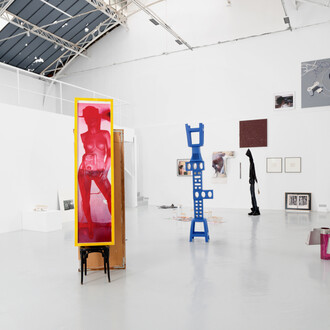
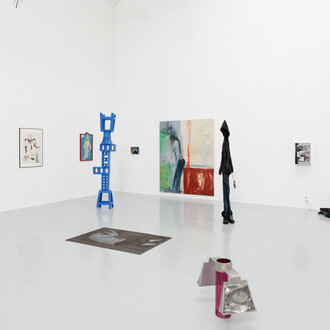
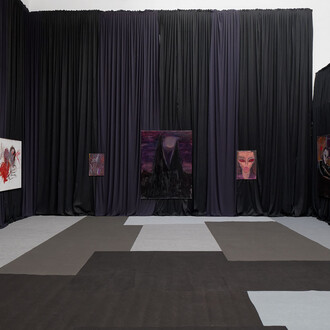
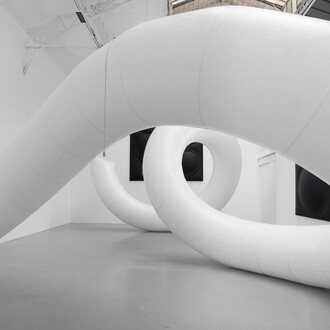
Galerie Hussenot is pleased to present Driving through the countryside, the first Paris solo exhibition by Swiss artist Kaspar Müller. The exhibition transforms the gallery into a site for examining how authenticity and artifice collapse into one another within contemporary aesthetic experience.
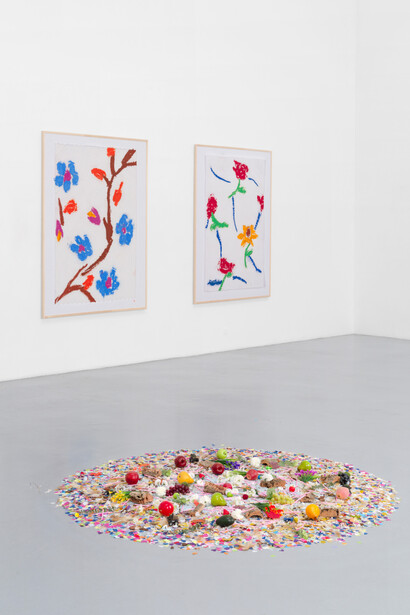
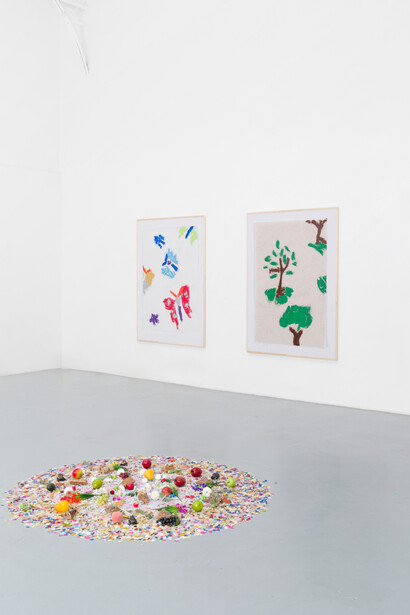
On the ground floor, four large oil pastel paintings anchor the space. Their origins trace a circuitous path: decorative motifs from commercial toilet paper, reinterpreted through the artist's daughter's kitchen-table drawings, then scaled up into dense accumulations of pigment. These works embody what theorist Hito Steyerl termed "poor images"—degraded copies whose circulation erodes their resolution—yet here they insist on aggressive materiality. At the center, a floor mandala assembled from e-commerce algorithms' suggestions—synthetic fruits, colored sand, decorative pebbles—creates a devotional arrangement from next-day delivery logistics.
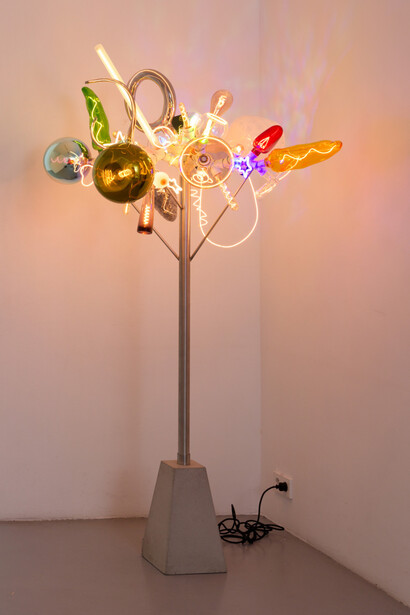
Upstairs, straw figures populate the gallery in conspiratorial groupings. These folkloric forms, constructed from agricultural waste repackaged as craft commodities, perform rustic tradition while remaining thoroughly theatrical. Overhead, chandelier constructions of cables and Edison bulbs multiply in configurations suggesting both organic growth and industrial standardization—each component a "quirky" design object mass-produced for distinction. Müller's practice refuses both nostalgic return to authentic experience and critical distance from commodity culture. Instead, the exhibition tracks how images and materials persist through successive platforms of reproduction and circulation. The pastoral—that fantasy of unmediated nature—reveals itself as always already framed, commodified, performed. Yet within these compromised materials, the artist locates a different vitality: one that emerges not despite but through mediation itself.
The exhibition draws from object-oriented ontology's insight that things withdraw from total access, maintaining realities that exceed human use or comprehension. Here, that withdrawal occurs within thoroughly human systems—a child's drawing, packaged straw, regulated light bulbs each carrying irreducible presence even as they circulate as signs. Driving through the countryside proposes no outside to capitalism's frames, but demonstrates how patient rearrangement of what's already in circulation can generate unexpected aesthetic possibilities.
![Mary Cassatt, Fillette dans un fauteuil bleu [Enfant dans le salon bleu] (detail), 1878. Courtesy of Musée d’Orsay](/attachments/3ddcf3630b2e6b21d055a8488350d949784be8fa/store/fill/330/330/9b97dc5b17cad42577b6453f0968e961b1231ceb2b8b5ceb2c09057b2695/Mary-Cassatt-Fillette-dans-un-fauteuil-bleu-Enfant-dans-le-salon-bleu-detail-1878-Courtesy-of.jpg)