English
 Español
 Français
 Deutsch
 Italiano
 Português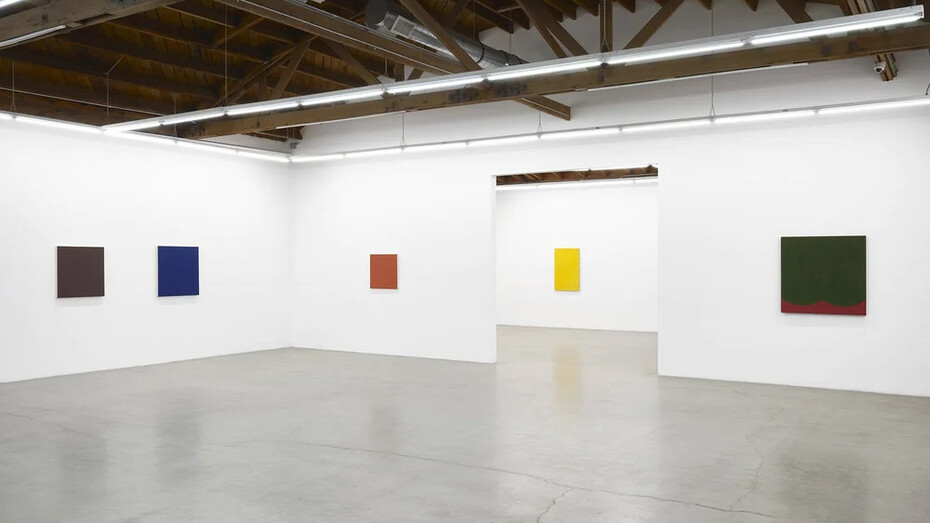
The artist is involved in being as a way of doing and in letting be… In that search for the present, for perception of being, the artist discovers a wholeness, a means of deriving beauty from within the area set out, from the nature of the materials together with the techniques and human attributes chosen to be dealt with.
(Marcia Hafif, Beginning again, Artforum, September 1978)
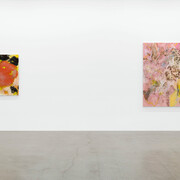
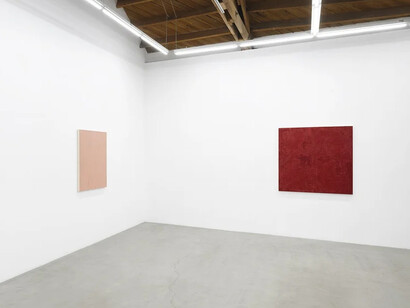
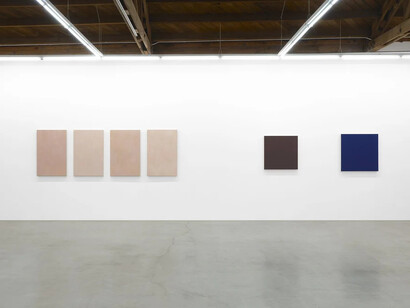
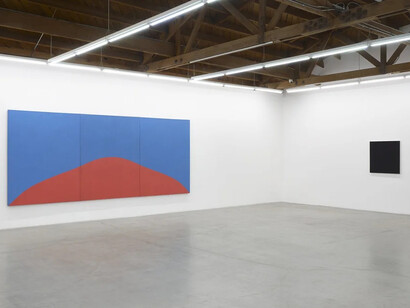
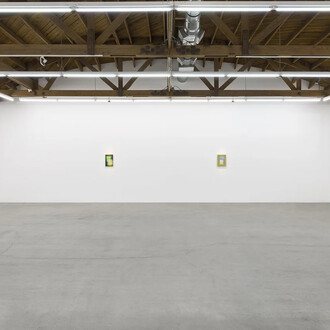
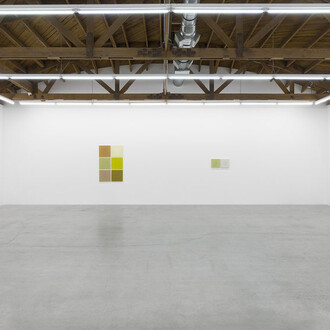
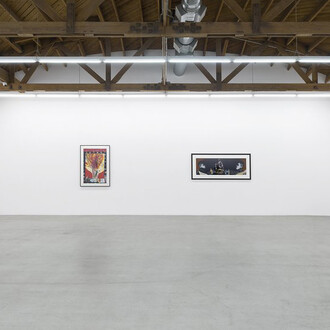
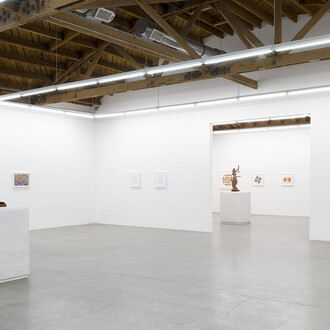
parrasch heijnen is pleased to present Marcia Hafif: experience of being, an exhibition of select works by the artist dating from 1962 – 1998. These paintings, which span the early to mid career of the artist’s nearly six-decade practice, include several works that have never before been shown in the United States.
Marcia Hafif’s (b.1929, Pomona, CA, d. 2018, Laguna Beach, CA) conceptual monochromes recreate emotional understanding through a highly methodical approach in which she related her body to her process, illuminating natural idiosyncrasies integral to the human touch. Hafif’s definition of “monochrome” connected to the subtle differences in hue, energy, and the patterns made by individual brushstrokes, generating a vibrating surface. The artist's paintings are both meditative and personal. The pleasure Hafif derived from her work was rooted in an uncertain journey towards the finished product: an act of unveiling a painting and its nature.
In his 1994 museum catalogue essay for Marcia Hafif, from the inventory, French critic Jean-Charles Massera illuminated an early but pivotal moment in the artist’s awareness of process. Observing how she removed context from experience to exhibit “its intrinsic qualities, out of place”, he described: “In 1970 Marcia Hafif recorded vibrations as she heard them on a Pacific Ocean beach, and presented this acoustic sample in the antiseptic space of a gallery at an exhibition: E.A.T. (Experiments in Art and Technology) at the University of Southern California… This sound work would not be repeated, but its principle seems to have guided Marcia Hafif’s pictorial development since 1972.” This principle of distillation, of isolating and pointing out a color negating its background noise, of making work that is of a place through one detail expanded, was an axiom of Hafif’s practice.
Attuned to chromatic variance, to light’s specific relationship with a specific location, Hafif collected native pigments, often referencing them in the titles of her works. Included in this exhibition, Roman painting III (1987) invokes the tonality and hue of a Roman cityscape, while French painting: rose painting: May 17, 1993 (1993) is expressive of the colors of Lyon, France. These two iconic bodies of work, while parallel in process, are differentiated by a subtle violet hue, the latitude between Lyon and Rome. In Mass tone, prussian blue (1974), the artist used dense, unmixed pigments to create unique surface effects, the result of their own material nature.
Hafif’s paintings are a constant reminder of objectness and materiality. Her “experience of being” was holistically attuned to each brushstroke she placed, each pigment she selected, and watching an object being created with her own hands from conception to materialization.