English
 Español
 Français
 Deutsch
 Italiano
 Português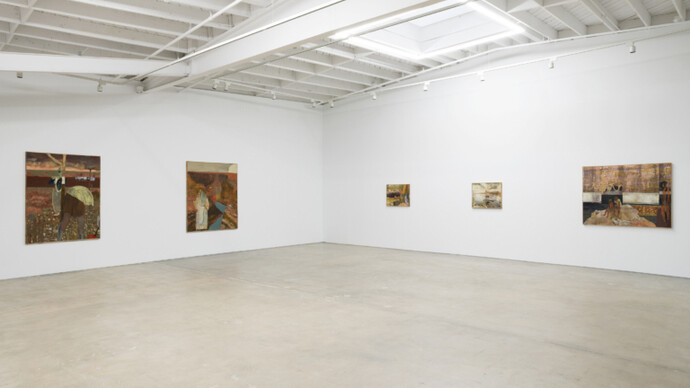
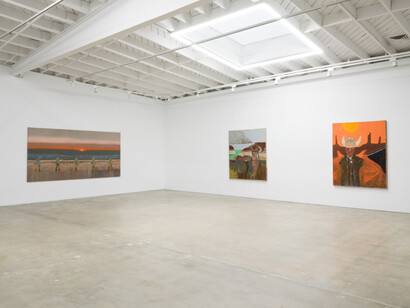
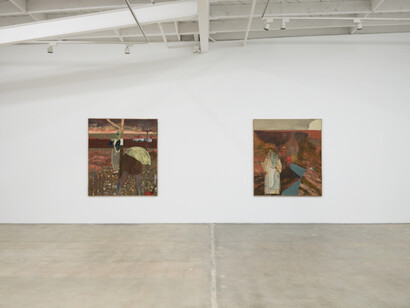
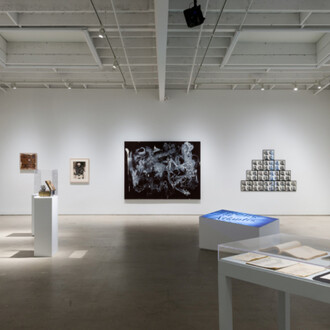
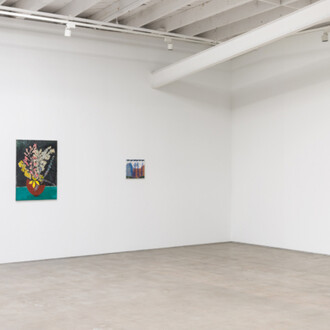
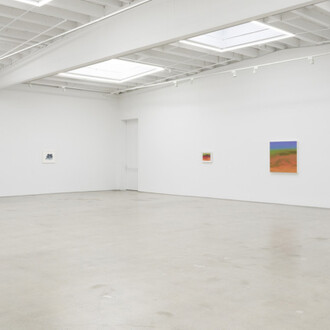
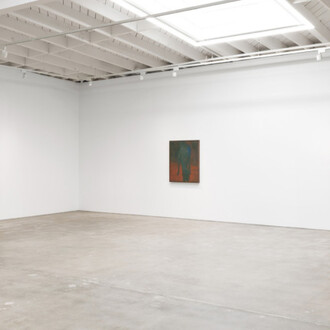
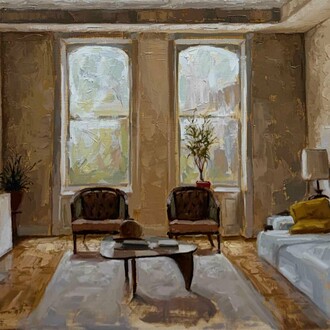
Casey Bolding’s paintings make memory material. Using plaster and industrial paint in concert with oil, acrylic, and Flashe, the artist builds up densely layered surfaces which he then scrapes and reworks, excavating embedded imagery drawn from mementos, photographs, and art history. As personal as they are process-based, Bolding’s paintings of landscapes and interiors are particularly informed by his childhood in the plains of Colorado, his longtime practice of graffiti writing in abandoned buildings and trains, and commercial faux-finishing techniques learned from his uncle. For Bloodstream, Bolding has created a suite of works that he describes as “mirages or scenes captured from the perspective of someone floating down the Colorado River,” from the Rocky Mountains to the Mexico-California border. This traveler encounters the West in what Bolding calls a “post-historic haze” that blends the archetypal and the everyday.
The dance between accumulation and reduction that forms many of the environments the artist depicts is reflected in his method. Canyons, carved into the earth over millennia through erosion, are rendered in Shell game (2025–26) through layers of cement and plaster, their cliffs dense with marbled strata. In the foreground, a robed figure, his face all but worn away through Bolding’s abrasion, seems to dissolve like the time-worn medieval icons his form suggests. In the similarly geological Cloud seeder (2026), a sewn horizontal seam in the canvas cleaves surface from a pool below, an effect akin to looking at water through glass. Drips that cross the breach and submerged plants are rusty due to Bolding’s oxidization of a faux-finishing paint, the artist engineering a chemical reaction that naturally occurs slowly between water and metal. This harmony between image and the act of representing makes the works appear preordained, as if they existed in the world long before Bolding found them.
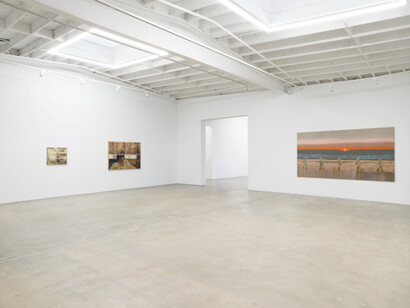
Water likewise flows through Red river mirage (2026), bisecting the canvas horizontally. A version of Manet’s Young flautist (1866) stands sentinel, his flute perfectly aligned with the far shore of the river. A semi-transparent, stooped figure in the foreground is just as flat as the appropriation, their leveled forms contrasting with the ridges of paint that animate the tributary’s surface. With its hallucinatory, non-local colors, including the titular river and the passages of pink that seem to both seep into and accumulate atop the grass; combination of source imagery; and variety of textures, Red river mirage presents landscape as a product of painterly imagination. The water’s unnatural, bloody hue is also suggestive of ecological crisis; in military garb, the flautist plays a tune that signals a perilous forward march. Based on a video the artist took of a man using a metal detector, the ten-foot-wide Goldfish (2026) represents movement through a series of consecutive stills, à la Eadweard Muybridge, known for his late-nineteenth-century illustration of a horse’s gallop composed of a sequence of photographs. Constituted by rust and an ethereal blue mirrored in the ocean above him, the beachcomber appears to materialize out of the landscape. Searching for treasures buried under the sand, he echoes the artist’s practice of unearthing relics from the rubble.