English
 Español
 Français
 Deutsch
 Italiano
 Português
Since its inception, the Emerging curators project has served as an annual exhibitory and academic trademark of the Power Station of Art, supporting 58 young Chinese curators through 23 on-site exhibitions and 2 online editions. For the first time, ECP 2025 shifts its focus to case studies and presentations of individual artists, inviting young curators to submit proposals for solo exhibitions. Through an in-depth examination of the artist’s creative practice, the project encourages curators to generate a more nuanced understanding of the artist’s individual modes of production and to develop exhibition narratives that are more issue-driven and context-responsive, fostering new reflections on the relationship between curating and exhibiting through close dialogue and collaboration between artists and curators.
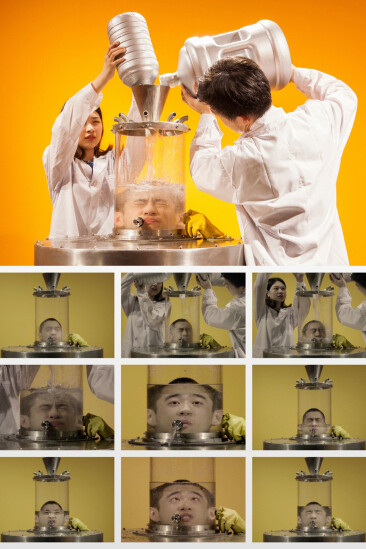
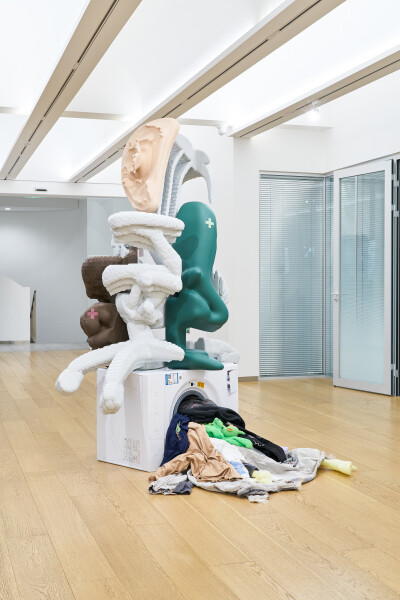
ECP 2025 received 80 submissions in total, of which 69 were valid proposals and 6 were shortlisted for the final selection. In October 2025, members of the PSA Academic Committee—including Emanuele Coccia, Cuauhtémoc Medina, Lin Tianmiao, Liu Qing, Roan Ching-Yueh, Wang Jianwei, and Gong Yan—conducted online final reviews and interviews with the 6 shortlisted curatorial teams. The two selected proposals are LiHi·Brave new mind: Li Hanwei’s Sanatorium project (curated by Wu Zhe and Chen Wenyi) and Wish you were here 2047: is ‘chenchenchen’ a fictional artist? (curated by Zhou Yi and Chen Gong). Both will be presented to the public as exhibitions on February 7, 2026.
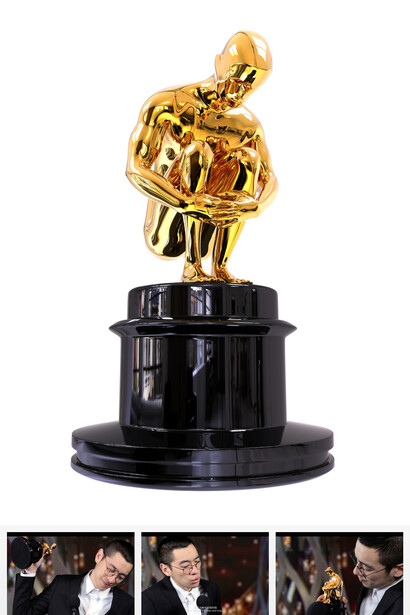
In addition, the ECP Award for this edition will be offered to one of two selected proposals following evaluation by experts, academics, media, and the general public after the official launch of the curatorial projects. A prize of RMB 50,000 will be awarded to the winning curatorial team and to its proposal for further research and development. The winner will be announced following the closing of the exhibition.
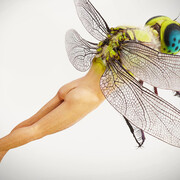
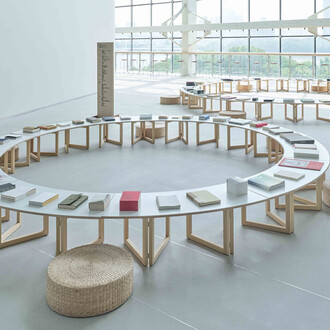
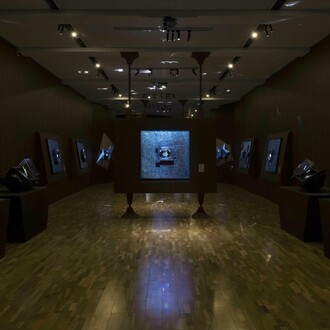
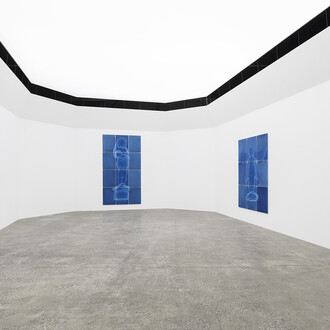
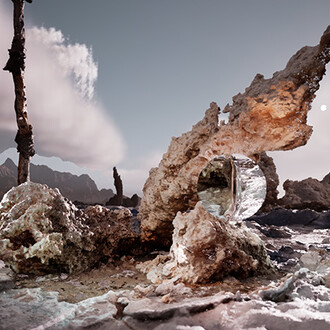
In an era where everything is optimized by technology, is recuperation also constrained by an ever-operating system? The exhibition LiHi·Brave new mind: Li Hanwei’s Sanatorium project originates from a fictional sanatorium brand, LiHi, inviting visitors to enter a meticulously designed experiential environment. “Brave New Mind,” the core motto of LiHi, points not to a specific organ but to a collective imagination of intelligence, rationality, and efficiency. Guided by this concept, the mind and perception are treated as renewable resources, while recuperation is understood as a long-term, continuous technical operation. Conceived within this framework, the exhibition is transformed into a spatial structure, in which the site is constructed as a circular, modular system.
Videos, sculptures, paintings, lighting, and other forms of works are arranged within a unified structural and lighting system, acting as sensory nodes that interact with one another while remaining relatively independent. As viewers move through the exhibition, they are presented with a pre-configured “sanatorium package,” allowing them to sense variations in intensity and density across different units. Through the arrangement of space, perceptual paths, and modes of viewing, the artist explores how technology operates at the limits of the body and emotion, while addressing critical questions: whether art can still sustain its ambiguity when creation, spectatorship, and recuperation itself become configurable social labor? Whether there still exists a genuinely human dimension that cannot be fully absorbed by a highly optimized system?