English
 Español
 Français
 Deutsch
 Italiano
 Português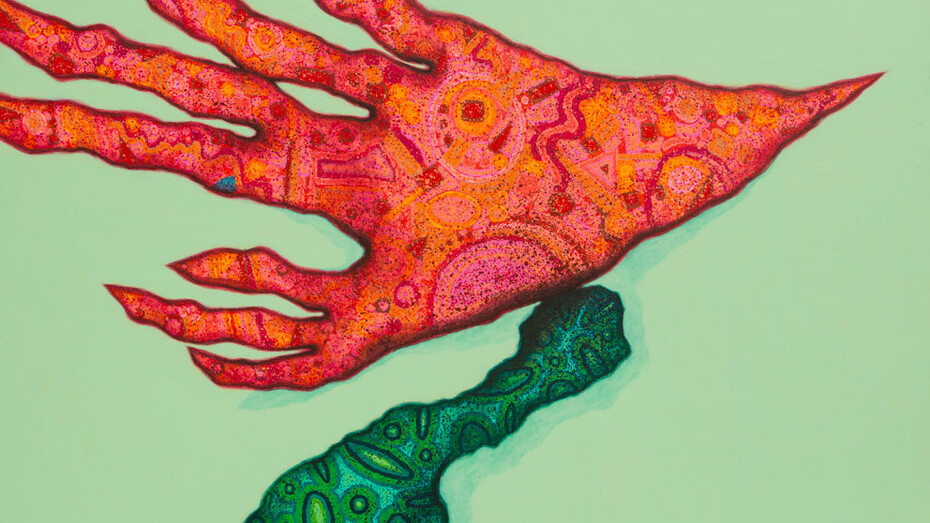
Wandering between good and evil, hope and despair, Nihad Al Turk’s paintings take a colorful, naive approach to express his philosophical reflections on humanity.
Without formal art schooling, Nihad Al Turk built his career through years of dedicated practice. In his quest for a unique artistic voice, after countless hours of experimentation and refinement, he has developed a distinctive visual language that blends colors, forms, and patterns, preserving his naïve sensibility while conveying his philosophical outlook and artistic vision.
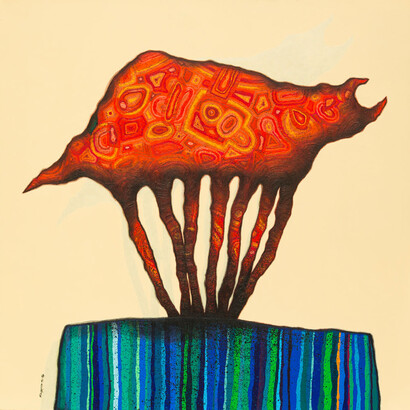
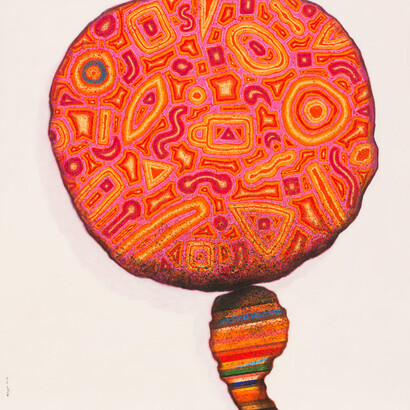
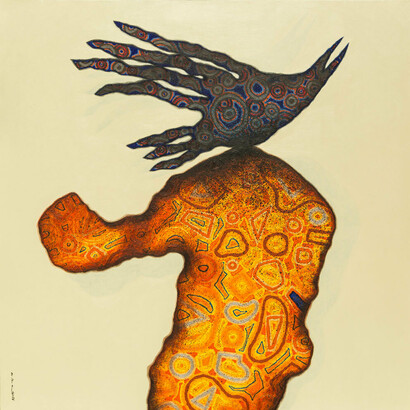
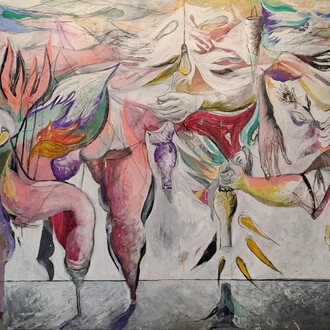
Anthropomorphic shapes and figures take center stage in the artist’s compositions, serving as a form of self-portraiture. They reflect Al Turk’s view on humanity and his connection with the world. These haunting, creature-like beings represent the complexity of our human ecosystem. In his earlier works, the figures seem burdened, heavy, and bloated, almost rock-like in their presence, only to later shed that weight and become lighter as his characters evolve. Symbols and recurring motifs are woven into his paintings, playing a key role in creating works that reveal the flaws and contradictions of human nature.
An apparent shift in color, combined with shapes resembling fruits, trees, and birds rather than human forms, symbolizes optimism in this body of work. The tree may even symbolize the Tree of Life, infusing new vitality into his works and filling them with renewed hope for humanity’s future. While his human figures remain present, they now seem to embody a sense of relief; they appear light and airy, enhanced by their increased brightness and vibrant colors. Patterns further contribute a sense of lightness and playfulness to Al-Turk’s work, reinforcing his childlike approach to representation. The layering of pattern, medium, and color complements Al-Turk’s favored medium of collage. A contradiction then appears between the artist’s introspective state and the message conveyed, as well as how his works are rendered.