English
 Español
 Français
 Deutsch
 Italiano
 Português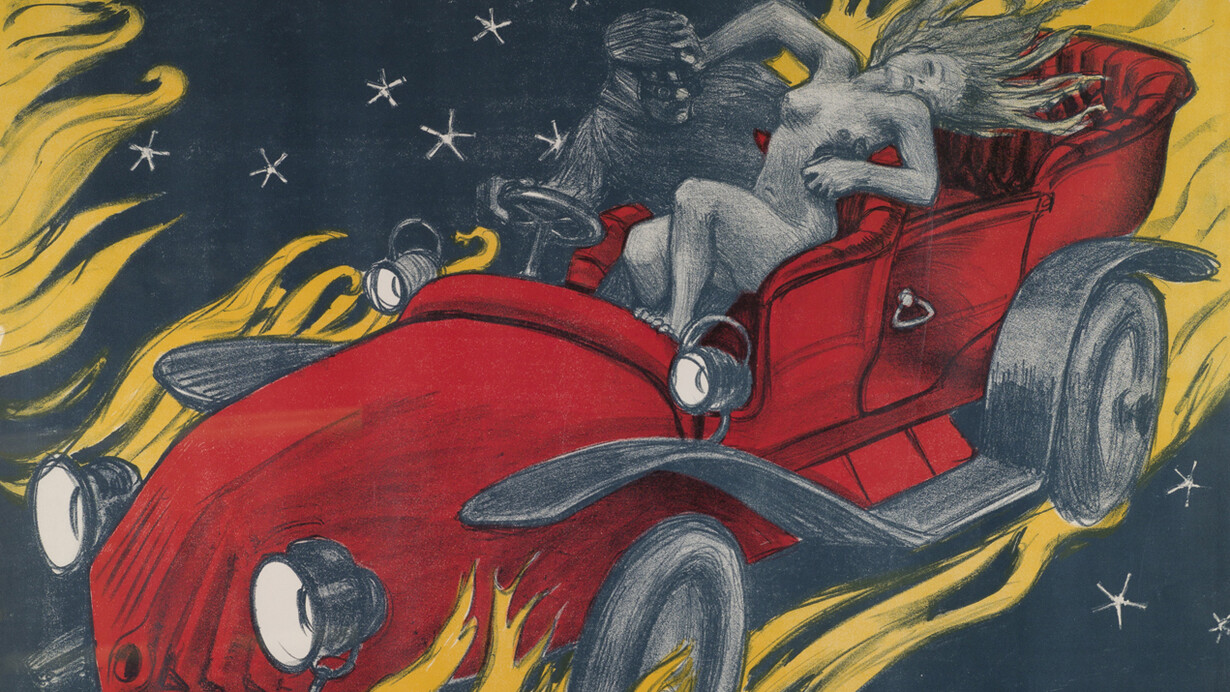
Gallen-Kallela Museum’s spring exhibition showcases delicate, small-scale art created with love. Akseli Gallen-Kallela’s graphic art invites the viewer to pause and examine the details of the artworks up close.
Akseli Gallen-Kallela (1865–1931) is a pioneer of Finnish modern graphic art and commercial graphics. The exhibition introduces the artist’s diverse production and role as a developer of graphic expression.
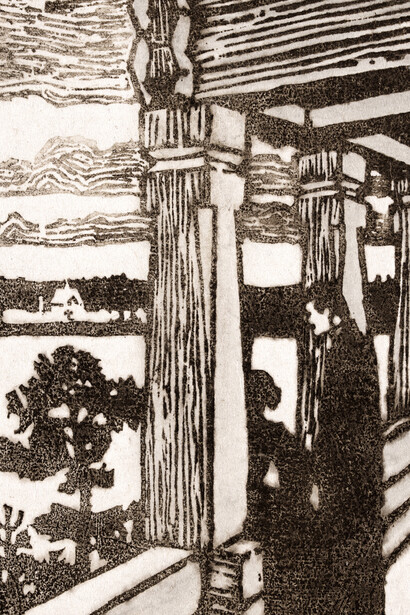
Gallen-Kallela produced over a hundred graphic artworks during his career: ex libris, portraits, landscapes, Kalevala themes as well as posters, mostly between 1895 and 1915.
Gallen-Kallela, who followed trends in the art world closely, learned the basics of etching in Berlin in 1895 and later worked independently in Kalela to familiarise himself with the woodcut technique. The artist was interested in various techniques and soon moved on to lithography and poster art, developed his printmaking techniques and shared his expertise with his students, such as Hugo Simberg (1873–1917) and Eric O. W. Ehrström (1881–1934).
Gallen-Kallela had hoped to receive some sorely needed extra income from his “treasures of miniature art” but in Finland, his contemporary audience shied away from the minimalist artworks. Although printmaking did not prove to be financially profitable, despite his expectations, making the art brought great joy to the artist: “If there was any hope that I could earn something with my woodblock prints, I would rather work on them, for I truly make them con amore.”
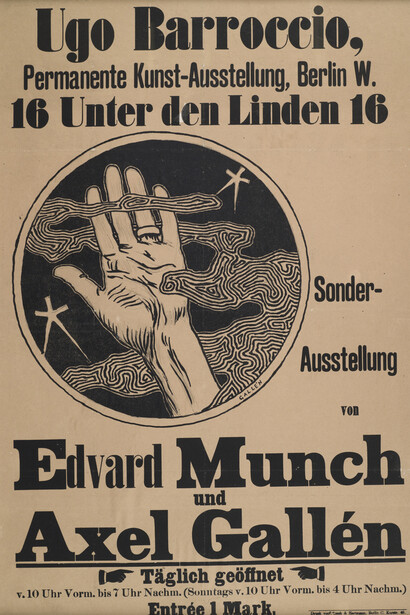
The artist’s printmaking, which emphasises black-and-white expression, received well-deserved international attention, for example, among the Die Brücke group. Gallen-Kallela was invited as a member of the group in 1907, and he participated in many of the group’s exhibitions. The iconic Bil-Bol (1907), also displayed in this exhibition, is known world over as a classic work of Finnish poster art.
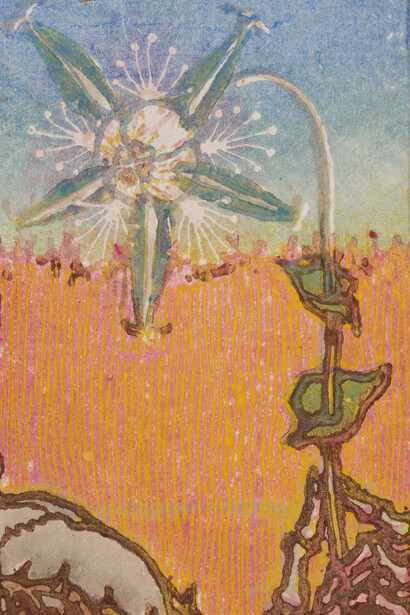
A special feature of the exhibition is the rarely seen version of Gallen-Kallela’s artwork Flower of Death (1895) with an outreached hand. The print-work is considered to be the first Finnish woodcut.
The exhibition has been curated by the art historian Elias Djupsjö (MA) in cooperation with the Gallen-Kallela Museum. The themes of the exhibition are explored in greater depth through sketches and paintings related to the graphic art. The majority of the artworks in the exhibition are from the museum’s own collections, enriched by loans from the Finnish National Gallery and private collections.