English
 Español
 Français
 Deutsch
 Italiano
 Português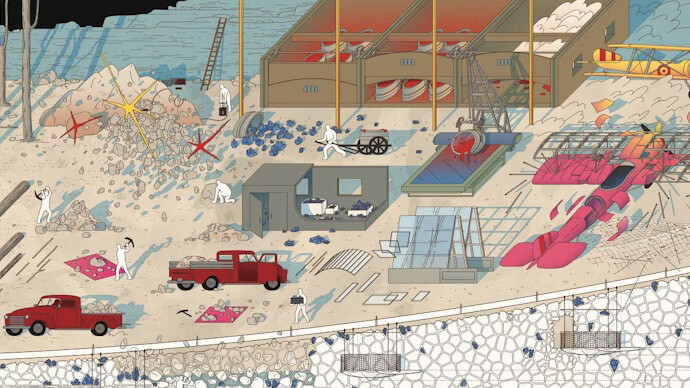
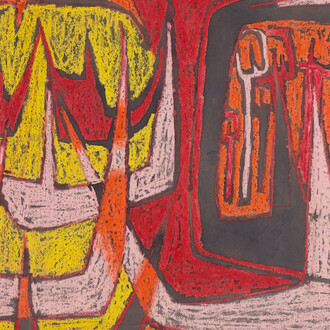
Adopting the visual language of graphic novels, New York architecture firm New Affiliates found inspiration in architect Bruce Goff’s offbeat and unexpected materials.
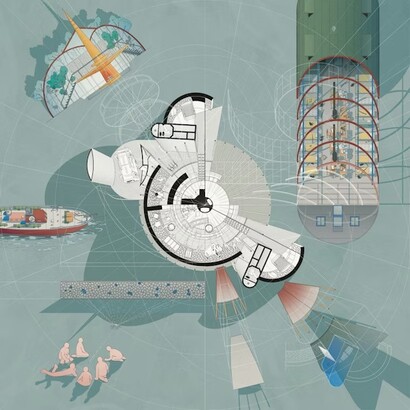
In 2024 architects Ivi Diamantopoulou and Jaffer Kolb of the firm New Affiliates were invited to participate in the Beta Architecture Biennial in Timișoara, Romania. Already steeped in Bruce Goff’s architectural drawings and collections for their exhibition design of the upcoming retrospective Bruce Goff: Material Worlds, they decided to take a deep dive into his unique forms and materialities. This new creative project soon focused on three of Goff’s best-known works: Shin’enKan, a house for Etsuko and Joe Price in Bartlesville, Oklahoma; the Ruth and Sam Ford House in Aurora, Illinois; and the Eugene and Nancy Bavinger House in Norman, Oklahoma.
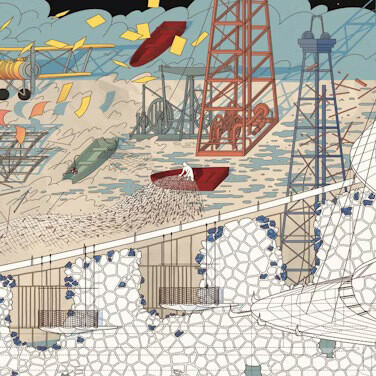
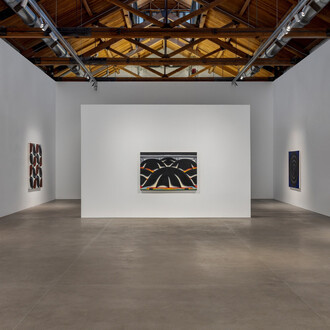
While each of these houses features different geometries, all three share Goff’s unusual approach to architectural construction, which often repurposed everyday materials from consumer, industrial, and military uses to dazzling effect. This common thread became the subject of three large-scale drawings, produced in a visual style that borrows from diverse sources including recent graphic novels and the 1970s “Architoons” drawn by Chicago architect Stanley Tigerman.
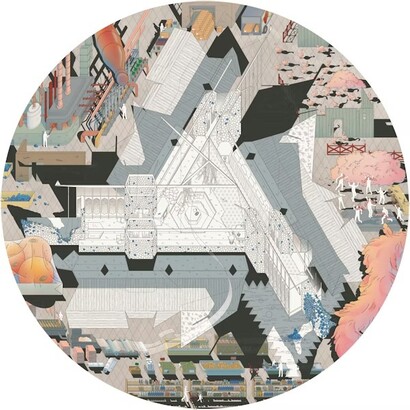
Recently acquired by the Art Institute of Chicago, Diamantopoulou and Kolb’s composite drawings illustrate the unique form of each house—triangle, dome, and logarithmic spiral—through simple, black and white floor plans and sections based on drawings by Goff at the Art Institute. Around these linear drawings, the architects layered fanciful vignettes about Goff’s materials that explode with color, action, and whimsy.
The drawing Shin’enKan, Revisited, for example, explores several unusual materials found in the house’s triangular, double-height living room, including long cellophane strips that Goff used to create a dramatic sculpture hanging from a central skylight. Inspired by this detail, the architects created a fictional scene showing one of the more common uses for cellophane plastic, to cover the vegetables and fruit sold in a grocery store. This imagined space appears in exquisite detail, complete with grocery aisles, immaculately wrapped produce, and cartoonish outlines of shoppers, thus making a playful connection between Goff’s idiosyncratic architecture and the shared materials of modern life.