English
 Español
 Français
 Deutsch
 Italiano
 Português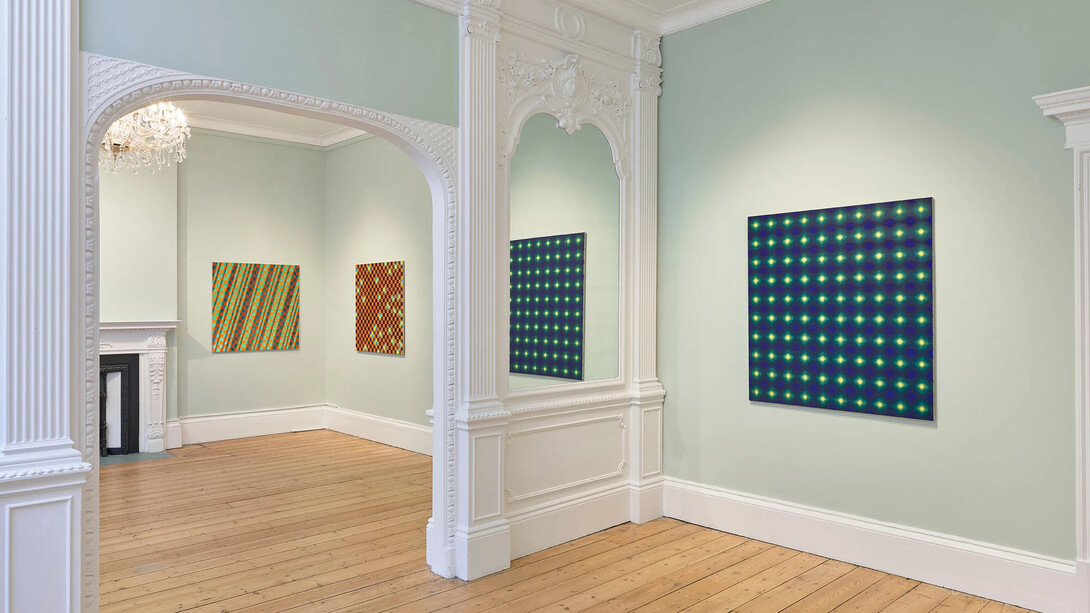
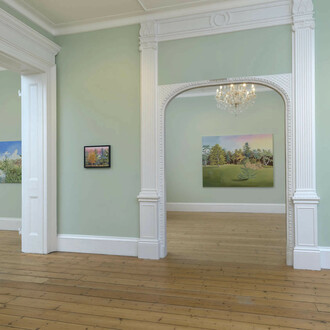
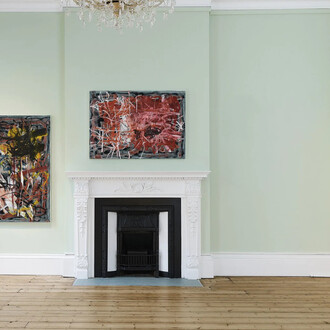
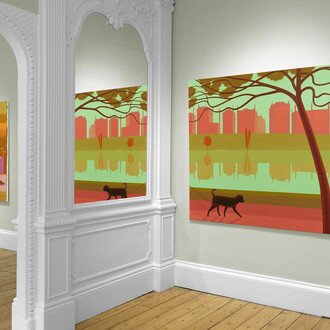
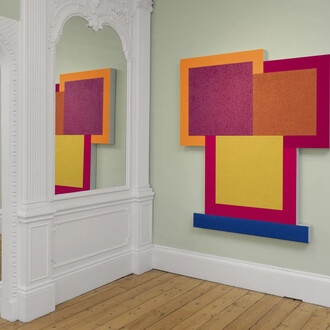
Massimo De Carlo is pleased to present A great sufficiency, Peter Schuyff’s first solo exhibition with the gallery in London.
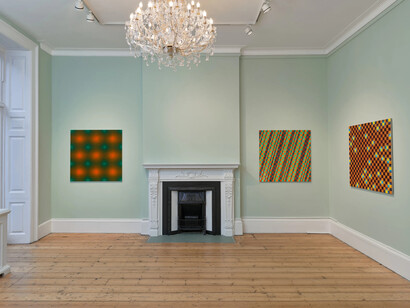
The exhibition brings together works shaped by counting, repetition, and sustained manual work, treating painting as a self-contained economy of labour and attention. The title points to a sense of fullness - neither too much nor too little - and reflects Schuyff’s resistance to over-explanation, as well as his belief that painting finds its meaning through the act of making itself.
“Function is a much better word than meaning,” Schuyff says. His paintings operate directly - visually, optically, physically - engaging the eye and the body. What they produce may vary, from pleasure to strain or fatigue, but the emphasis remains on the fact that something happens.
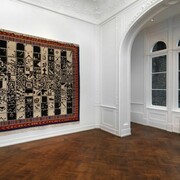
Many of the works in the exhibition are linked by systems of counting and measuring. Titles such as Ninety six nurses (2024), One hundred golden eggs (2024), and Gross miscarriage (2024) read almost as records or inventories. A “gross” means twelve dozen, or 144, a unit once used to count everyday goods like eggs or nails. DC (2024) points to six hundred, written in Roman numerals. The numbers mark the units Schuyff works with, linking the paintings to a logic of accumulation based on repetition and duration.
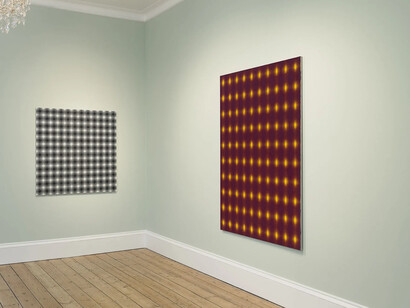
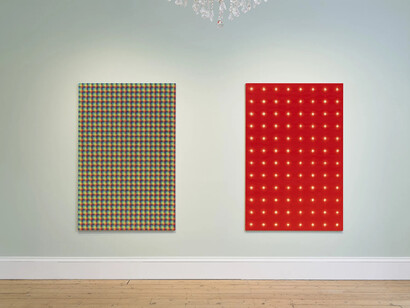
Several works from 2024 are densely worked, their surfaces punctuated by small points of light that slow the eye. The optical effect is a result rather than a plan. “I wanted to stop thinking and keep my hands busy,” Schuyff explains. Built over weeks through the repetition of a single gesture, the paintings gradually gather a different kind of intensity. “It’s like a stone in your pocket,” he says. “At a certain point it becomes gold. It becomes shiny. It becomes heavy.”
A sense of visual instability in the works emerges from touch and time rather than design. The surfaces unsettle the eye because they have been worked again and again. Looking slows down, becoming more attentive. The paintings ask the viewer to remain.
Schuyff is also open about the circumstances in which these works tend to be made. “They’re not the paintings I make when I’m really happy,” he says. “They are therapy.” This is not offered as confession, but as context. For Schuyff, painting is a form of persistence rather than expression. He has described himself as “more an athlete than a poet.”Across a career that began in New York in the 1980s and moved through Neo-Geo and beyond, Schuyff has avoided fixed positions and categories. Now based between Amsterdam, Netherlands, and Bari, Italy, but still culturally shaped by New York, he works at a slight remove from place and narrative. That distance allows him to remain attentive to what painting can still do, on its own terms.
A great sufficiency does not seek to demonstrate painting’s relevance or argue for its necessity. It takes it as given. The exhibition asks little of the viewer beyond time and attention. What the exhibition offers instead is a complete act of painting, carried forward through measure and repetition until it reaches a point where nothing more is needed. This is what Schuyff calls “a great sufficiency”.