English
 Español
 Français
 Deutsch
 Italiano
 Português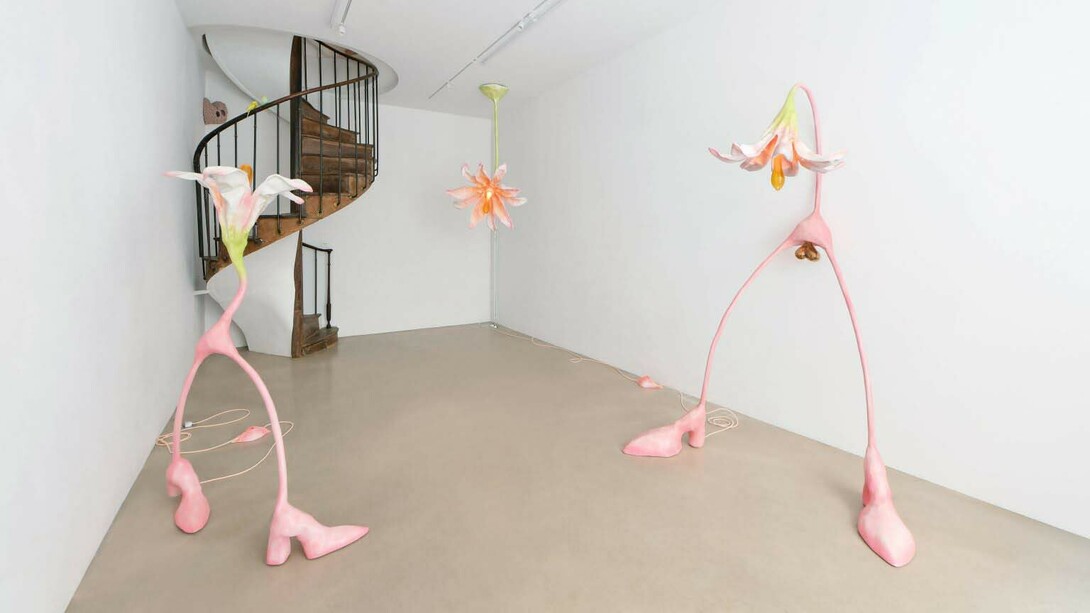
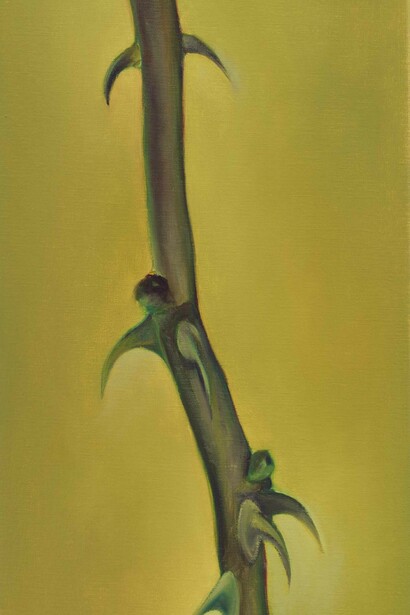
Flowers — Form, meaning and transience brings together artists who approach the floral motif not as decoration, but as a critical and material framework. Across painting, sculpture, textile and hybrid practices, the exhibition explores the flower as a site where form, symbolism and process intersect.
Historically charged with associations of beauty, growth and ephemerality, the flower here becomes a lens through which broader questions of time, transformation, identity and making are addressed. Rather than presenting a unified image, the exhibition unfolds as a constellation of distinct artistic positions.
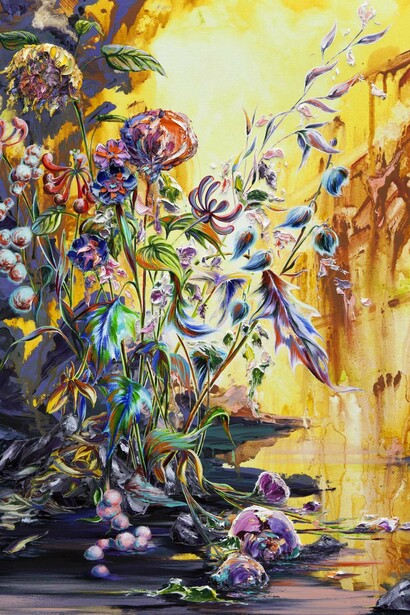
In Marc Mulders’ work, the flower operates as a spiritual and painterly terrain, where abundance, decay and light coexist. His paintings articulate a cyclical understanding of life and death, rooted in materiality and gesture.
Kiki van Eijk approaches the flower through structure and craftsmanship. Moving between design and fine art, she transforms floral forms into sculptural and architectural systems, emphasizing repetition, construction and precision.
For Taqwa Ali, the flower functions as a symbolic and personal carrier. Her work connects organic forms with narratives of memory, identity and femininity, allowing vulnerability and strength to exist simultaneously.
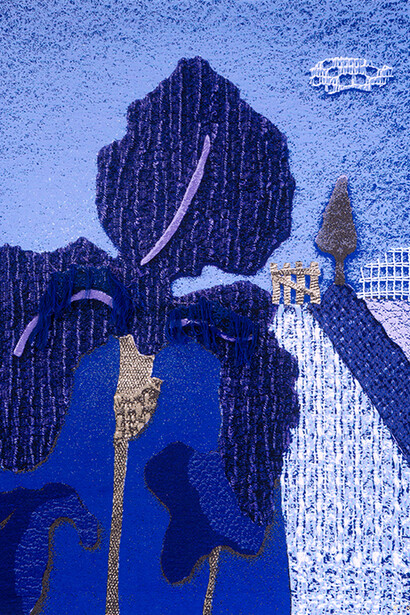
Anna Aagaard Jensen engages the floral motif through textile, tactility and handwork. Her practice foregrounds the sensory and the intimate, positioning making itself as a slow, attentive and embodied process.
In Sam Werkhoven’s work, the flower appears within a contemporary and sometimes unsettling context. Detached from romantic symbolism, it becomes an image that negotiates tension between nature and culture, attraction and unease.
Alongside these artists, additional participants contribute further interpretations, reinforcing the flower as a mutable and continually redefined motif. Together, the works demonstrate how a seemingly familiar form can serve as a rigorous and relevant vehicle for contemporary artistic inquiry.