English
 Español
 Français
 Deutsch
 Italiano
 Português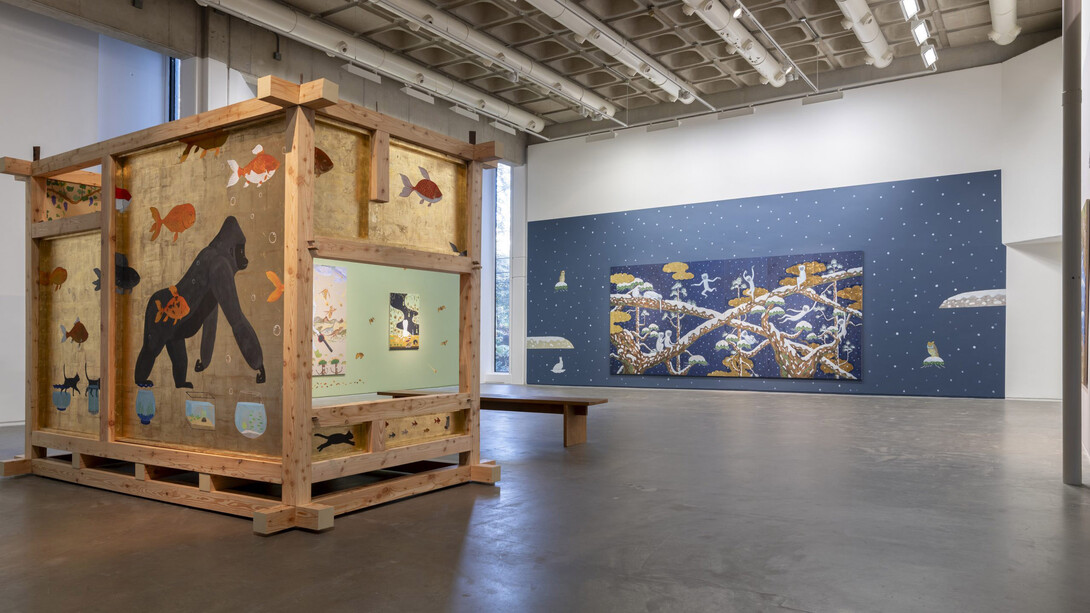
The Douglas Hyde is delighted to open a commissioned solo exhibition by renowned artist Atsushi Kaga titled Just another human experience.
Over the past twenty years, working across paintings, installations and sculpture, Kaga has created a complex alternate universe populated with cats, mice, monkeys, foxes, and, continually at the centre a singular white rabbit.
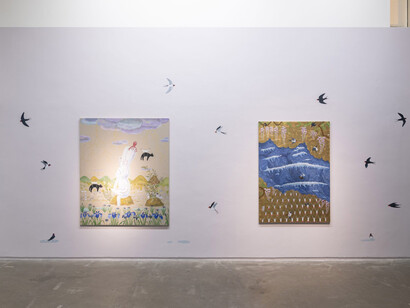
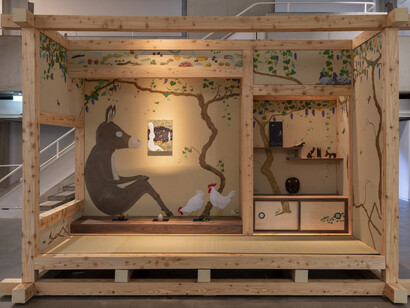
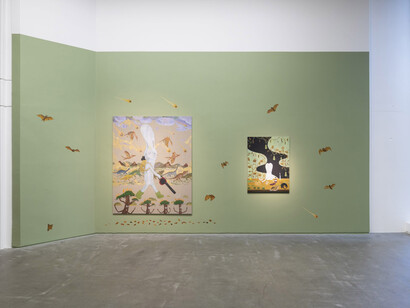
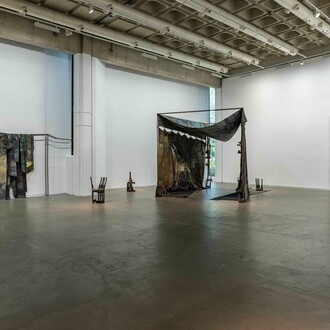
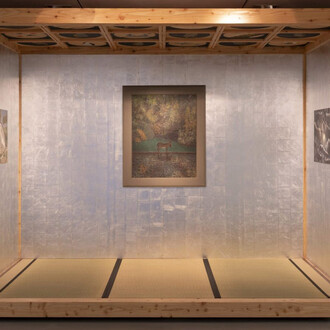
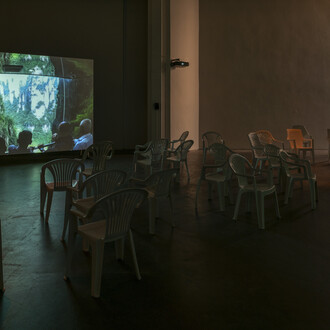
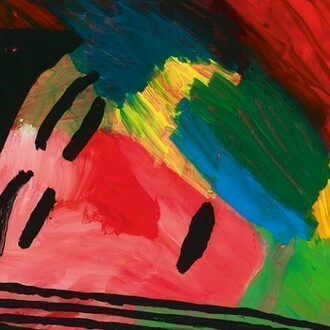
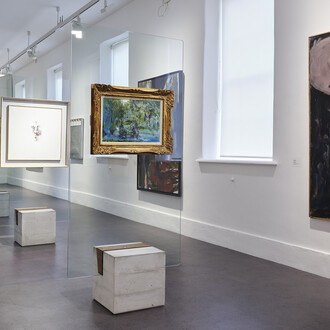
In his first institutional exhibition in his adopted home since 2008, Just another human experience transforms the gallery into a space of four seasons bringing together large-scale and small paintings, bronze works and a large sculptural pavilion at the centre of Gallery 1. The four seasons of the year correspond to the gallery’s north, east and west walls, surrounding a central ‘Summer’ pavilion.
“Usacchi,” a near anagram for the artist’s name is the diminutive form of usagi, the Japanese word for rabbit or hare. Usacchi appears throughout the exhibition; the coffee-addicted big-eared bunny (or trickster) takes a purposeful stroll outside, sits on a rock contemplating the world or, takes care of his dental hygiene amidst dying sunflowers. The humourous, deflationary title of the exhibition stands in stark contradiction to the chaos around him.
The ‘cute-ness’ of the bunny, an eternal stand-in for the artist, belies the melancholy and challenge that pervades Usacchi’s world. Animals as human ciphers offer a safe space to talk about feelings and fears. Eager for viewers to see themselves in the work, the protagonist’s uncertain surroundings are neither interiors nor exteriors, but golden realms experienced through the imagination. Usacchi encounters multi-faceted cultures, seamlessly weaving the subjective and the universal, and inviting us to empathise.
Kaga’s upbringing in Tokyo is evident throughout the work. From the influence of Japanese subculture, he fuses elements from animé and manga with the work of painters from Hasegawa Tōhaku (1539-1610), Itō Jakuchū (1716–1800) and Ogata Korin (1658–1716) to James McNeill Whistler (1834-1903) and Henry Darger (1892-1973). Throughout the work Kaga uses gold leaf, taking inspiration from the Edo period Rinpa School of painting in Kyoto, known for using gilded layers of oil and gold to exalt themes inspired by nature and Japanese traditions.
Storytelling is at the heart of Kaga’s work, presenting scenes from daily existence that explore cultural politics, the quest for personal identity, mental health and struggles of daily life. Using anthropomorphism he presents a complete inventory of human emotions; layering the work with dark humour, social satire and existential philosophy.
At a time when we are caught in torrents of climate calamity, wars and other horrors, Kaga invites viewers to reflect on universal themes of fragility, loneliness, and the passage of time. Just another human experience presents a series of encounters between one’s inner world and the natural phenomenon of the exterior world exposing the fragility of life and the fleeting nature of all things.