English
 Español
 Français
 Deutsch
 Italiano
 Português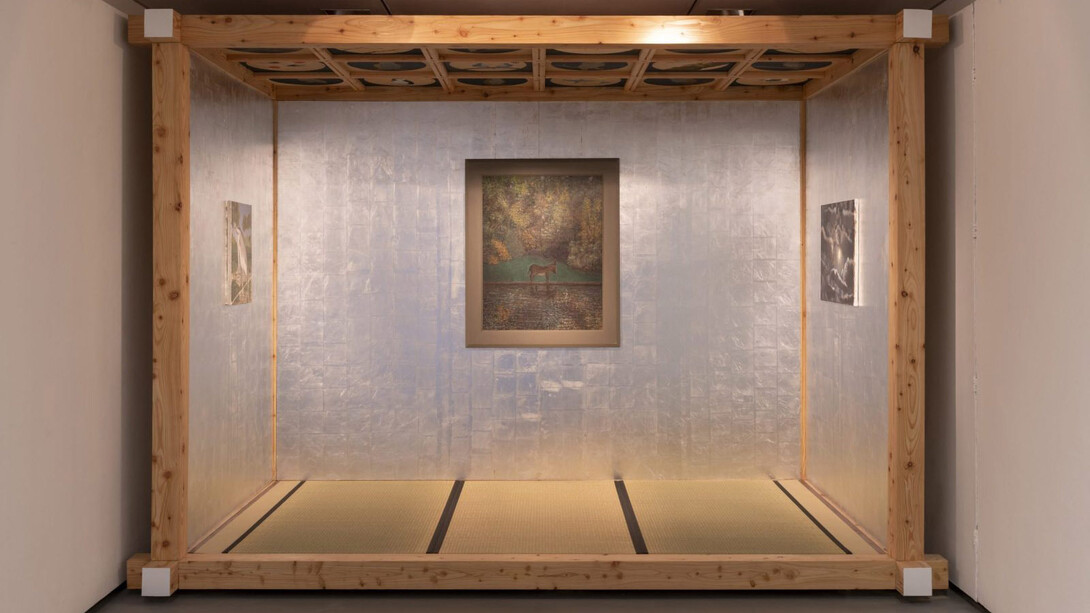
Acknowledging the crucial role artists play in influencing and shaping other artistic practices, The artist’s eye series asks those exhibiting in Gallery 1 to invite an artist of influence to present work in Gallery 2. In this instalment Atsushi Kaga has selected the work of painter Stephen McKenna to be presented.
Stephen McKenna (1939-2017) studied at the Slade School of Art before moving between Belgium, Germany and Italy, and settling in Ireland. Influenced by his time in continental Europe, McKenna drew on classical and modern painting traditions to skilfully explore pictorial form through a contemporary lens. Over his 60-year career, Stephen McKenna produced a large body of work, developing a distinctive style of representational painting that withstood the changing art movements. Ranging from still life to interiors and landscapes, the artist’s atmospheric renditions of the physical realm are marked by the otherworldly. McKenna conveyed a deep curiosity through his work, using painting as a method to apprehend the world, its banality, absurdity and wonder.
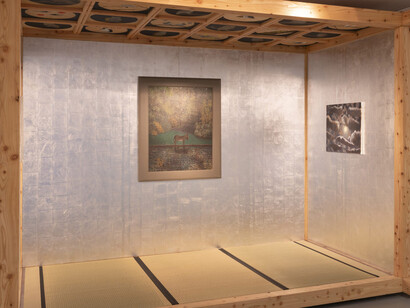
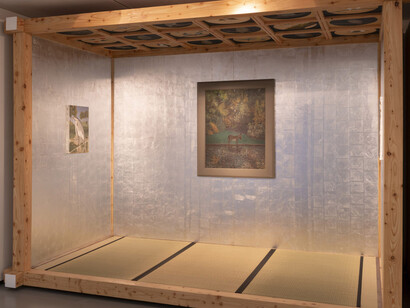
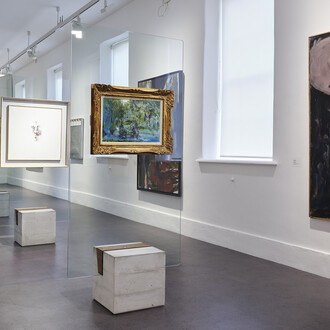
In Gallery 2, a selection of three paintings produced by McKenna during the turn of the millennium demonstrate the artist’s longstanding interest in the natural world. McKenna’s painterly approach and compositional harmony imbue the works with a mythical quality, rendering scenes that appear to transcend time. Beneath this serenity McKenna explores an underlying strangeness. Moon with rough clouds (2000) hints at the eerie while Heron (2002-2011) captures a distinctly understated portrait of the typically flamboyant bird, notably considered a divine creature in Japanese culture. Similarly, in Narcissus (1999), McKenna archly punctures the grandiose title with the humble figure of a donkey.
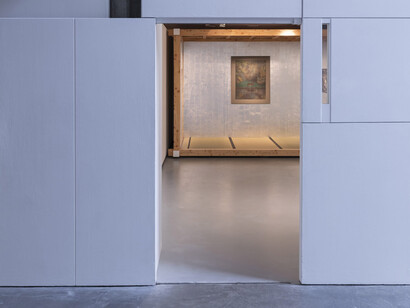
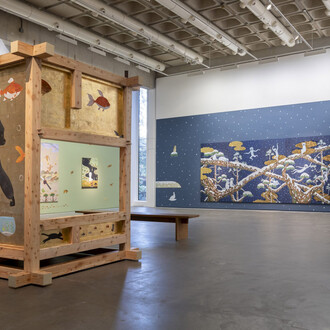
For The artist’s eye, McKenna’s three paintings are presented in a hand-painted tokonoma, a raised alcove dedicated to contemplation and the display of art, typically featuring in traditional Japanese homes. Choosing to display McKenna’s paintings in the tokonoma, Kaga dedicates a space to observe and reflect on these self-contained worlds.