English
 Español
 Français
 Deutsch
 Italiano
 Português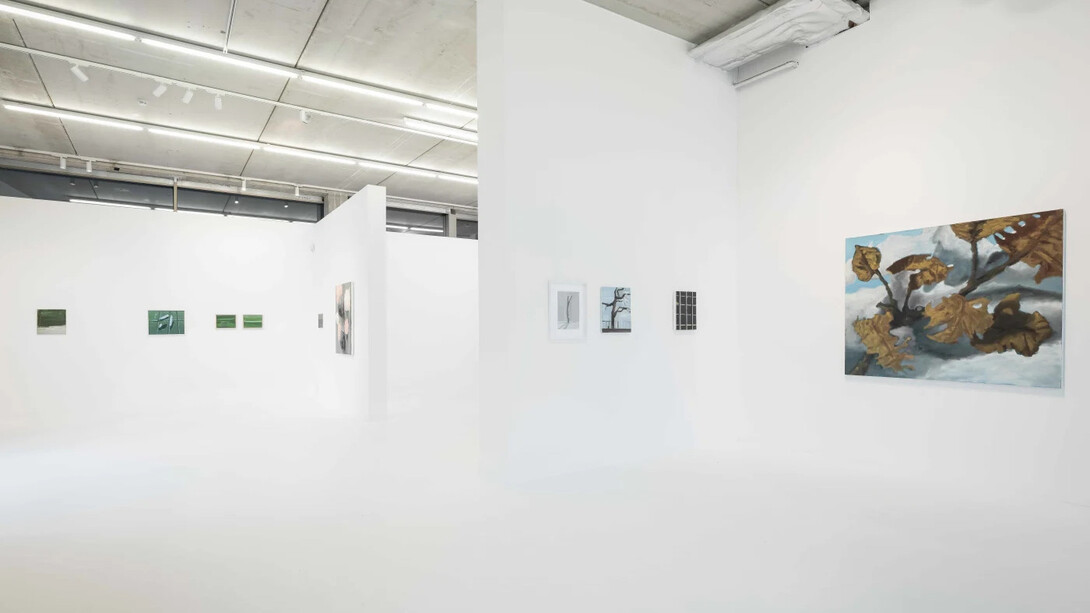
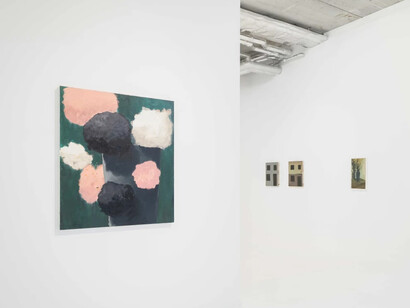
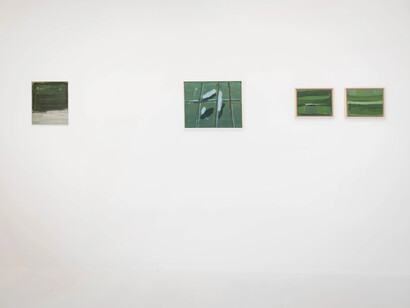
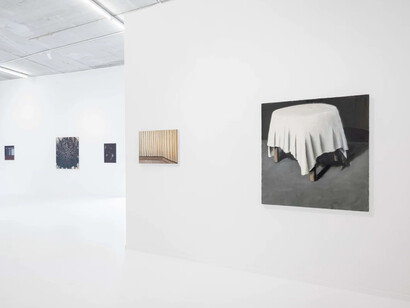
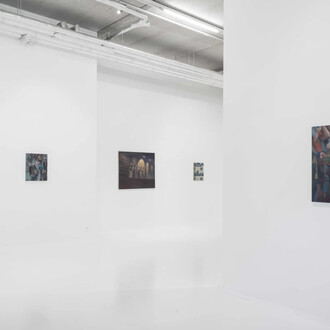
Silent Talk presents the work of two painters , Cristof Yvoré and Ilse D’Hollander, creating a silent dialogue between two artists, who have never met. Their respective practices resist easy categorization—neither strictly abstract nor conventionally representative—and expand the possibilities of what painting can reveal about memory, vision, and reality. Their paintings, never large in scale, share an absence of the human figure, affirming painting as a mode of thought, a poetics of silence, and a meditation on presence. In the hushed eloquence of their images, we encounter not emptiness, but an invitation to dwell, reflect, and perceive with heightened awareness.
Within the contemporary field of painting—where figuration often contends with the pressures of narrative and spectacle—the bodies of work by Cristof Yvoré (1967–2013) and Ilse D’Hollander (1968–1997) delineate an austere yet profoundly resonant territory. Born in different geographies—Yvoré in France and D’Hollander in Belgium—their practices intersect in an almost uncanny manner. Both artists died young, leaving behind bodies of work marked by quiet hermeticism and a deep poetic engagement with the act of painting itself. In their respective oeuvres, the human figure is absent, yet presence is strongly felt through the atmospheric charge of paint, memory, and space. This exhibition brings these two singular voices into dialogue, inviting viewers to consider not only the affinities between their approaches but also how their differences illuminate distinct modes of abstraction and perception.
Central to both Yvoré’s and D’Hollander’s work is an attentiveness not to the human figure, but to what remains in its absence. Yvoré’s canvases are populated by everyday objects—vases of flowers, empty plates, corners of rooms, curtains, architectural fragments—yet these elements exist in an isolated sphere, stripped of narrative context and devoid of explicit human presence. His compositions radiate an existential stillness, as if the depicted objects were relics of a familiar domesticity suspended in time. Yvoré’s method of working “solely from memory,” as he often stated in interviews, reinforces this introspective distance: he does not paint what he sees, but what lingers in the mind’s eye. The dense materiality of his paintings, built through successive layers of pigment, absorbs rather than reflects light, generating a compressed, almost claustrophobic space in which objects acquire a sculptural weight.
Ilse D’Hollander’s practice, while similarly eschewing figuration, unfolds through a more liminal negotiation between abstraction and evocation. Her paintings hover on the threshold between representation and pure painterly matter, manifesting spaces of emotion rather than identifiable scenes. D’Hollander paints places, flowers, and seemingly abstract fields that never fully resolve into recognizable landscapes; instead, they function as afterimages of physical sensations—horizons, weathered skies, terrains glimpsed during solitary walks through the Flemish countryside. Her work demonstrates exceptional mastery of surface and gesture, where subtle modulations of colour and layered brushwork evoke both place and emotions without resorting to explicit depiction. Her canvases thus become sites of contemplation, where colour fields and forms hover just beyond full comprehension, offering a poetic resonance of the world rather than its illustration.
For both artists, the physicality of paint is not a vehicle for storytelling but a site of existence. Yvoré’s canvases are heavily worked surfaces, where accumulated layers of pigment blur the boundary between figure and ground. Thick impasto and restrained tonal variations transform commonplace subjects into meditative objects of visual thought. Rather than dissolving into abstraction, these surfaces generate a palpable tension between presence and void, echoing the silent inflections of everyday life held in suspension.
D’Hollander’s works, by contrast, are defined by a delicate negotiation of light, hue, and gesture. She coaxes evocative impressions of atmosphere, weather, and spatial tension into modestly scaled canvases. Often beginning from monochrome or near-monochrome spaces, her paintings are subtly interrupted by blocks of colour or fleeting brushstrokes that suggest transient perceptions. This meticulous layering records an experience of looking—a painterly recollection of sight, memory, and thought. D’Hollander herself wrote that a painting comes into being when “ideas and the act of painting coincide,” asserting a philosophical intimacy between the painter’s presence and the material act of painting. Instead, Yvoré’s empty interiors and anonymous still lifes evoke a memory of being rather than a record of seeing, as if each object carried the residue of lived experience without narrative articulation. His paintings are imbued with a quiet philosophical intensity—an invitation to remain within the image, attentive to its lingering