English
 Español
 Français
 Deutsch
 Italiano
 Português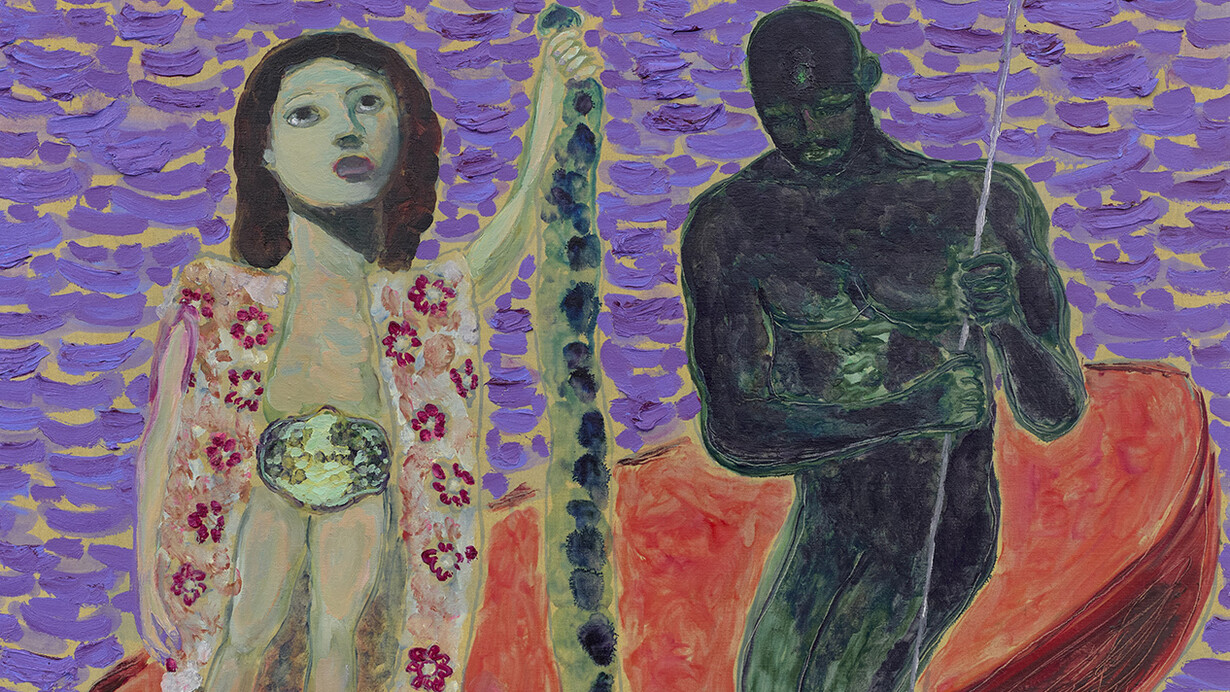
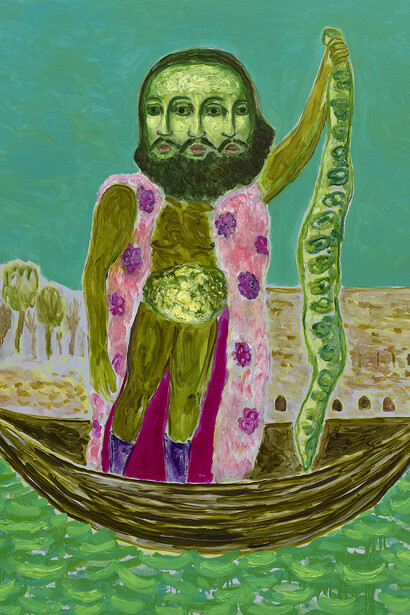
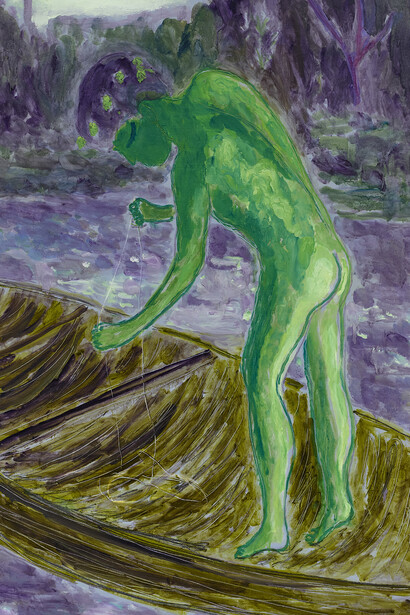
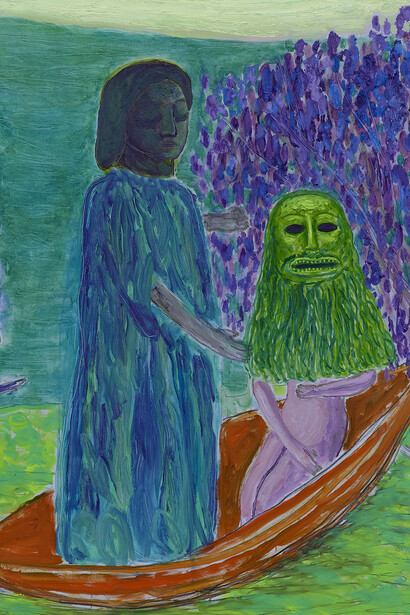
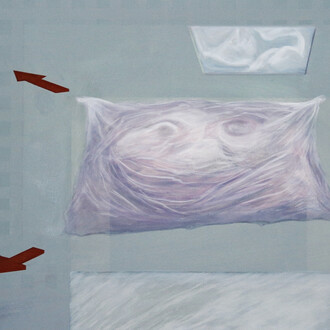
The Hole is pleased to present False prophet, the first solo exhibition in the United States by Croatian painter Grgur Akrap, following his stateside debut at the Independent art fair this spring. Across eleven new paintings, the exhibition expands Akrap’s distinctive pictorial universe—lush, uncanny, and insistently unresolved—where familiar figures drift toward the archetypal and images hover between doubt and revelation.
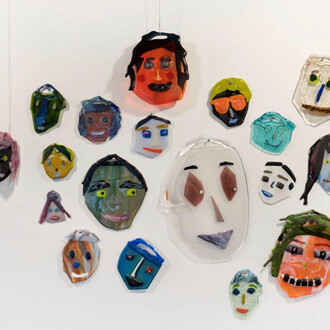
Built through layered applications of oil and wax, Akrap’s paintings seduce with color while quietly resisting clarity. Winged figures fall, boys drift in boats, animals surface and disappear, masked faces peep at us. Certain characters recur from earlier works—the boater-hatted man, Icarus, the salamander—while new presences emerge here, including harpies and gold masks rendered in an even more acidic, volatile palette. The imagery feels both ancient and personal, as if filtered through half-remembered myths, alchemical diagrams, and distant echoes of Impressionist and Post-Impressionist painting.
Akrap’s work openly grapples with the problem of painting now: how to make images that resist the flattening certainty of algorithmic narratives and visual manipulation. The exhibition’s title, False prophet, gestures toward that tension. These paintings promise meaning without delivering doctrine; they lead the viewer somewhere uncertain, asking whether revelation itself can still be trusted.
Water appears repeatedly throughout the exhibition, functioning less as a landscape than as a destabilizing mental space. Symbols are slippery, forms blur, and images seem to materialize only momentarily before dissolving again. One painting takes Titian’s Rape of Europa as a distant point of departure; elsewhere, motifs shift through repetition, refusing a single, fixed interpretation. As Akrap notes, “Through repetition, the golden mask gradually becomes the true face and ceases to be a mask. The painting resists a single meaning; each time it shifts slightly.”
Material process is central to this instability. Akrap mixes wax into oil paint, applying it cold in both thin and thick layers. The surface remains open yet resistant, forcing a slow, recursive working rhythm. “A painting doesn’t happen all at once,” he explains. “In that rhythm of slowing down, the figure appears like a memory that isn’t entirely reliable.” Wax allows light to be held within the surface while maintaining transparency and drag, producing images that feel luminous but withheld.
Akrap cites Odilon Redon and Pierre Bonnard as formative influences, but his world is firmly his own—hermetic, dreamlike, and quietly obstinate. In False Prophet, control loosens and listening takes precedence, resulting in a body of work that feels like new territory while remaining committed to the same elusive pursuit: grasping what continually slips away.