English
 Español
 Français
 Deutsch
 Italiano
 Português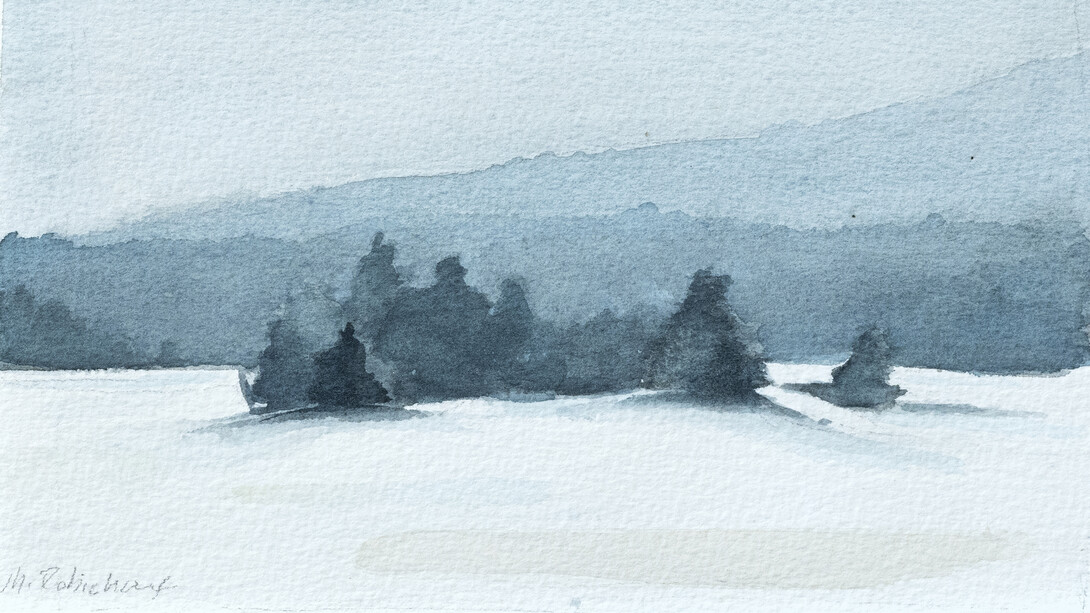
Floating through my mind as I work on a series of new paintings is a long-lost, half-remembered poem by my friend, the late Jud Strunk, Maine poet and musician extraordinaire. Unable to locate a written copy, I recall the essence of the poem if not the exact stanzas. The narrator imagines what this grand old tree might have witnessed over decades, or even centuries, of its existence.
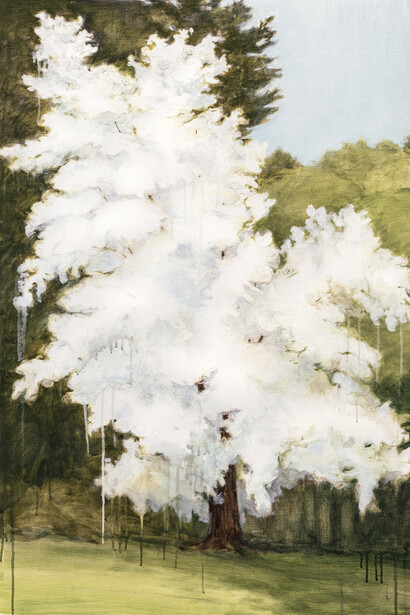
I have painted thousands of trees, imagining them in landscapes near and far. There is one particular tree that speaks loudly and poignantly to me. Wild apple (MR403 and MR404) survives on the side of a busy highway a few miles from my home and studio. It is tall, misshapen, and lists to the south. I have it on good local authority that this is its second home. Wild Apple once grew on a farm north of here near the Quebec border. The farmer supplied vegetables and firewood to a remote fish and game camp. When he got older, sold his farm, and moved closer to town, he dug up his apple tree and brought it with him. Each spring for a few days in the middle of May, this ephemeral white cloud floats above the roadside. I have painted it many times; it certainly has stories to tell.
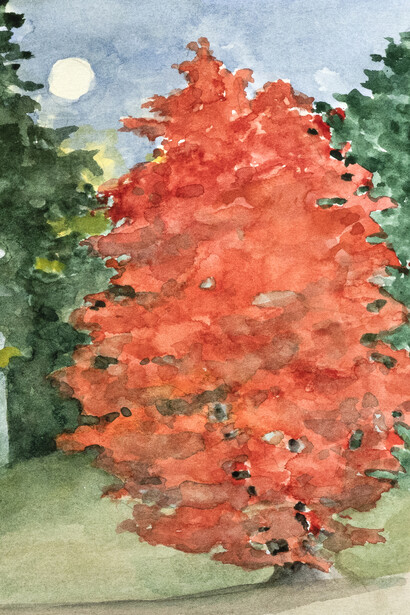
There are other trees that appear often in my work – trees that dominate a landscape and demand our attention. Crab apple (MR390 and MR391), covered by pink blossoms, generates its own rosy atmosphere in the welcoming green of spring. Its stories are of bees and cedar waxwings that thrive on pollen and petals adorning the heavily cloaked branches. I observe Sugar maple (MR401 and MR402) from my living room window year-round. In early October when the days are shorter, this tree glows in the early dawn as the waning moon sets, boldly announcing the change of seasons from summer to winter.
Sac-a-lait (MR400) returns to my roots in southern Louisiana. I would go fishing with my uncle and his cronies on backwaters and bayous, and the prize was a mess of sac-a-lait (“bag of milk” in Cajun French), a fresh water white perch—gutted, scaled, dredged in cornmeal, deep fried, and delicious. This painting, inspired by those outings on slow-moving, murky waters, enveloped in hot, humid air invites a story from those towering cypress, swamp maple, and tupelo trees. Spanish moss drips into the water as paint drips down the paper. A wide border, made by hand-printing with antique lace, frames the watery images and evokes nostalgia for a lost place. These trees have plenty to tell.
Like Jud’s poem of that old pine and the perhaps mythical tale of a transplanted apple tree, these oral histories will fade from memory if not recorded. My quest to preserve our knowledge of cherished rural landscape, farmlands and fields, and undisturbed wilderness is to paint and celebrate these places before they disappear. We have stories to hear and many miles to go.
(Text by Marguerite Robichaux, september 2025)