English
 Español
 Français
 Deutsch
 Italiano
 Português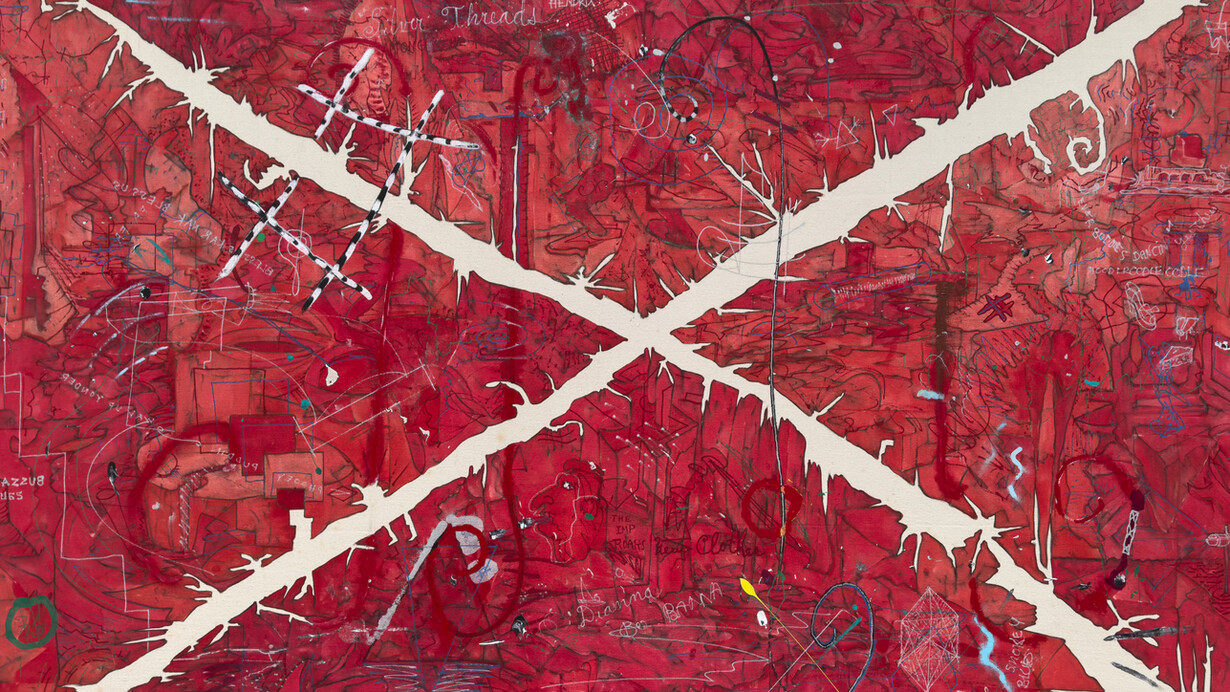
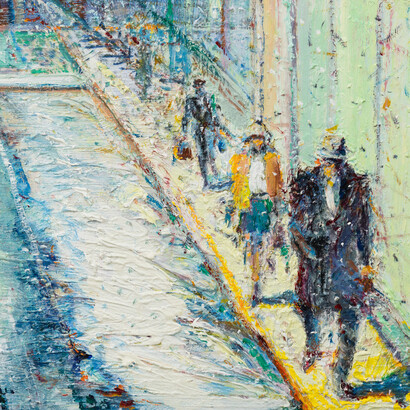
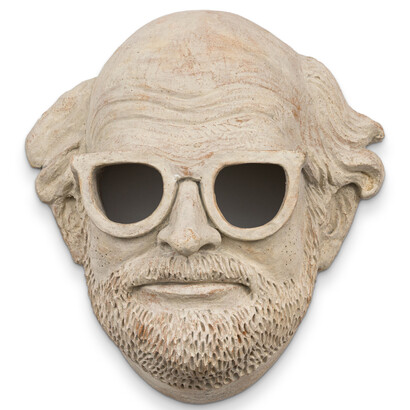
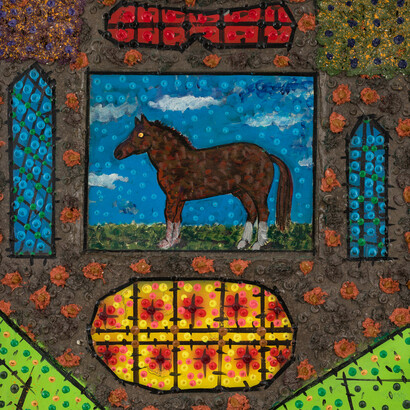
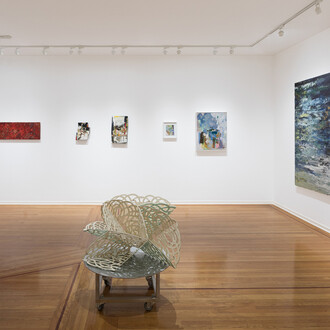
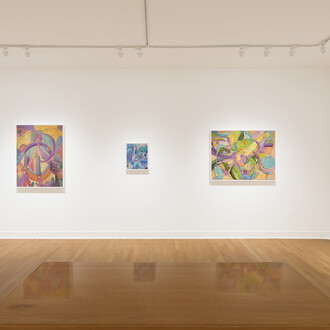
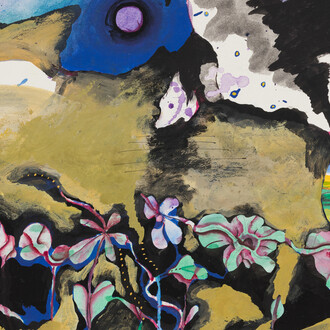
Paul Thiebaud Gallery is pleased to announce the opening of Fertile ground: U.C. Davis faculty and alumni on Saturday, January 17, 2026, from 3-5pm. On view will be paintings, and ceramic sculpture by Robert Arneson, William Theophilius Brown, Roy De Forest, April Glory Funcke, Robert Hudson, Grace Munakata, Manuel Neri, Cornelia Schulz, Sandra Shannonhouse, Wayne Thiebaud, Michael Tompkins, William T. Wiley, and Paul Wonner. Diverse in aesthetic expression and intent, this capsule exhibition highlights the artistic achievements of not only U.C. Davis’s legendary art department faculty but also selected alumni. The exhibition will be on view through February 28, 2026.
Better known for its veterinary, agriculture, and medical departments in 1960, U.C. Davis’s art department underwent a major transformation beginning that year with Department Chair Richard L. Nelson’s hiring of a new slate of faculty. The first to arrive was Wayne Thiebaud (1920-2021) in 1960. Though his breakout exhibition of cakes and pies would not take place at Allan Stone Gallery until 1962, Thiebaud’s close friendships with Willem de Kooning and Franz Kline lent him credibility beyond his painting skills. The next to arrive was Robert Arneson (1930-1992), who established the legendary ceramics program in TB9, and was a leading member of the movement bringing clay into the world of fine art sculpture at the time of his hiring. William T. Wiley (1937-2021) joined the faculty at the same time as Arneson, infusing the department with his conceptual and poetic approach to making art.
The final members of the founding faculty – Manuel Neri (1930-2021) and Roy De Forest (1930-2007) – arrived in 1965. Both Neri and De Forest had established reputations at the time of their appointments – Neri for being the sole sculptor in the Bay Area Figurative Movement and De Forest for this unique painterly vision, which at that time encompassed quasi-surreal, semi-abstract paintings recalling aerial landscapes. The mixture of styles and movements represented among these artists immediately put U.C. Davis on the map as a hot bed of artistic activity, and the impact it had on generations of students cannot be underestimated.
In the following decades, the art department faculty grew to include more full-time positions, as well as lecturers and visiting professors. Cornelia Schulz was hired in 1973 and went on to teach there for 30 years, becoming the first female chair of the department in 1988. Her explorations with combining geometric structures with gestural abstraction have defined her paintings for over five decades. During the 1975-1976 academic year, William Theophilus Brown (1919-2012) and Paul Wonner (1920-2008) taught as lecturers in painting and drawing, adding to the Bay Area Figurative influence already present. In 1983, Robert Hudson (1938-2024) served as a distinguished visiting professor in sculpture. Hudson’s work in polychromed welded steel and glazed porcelain assemblage sculpture demonstrated for students that an aesthetic vision can traverse multiple mediums.
Among the U.C. Davis Art Department alumni included in the exhibition, Sandra Shannonhouse (1947-2025) is best known as the wife of Robert Arneson. In the 1970s and 1980s, Shannonhouse explored themes of confections, the body, and mythologies, through a feminist perspective. A student of Wayne Thiebaud and Cornelia Schulz, Grace Munakata paintings collage together diverse sources of inspiration in each composition, including her love of nature, the patterns of fabrics, and her family’s heritage. Michael Tompkins still life paintings of everyday objects arranged on shelves are rendered with near trompe l’oeil effect and are meditations on light, color, shape, and form, much like those of his teacher Wayne Thiebaud. A teaching assistant to Thiebaud while a student, April Glory Funcke has made still life a focus in her work. Funcke cuts the roses, pansies, and other flowers she paints from her own garden, and depicts them against neutral backgrounds to highlight their delicate forms.
While focused on a select number of key faculty and alumni, the range of artistic territory encompassed by the group of artists included in this exhibition conveys the impact of U.C. Davis Art Department on the history and trajectory of American Art in the 20th and 21st centuries.