English
 Español
 Français
 Deutsch
 Italiano
 Português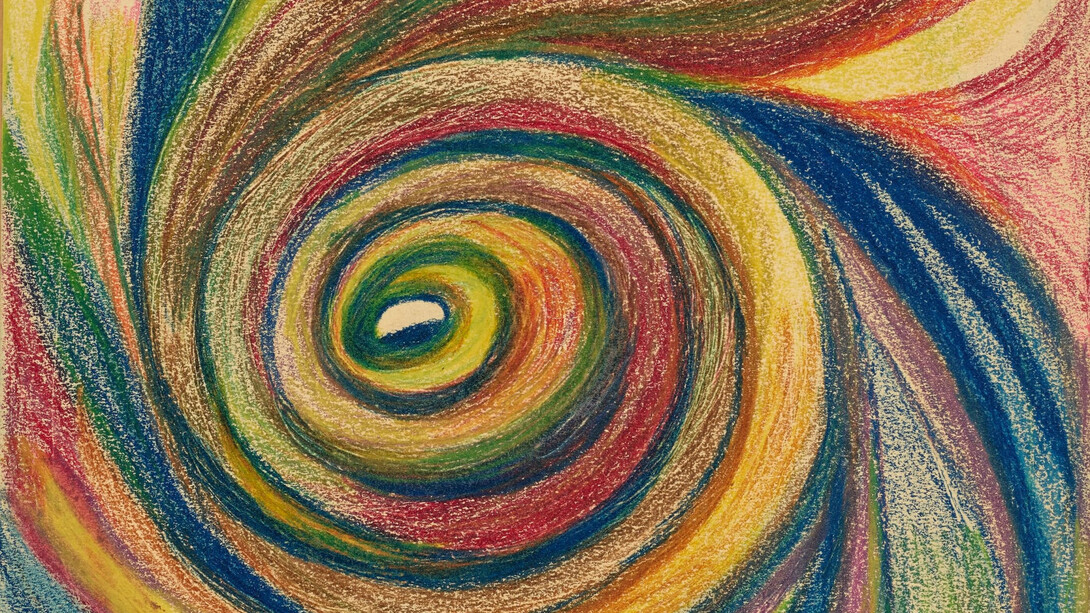
Although Piet Mondriaan and De Stijl are often celebrated as pioneers of Dutch abstraction, the movement’s earliest investigations emerged earlier within the theosophical circles of the 1910s, led by artists who have since been largely overlooked.
Around 1910, Dutch artists began moving beyond direct representation, developing symbolic visual languages that replaced natural color with chromatic harmonies, observed reality with distilled signs and shapes, and descriptive depiction with ideas. Yet they never abandoned meaning: instead, they pursued deeper, often spiritual, layers of significance.
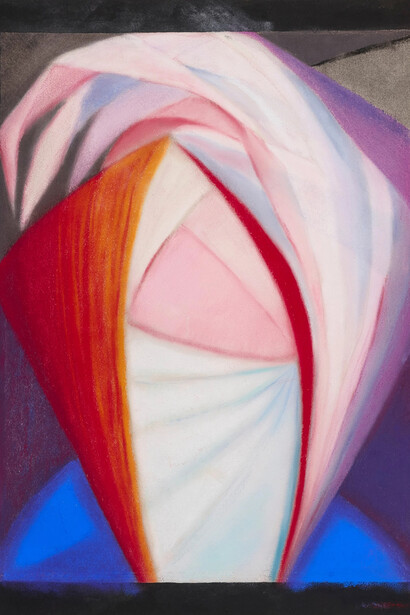
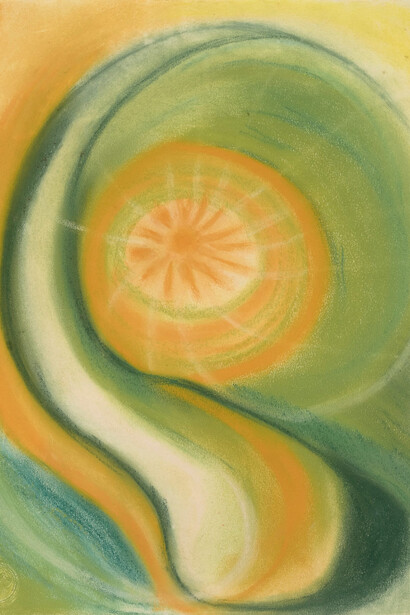
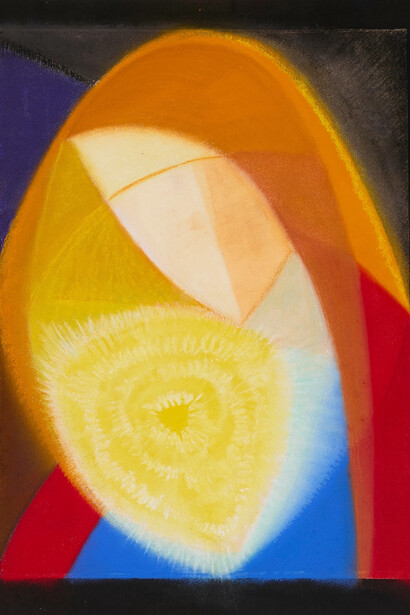
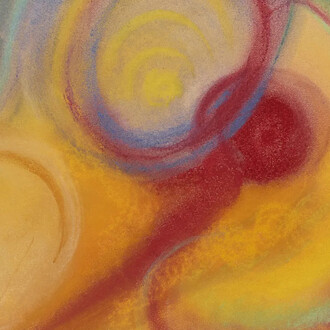
Across Europe and the United Sates, the rise of abstraction in the late nineteenth and early twentieth centuries was closely intertwined with spirituality and mysticism. Within this context, Elisabeth Stoffers and Paulina Wijnman forged strikingly modern visions. Between 1915 and 1918, during World War I, they created pastels poised at the threshold of abstraction. Like their contemporaries Hilma af Klint and Georgia O'Keeffe, they explored nature, symbolism, and spiritual inquiry as catalysts for new artistic forms. Yet when the landmark exhibition The spiritual in art. Abstract painting 1890-1985 opened nearly forty years ago at LACMA and the Gemeentemuseum in The Hague, their work remained out of focus. While recent exhibitions in the Netherlands have finally begun to acknowledge their contributions, the The spiritual in art. Abstract painting 1890-1985 marks the first exhibition of eighteen of their pastels in the United States.
Inspired by both nature and the spiritual, Stoffers’ and Wijnman’s pastels represent the modest but compelling oeuvres of two women largely unrecognized in their lifetimes. Stoffers produced thirtytwo pastels between 1915 and 1918 in near-complete isolation. Since their discovery in 1980, a small number of these abstract drawings have entered the collections of the Rijksmuseum in Amsterdam and the Centraal Museum in Utrecht. Wijnman’s artistic pursuits, meanwhile, were overshadowed by the career of her artist husband, to which she contributed significantly. Only two of her pastels are known to survive and are both included in this exhibition.
Together, these rare drawings reveal nature on the verge of abstraction and abstraction pushing beyond the confines of observable reality. Pioneers of early modernism, Stoffers and Wijnman channel a mystical energy into their drawings, merging spirituality with vivid, otherworldly forms, offering a bold long-overlooked contribution to the development of abstraction. The spiritual in art. Abstract painting 1890-1985 introduces these two Dutch innovators for the first time to an American audience.
Additional works on view include drawings by two queer artists: Simeon Solomon (1840-1905) and Karel de Nerée tot Babberich (1880-1909). Solomon, who will be the subject of a monographic exhibition at the Delaware Art Museum in 2027, and De Nerée, recently featured in an exhibition at the Dordrecht Museum in 2025, each represent artists working on the margins of the art world, whose isolated contributions are now being revisited.