English
 Español
 Français
 Deutsch
 Italiano
 Português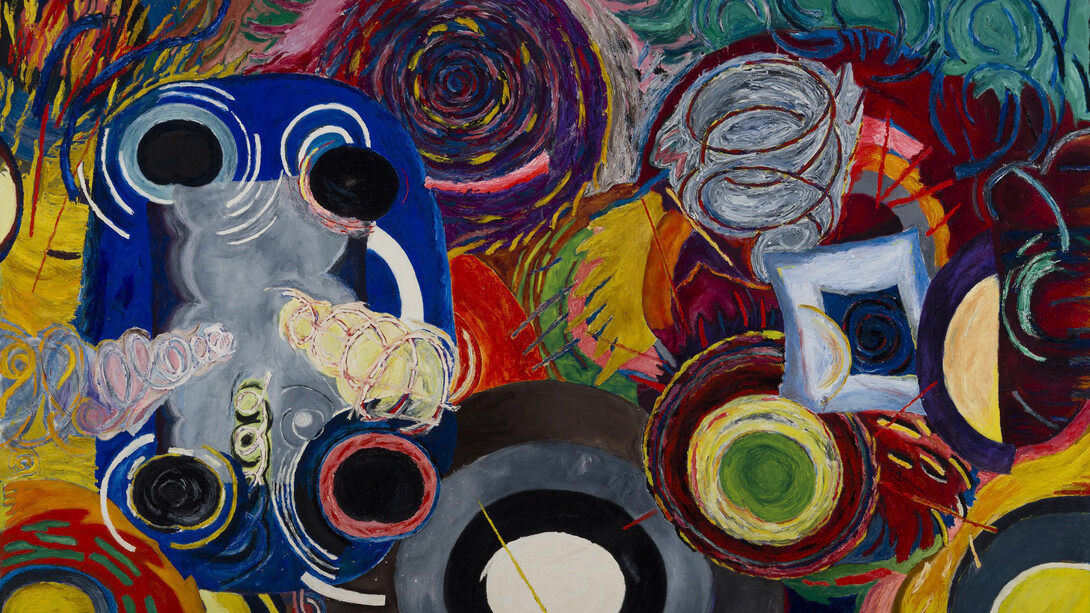
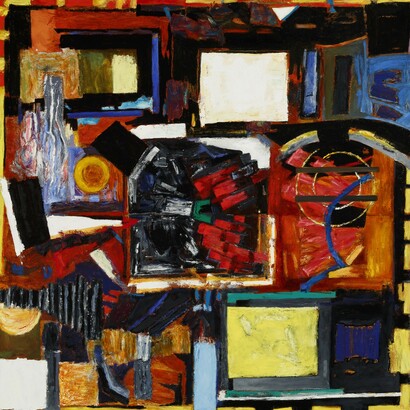
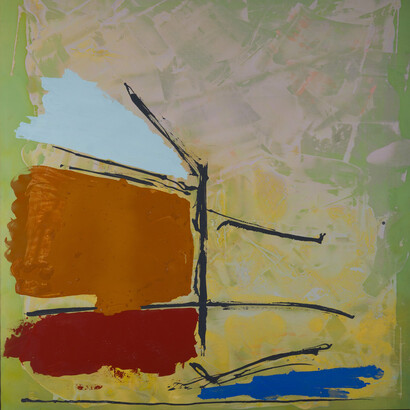
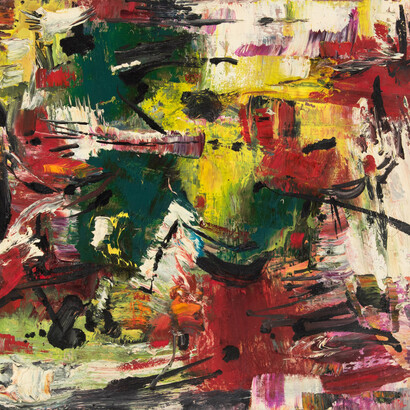
LewAllen Galleries initiates 2026 – its 50th anniversary year – with a group exhibition that focuses on New York Abstraction, featuring the work of Norman Carton (1908-1980), Edward Zutrau (1922-1993), Jack Roth (1927-2004), Dan Christensen (1942-2007) and Katherine Porter (1941 - 2024).
This illuminating presentation reflects on the significance of Abstraction in American art by looking at the works of these five artists who, at some point during their careers, worked in New York City. In each of their own personal ways, the works of these artists demonstrate the basic tenets of abstract art. Their works are conceived to be singular and, as with all abstract art, do not strive to imitate a particular subject matter or attempt fidelity to a recognizable narrative. As scholars of abstraction have noted, abstract art is, finally, art that “looks like nothing but itself.”
Abstraction celebrates the freedom from perceived orthodoxies of verisimilitude and particular subject matter in the creation of the artwork. First emerging in Europe out of movements that included Post-Impressionism and Cubism in the late 19th and early 20th centuries, non-representational Abstract art was generated by significant pioneering artists such as Vassily Kandinsky, Piet Mondrian, and Hilma af Klimt.
Artists became free to express spontaneity, personal emotion, and subconscious response through non-representational marks, gestures, and expanses of color and material. In his 1911 treatise On the Spiritual in Art Kandinsky advocated for the use of pure color and form to express inner emotional and spiritual truths, likening the process to creating music. In a similar fashion, art could now be liberated from discernible image or subject so that the artist could work from a spiritual or theoretical basis.
Correspondingly, viewers are freed to experience their own personal sensations of emotion or exhilaration through non-representational art. It is that response, sometimes described as “mystical” or “the abstract sublime” in intensity, experienced when viewing certain abstract art, that can cause the viewer to stand quietly and contemplatively and ponder as though looking at some incomprehensible but wondrous manifestation of transcendence. It is akin to the “awe” experience of seeing a magnificent sunset or an extraordinary mountain vista.
After World War II, New York Abstract Expressionism had the distinction of being the first American school of art to gain international acclaim and significance – New York would supplant Paris, transforming New York into the premier city of the art world. This movement also became known as the “the New York School” characterized by two main styles: the gestural "action painting" of artists such as Jackson Pollock, Willem de Kooning and Franz Kline, who would dribble, pour, and energetically brush paint onto canvas, and the large-scale "Color Field" paintings of artists such as Mark Rothko, Barnett Newman, and Clyfford Still, focused on the expressive potential of open fields of color, the materials and properties of paint, and the eloquence of their internal relationships.
Subsequently, other refinements and various other forms of New York abstraction would emerge, including what would be called “lyrical abstraction,” characterized by looser, flowing forms and brushwork and “stain painting.”
Throughout the various genres of abstraction, a sense of human agency is present. There is a sense of the artist’s declaration of individuality evident from habits of gesture, marks, color relationships, and elements of composition apparent in a work of excellent abstract art. Because the work evinces the deepest feeling and thoughts of the artist, there should be traces of the artist’s hand. And of course, there is that sense of wonder from the experience of looking at the work. The “awe” factor.