English
 Español
 Français
 Deutsch
 Italiano
 Português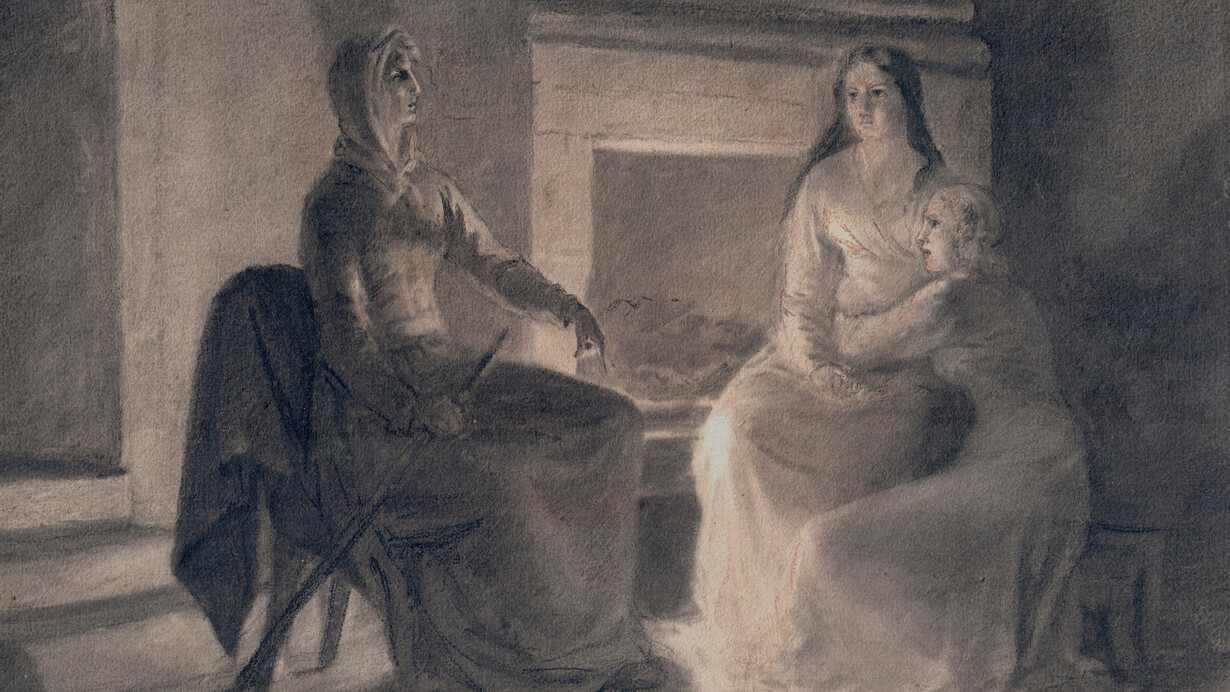
Drawing was not simply a hobby for me; it was a dominant, unique, and all-consuming passion, and it lasted with an intensity far beyond many other passions, until sorrows and constant worries came to tear me away from it... and even then, as soon as I had a little peace of mind, drawing almost became my sole occupation again and brought me all my joy.
Stephanie de Virieu was a draughtsman and sculptor born to the next generation of painters after Vigée Le Brun and Marguerite Gérard. Her drawings are a very recent discovery and her work is virtually unknown outside of France. Her story involves art, literature, politics and society in early nineteenth century France.
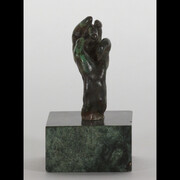
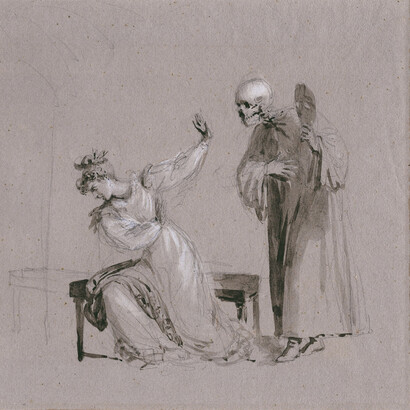
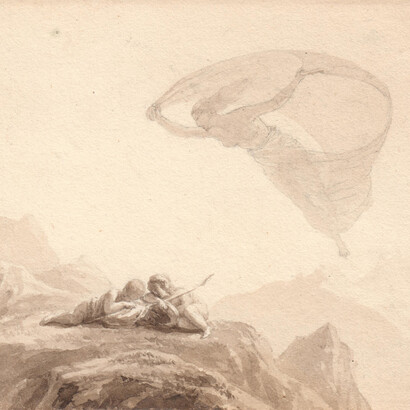
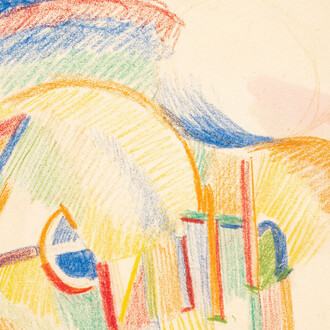
Stephanie de Virieu was born July 14, 1785 into an aristocratic family from the Dauphiné region in southeast France. She lived to be 88 years old. Her oeuvre consists of some 3,000 drawings, and some sculpture, which she began making late in life as her eyesight started to fail.
De Virieu’s family had close ties to the court of Louis XVI, thus the French Revolution and Reign of Terror had a profound and devastating impact on her childhood. The family home Château de Pupetières was destroyed by revolutionaries, and in 1793, Stephanie’s father was killed during a Royalist uprising called the Siege of Lyon. De Virieu, her mother, and two siblings were forced into exile in Switzerland, at times disguising themselves as peasants in order to escape persecution. Once Napolean Bonaparte established the French Empire in 1804, de Virieu’s family was allowed to return to France and retake possession of their partially destroyed home. They were even able to build a new home at Grand-Lemps in Isère, and still the seat of the de Virieu estate today.
Throughout the tumultuous years of her childhood, Stephanie’s mother remained committed to her daughter’s education which included instruction in drawing, albeit in an ad hoc manner. The artist would later regret her lack of a conventional or consistent art education which stunted her creative growth, as she wrote to her brother in 1816, “I believe that I was born a painter, but the worthlessness of my studies means that I am, and will only ever be a failure.”
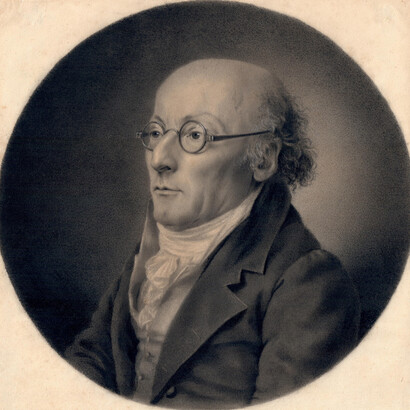
De Virieu’s talent and passion for art were given a better outlet during the course of two stays in Paris when, at age 13, she took lessons from two former students of Jacques-Louis David, De Lavoipierre, an artist from Rouen, and Albertus-Jacop-Frans Grégorius (1774-1853), a Belgian portraitist. De Virieu later shared a studio in Paris with a friend named Mme du Cayla in the Hôtel Jaucourt. (Notably, Comtesse du Cayla, 1785–1852, was an intimate friend, confidante, and maîtresse-en-titre of King Louis XVIII of France. The King referred to his affection for her as paternal, calling her "his daughter"). Drawing meanwhile remained a central activity in de Virieu’s life, and it was in her memoirs around this time that she wrote “I draw with an incessant ardor.”
Testamony to De Virieu’s deeply aesthetic nature is her friendship with Alphonse de Lamartine (1790-1869), a close childhood friend of her brother Aymon de Virieu. Lamartine would become an important figure in 19th century France, renowned as the country’s first Romantic poet and a pivotal statesman during the French Revolution of 1848. Following Aymon’s death in 1841, Stephanie and Alphonse remained devoted correspondents, sharing their mutually artistic spirits as well as their concerns for home and hearth.
During the 1860s, driven by failing eyesight and a deep commitment to her faith and her family (both her brother and sister had died, so she became very involved with the upbringing of her nieces and nephews), de Virieu turned to sculpture, collaborating with the reknowned architect Eugène Viollet-leDuc on the restoration of her family’s ancestral home, the Château de Pupetières. Stephanie contributed to the interior décor, and at age 78, sculpted a stone fireplace mantle depicting her 12th-century ancestors.
(Research by Cora Michael, Ph.d)