English
 Español
 Français
 Deutsch
 Italiano
 Português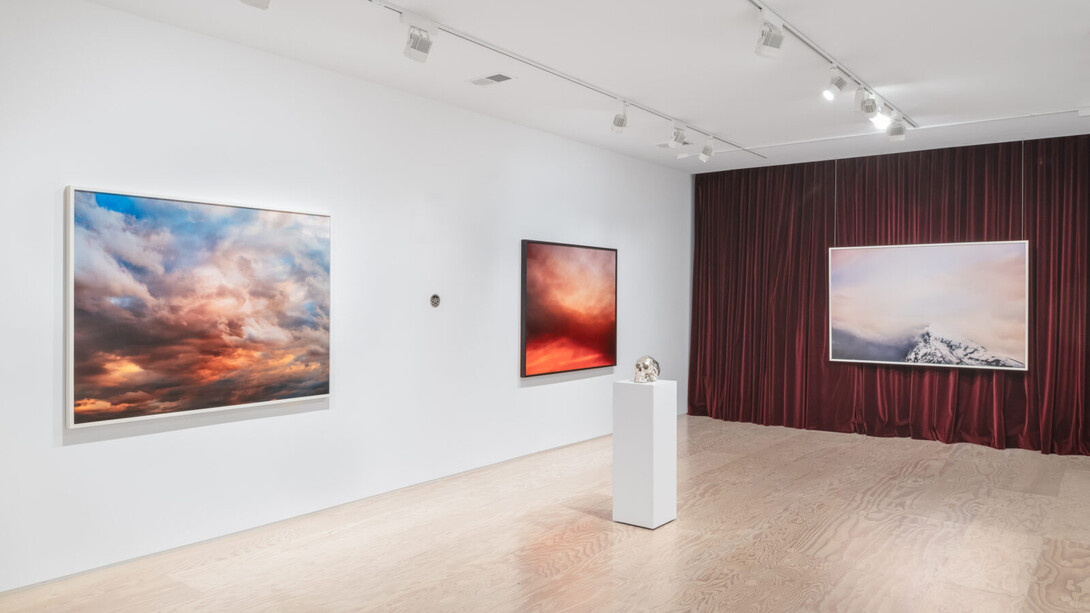
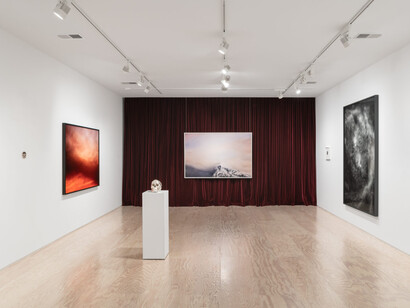
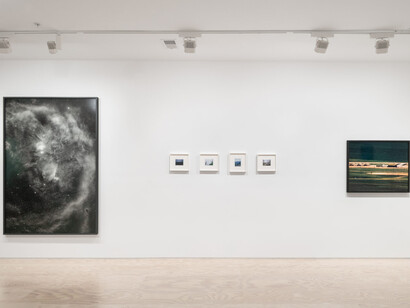
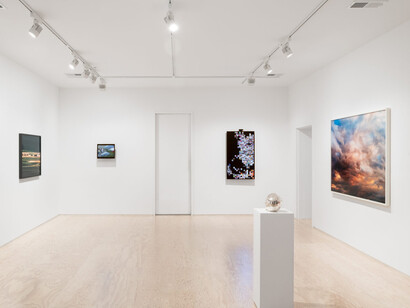
Jessica Silverman is elated that artist Trevor Paglen has joined our roster and entrusted us with a solo exhibition of new prints from four award-winning series that explore the outer limits of visual perception. Opening January 8 and running through February 28, the show titled, The horizon waved, and nothing was certain: 2006-2026, features previously unseen landscapes and skyscapes that investigate computer vision, drone surveillance, secret military bases, and unidentified objects in Earth’s orbit. These pictures are the final ones to emerge from the series that established Paglen as the unrivaled exemplar of the “techno sublime.” As philosopher Brian Holmes explains, Paglen transforms art into “a crossroads of critical analysis and cosmic experience… creating encounters with currently invisible realities.” Put simply: imagine Philip K. Dick meets J.M.W. Turner in Mountain View, CA.
The works in “The Horizon Waved, and Nothing Was Certain” examine how different ways of seeing produce distinct visions of the world, each with its own emotional associations and potential for empowerment. Cloud #395 (2025) depicts a celestial sky with patches of blue, hints of golden light, and both fluffy white and dark, ominous clouds. At first glance, the image suggests that heaven waits for those who avoid the lure of the storm. When viewed in person at its full scale of 4 feet high and over 5 feet wide, the skyscape reveals the linear and blotchy marks of two confused algorithms. By inscribing the motifs of classical computer vision on clouds, Paglen does more than make a clever pun about data centers and their "cloud" services. Indeed, he depicts our new world order, warning us not to mistake artificial intelligence for a god-like intelligence, even if the “Singularity” has arrived and technological growth has sped past human control. With Cloud #395 and several other works in the show, such as The watzmann (2018/2025) and Bloom (2021/2025), Paglen advocates for the higher power of nature, as witnessed by the human eye, if not the naked eye.
Ever curious and committed to research, Paglen decided to make pictures from even greater distances by exploring infrared astronomy. He assembled his own mobile observatory equipped with several telescopes and infrared cameras, using the same software NASA employs for the largest telescope in space. Unknown #89161 (2023/2025) captures an unidentified object (a true unidentified flying object, aka UFO) near "The Revenant of the Swan," a massive, unstable star in the Milky Way.
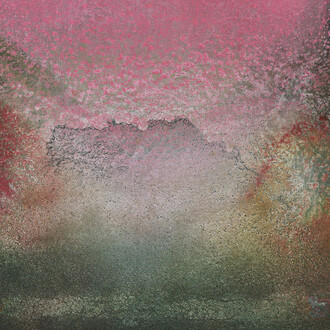
In a red-and-purple picture taken with a large-format camera at sunrise called Untitled (Reaper drones) (2009/2025), Paglen plays with the postwar history of abstraction and pattern recognition, from Mark Rothko to Gerhard Richter and Andreas Gursky. “Paglen has a sophisticated feel for color,” writes art historian Julia Bryan Wilson. “He deliberately shoots at times of day when the light produces specific, sometimes peculiar, chromatic effects." The work’s title provides a crucial clue, guiding viewers to recognize two combat drones used for surveillance, reconnaissance, and military strikes. While these grim reapers lack black robes and scythes, they pose a threat to human lives and symbolize death for “enemies” of the United States. When we identify the drones, the work shifts from a pretty skyscape to a war photograph. It also moves from the familiar domain of the picturesque into the estranged zone of the sublime, which, in the Romantic tradition, is always haunted by terror.
Paglen enjoys capturing subjects that resist being seen or represented. For Area 52; Tonopah Test Range, NV (2006/2025), Paglen climbed a Nevada mountain in winter equipped with a long-range telescopic lens, camera, and heavy-duty tripod. The resulting image struggles to reveal a secret military test site from twenty miles away, thereby testing the limits of intelligibility. "The representation is falling apart,” says Paglen about these existential, investigative works. “I like being on the line between something you can name and something you can’t.”
Through a very different process, Paglen has created intentionally ambiguous “UFO photographs,” using a 4x5 camera with Fuji instant film, which produces Polaroid-like 4x5-inch prints. Images such as Near Todd road (undated) (2025) are undoctored but carefully crafted. Unless you believe in aliens, viewers should ask: Is it a bird, a plane, or something extraordinary? Since its invention, photography has been considered a reliable witness—"the camera doesn't lie"—but UFO photos introduce uncertainty. “I've always been obsessed with UFO photography,” admits Paglen. “The ontology of the UFO photograph is the most precise distillation of the metaphysics of photography.”
Paglen’s biography is so relevant to his artistic output that you couldn’t make it up. The son of an Air Force eye surgeon, Paglen grew up in a household supported not just by the business of vision but its fallibility. As a military brat, he also understood that the United States was shaped by a quiet global network of “thousands of American bases with people moving in and out of them all the time.” Growing up in a patriotic and transient subculture, Paglen was infused with both idealism about democracy and an aptitude for handling change. Meanwhile, Paglen’s grandmother was a painter, and his mother was an Episcopal priest. An interest in other people’s belief systems and “making ideas visible,” as he puts it, led Paglen to pursue a BA in Religious Studies, then an MFA at the Art Institute of Chicago. Combining his love of the real world with his interest in landscape, he went on to do a PhD in Geography, investigating state secrecy and places that don’t officially exist.
Paglen is a conceptually adventurous MacArthur "Genius" with a talent for profound beauty that art historian Hal Foster has described as “Malevich in the sky with diamonds.” In exploring the hazy borders between knowing and not-knowing, the perceptible and the undetectable, secrecy and revelation, Paglen manifests documentary work that feels like science fiction. He also confronts chilling realities with an uncanny optimism that sustains hope and a romantic missionary spirit. With The horizon waved, and nothing was certain: 2006-2026, Paglen delivers an exhibition of technically complex, historically relevant, and emotionally resonant images, which reveal the hidden systems that shape our world.

![Paul Klee, Komiker (Comedian) [Invention 4] (detail), 1904. Courtesy of San Francisco Museum of Modern Art](/attachments/04df4ade6b4e470f095f311cf9fe61061207f309/store/fill/330/330/9c191f0baf62001530291521d7da91c9dc6cfcfa380da17510698c809d2c/Paul-Klee-Komiker-Comedian-Invention-4-detail-1904-Courtesy-of-San-Francisco-Museum-of-Modern.jpg)