English
 Español
 Français
 Deutsch
 Italiano
 Português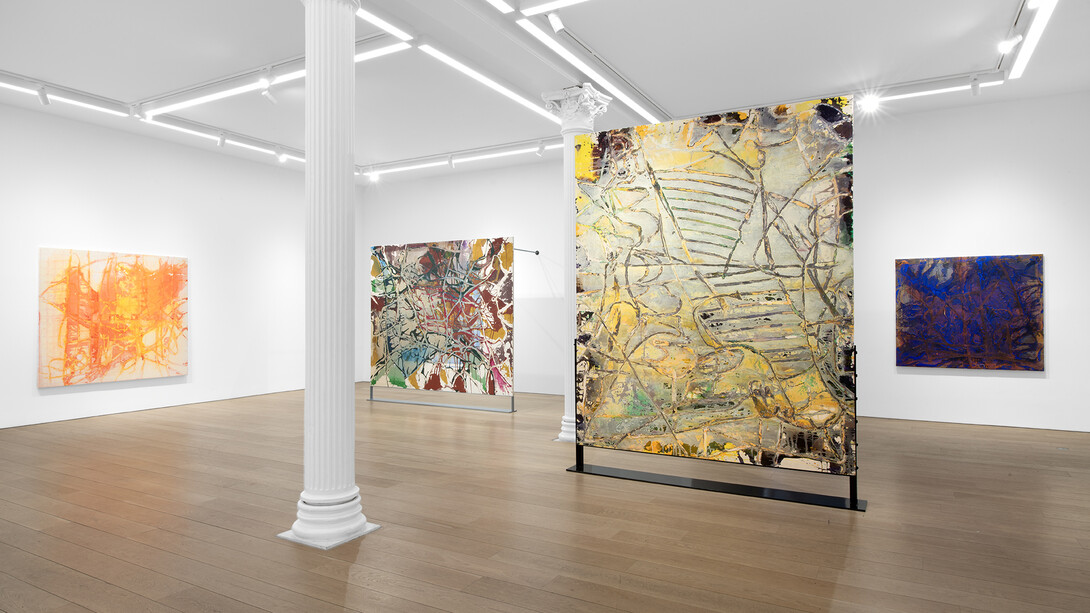
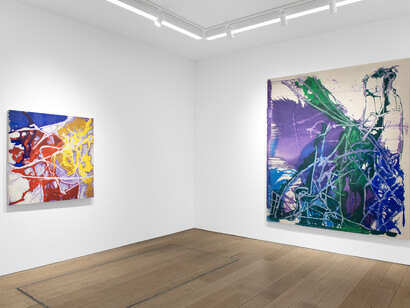
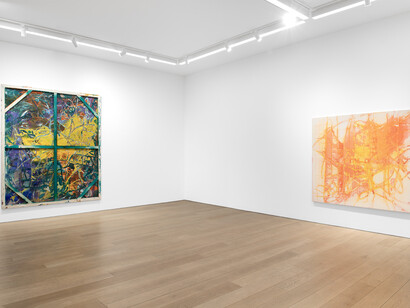
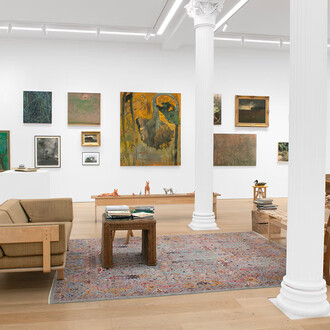
Canada is excited to announce The individualism of Dona Nelson, presented in collaboration with Thomas Erben Gallery. This exhibition of wall based and free- standing paintings explores form, color, material and light while foregrounding the means and flexibility of gestural abstraction.
The show’s title is a borrowed from The individualism of Gil Evans, the 1964 album by the jazz pianist and arranger, considered to be one of his best. The music on the album is distinct from song to song, playing fast and light over many different motifs, timbres and emotional registers. Similarly, Nelson treats each individual painting as a journey, a story with unique properties. Every facet of the paintings is considered, especially the material choices; stretcher bars, the weave of the canvas, the scale and proportions, color, the terms of display and how paint is applied.
The works define themselves through the act of making. They start with drawing. Strips of cheesecloth soaked with acrylic medium are carefully applied or flung onto raw canvas drying into rigid dams that corral thinned acrylic that puddles and soaks into the weave and often through to the reverse side of the faceup canvases. When the colors dry, the cheesecloth is pulled off to reveal frozen rivulets, glassy sheets of color or patches of raw canvas. The layers of paint, either soft flows or shattered slabs, create depth of feeling when placed on top of or next to one another. The paintings suggest rock strata and geology, which is time made visible.
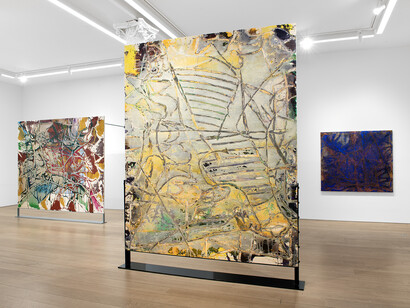
Nelson has noted that since Frank Stella’s black paintings the “objectness” of painting has been revealed as an important aspect of the medium. The show features several of her ontologically challenging freestanding double-sided works, which explore aspects of painting that are traditionally off limits to viewers. We see the backs of the paintings, exposing supports and staples, granting the works a sculptural presence in the physical world. Nelson designed stands that hold the paintings in the center of the gallery and a system of pipes that fuse them to and away from the walls. The effect is to make the paintings read like screens, and to see the entirety of the paintings they must be seen from all sides. Nelson explores the whole object and the interplay between intentional and unintentional activity, playfully subverting hierarchies.
By responding to what is there, Nelson reworks classical ideas of authorship central to the precepts of Abstract Expressionism, famously personified by Jackson Pollock, who Nelson admires. The paintings grow expansive through their resolutely collaborative approach between the painter and the activity of making. We see both the sublime nature of color, exemplified by the deep smoldering green of Grass (2025), which is activated by light and an enticing web of conditions, properties and histories that make the work possible. In Nelson’s hands painting feels like a field of possibility rather than a fiction in need of questioning.